Top Mobility Harnesses for Service Dogs: 2026 Review
Discover the best mobility harnesses for service dogs in 2026. Compare top brands, learn about canine ergonomics, and find the perfect fit for your team.
Understanding Canine Ergonomics in Mobility Work
Mobility service dogs perform some of the most physically demanding tasks in the assistance dog world. From bracing to help a handler stand up from a seated position to pulling manual wheelchairs up inclines, these incredible canines put immense physical strain on their bodies. As of 2026, advancements in veterinary physical therapy and canine biomechanics have revolutionized how we approach mobility equipment. Using an ill-fitting or poorly designed harness can lead to severe spinal issues, joint degradation, and muscle fatigue in working dogs.
According to guidelines established by Assistance Dogs International (ADI), a mobility harness must distribute weight evenly across the dog's chest and shoulders, entirely avoiding the spine and abdomen. The modern standard for 2026 dictates that harnesses must be constructed from high-tensile, breathable materials that prevent chafing during long shifts while providing rigid structural support for the handler's balance.
Crucial Features to Look For in 2026
When shopping for a mobility harness this year, you must look beyond basic service dog vests. A standard vest with a patch is entirely insufficient for mobility work. Here are the critical features your harness must possess:
1. Rigid vs. Flexible Handles
For bracing tasks (where the handler leans on the dog to stand or balance), a rigid, reinforced handle is non-negotiable. Flexible fabric handles will collapse under human weight, throwing the dog off balance and potentially causing spinal injury. Look for handles wrapped in premium leather or high-density neoprene with a solid internal core.
2. Weight Distribution and Padding
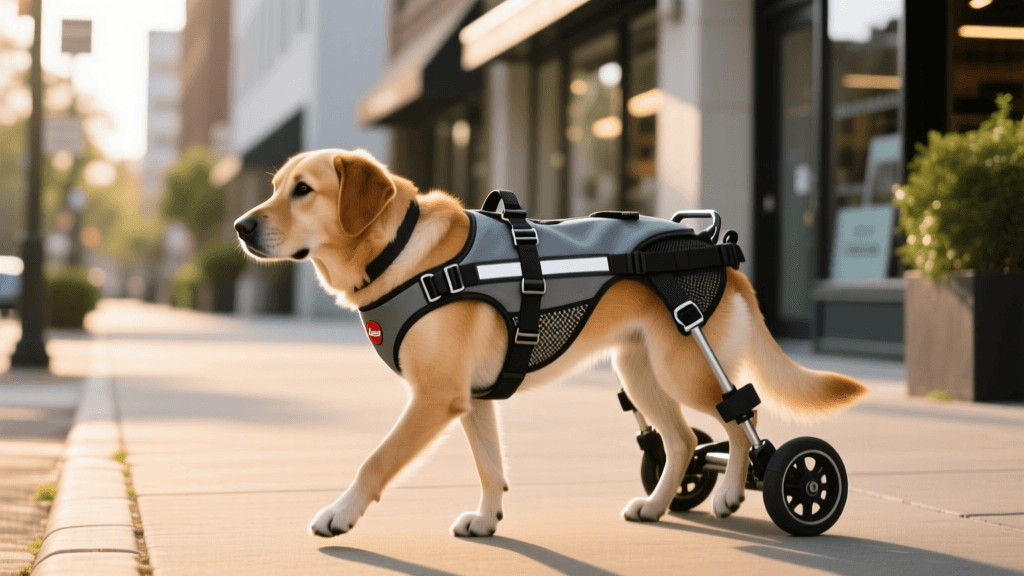
The harness must feature a wide, padded chest plate (often called a Y-front or breastplate) to disperse the force of pulling across the dog's sternum and pectoral muscles. Additionally, a padded belly strap is essential to prevent the harness from riding up into the dog's armpits or groin during heavy pulls.
3. Breathable, High-Tensile Materials
In 2026, the best manufacturers are utilizing aerospace-grade mesh and Cordura nylon. These materials offer the tensile strength required to pull a wheelchair weighing over 200 pounds while allowing air circulation to prevent the dog from overheating during strenuous work.
Top 3 Mobility Harnesses for 2026
1. Bold Lead Designs Mobility Harness
Bold Lead Designs remains the gold standard for professional mobility teams. Their custom-fitted leather and biothane harnesses are built specifically for heavy bracing and pulling. The rigid handle is positioned perfectly over the dog's center of gravity (the shoulders), ensuring that when a handler leans their full weight onto the dog, the force is directed straight down through the dog's sturdy front legs rather than twisting their spine. Priced around $285 in 2026, it is an investment, but the custom-fit guarantee and lifetime stitching warranty make it the top choice for daily, heavy-duty mobility work.
2. Ruffwear Web Master Pro Harness
For handlers who need a versatile harness that transitions well between mobility tasks and active outdoor lifestyles, the Ruffwear Web Master Pro is exceptional. While the standard Web Master is great for hiking, the Pro version includes an upgraded, padded rigid handle and reinforced belly straps. The foam-padded chest and belly straps provide excellent comfort for dogs with sensitive skin. At approximately $125, it is a highly accessible option for light-to-moderate bracing and retrieval tasks, though it may not be robust enough for full-weight wheelchair pulling.
3. Dogline Unimax Service Dog Harness
The Dogline Unimax is renowned for its plush neoprene padding and ergonomic design. It features a unique chest plate that prevents the harness from shifting side-to-side, which is critical when a handler is using the dog for dynamic balance support while walking. The handle is heavily padded and reinforced with a steel core. Priced at roughly $145, the Unimax offers a fantastic middle ground between the rugged customization of Bold Lead and the outdoor versatility of Ruffwear.
Comparison Chart: Best Mobility Harnesses
| Feature | Bold Lead Designs Mobility | Ruffwear Web Master Pro | Dogline Unimax |
|---|---|---|---|
| Best For | Heavy bracing & wheelchair pulling | Light bracing & active outdoor use | Dynamic balance & daily walking support |
| Handle Type | Rigid leather/biothane | Semi-rigid padded foam | Rigid steel-core neoprene |
| Material | >Premium Leather / BiothaneCordura Nylon & Aerospace Mesh | Heavy-duty Nylon & Neoprene | |
| Approx. 2026 Price | $285.00 | $125.00 | $145.00 |
| Custom Sizing | Yes (Custom built to order) | No (Standard S-XL sizing) | No (Standard adjustable sizing) |
Training Your Dog for Mobility Tasks
Equipping your dog with the right harness is only half the battle; proper training and physical conditioning are paramount. The Americans with Disabilities Act (ADA) requires that service dogs be individually trained to perform tasks that mitigate a person's disability. For mobility dogs, this means mastering complex physical interactions.
Bracing (Static Support)
Bracing requires the dog to stand completely still, locking its stance to act as a living crutch. Training begins on a non-slip surface. The handler applies gentle, incremental pressure to the harness handle, rewarding the dog for maintaining a solid, four-square stance. Over months, the pressure is increased until the dog can support a significant portion of the handler's body weight. It is vital to condition the dog's core and hindquarters through canine fitness exercises, such as balance discs and cavaletti poles, to prevent injury.
Wheelchair Pulling (Dynamic Support)
Pulling a wheelchair requires a completely different biomechanical approach. The dog must learn to pull from the chest and shoulders in a steady, rhythmic gait. Commands like "pull," "slow," and "stop" must be flawlessly obeyed. Never allow a dog to pull a wheelchair using a standard walking harness or a collar, as this can cause catastrophic tracheal or spinal damage.
Proper Fit and Sizing Guidelines
A mobility harness that is too loose will shift and cause severe chafing, while one that is too tight will restrict the dog's breathing and shoulder extension. When measuring your dog in 2026, follow these precise steps:
- Girth: Measure the widest part of the dog's ribcage, just behind the front elbows. This is where the main belly strap will sit.
- Chest: Measure around the deepest part of the sternum. The chest plate must sit flat against the bone, not riding up into the throat.
- Handle Placement: The handle should sit directly over the dog's shoulder blades. If it sits too far back over the lumbar spine, bracing will cause severe lower back injuries.
Harness Maintenance and Safety Checks
Because mobility harnesses bear human weight, they are subject to immense stress at the stitching points and D-rings. You must perform a safety check before every single use.
- Inspect all metal D-rings and buckles for micro-fractures, rust, or warping.
- Run your fingers along every seam. If you feel any fraying threads or notice the webbing pulling away from the leather or nylon, retire the harness immediately.
- Wash the harness according to the manufacturer's instructions. For leather and biothane, use specialized saddle soap and conditioners to prevent cracking. For nylon and neoprene, hand-wash with mild detergent and air dry away from direct sunlight to preserve the integrity of the synthetic fibers.
Conclusion
Investing in a high-quality, ergonomically sound mobility harness is an investment in your service dog's health and longevity. By prioritizing proper weight distribution, rigid handle support, and rigorous physical conditioning, you ensure that your canine partner can safely and comfortably assist you for years to come. Always consult with a certified canine physical therapist or an accredited assistance dog trainer when introducing new mobility tasks or equipment to your working dog's routine.
beth-carrasco
All our authors care for dogs every day — read more of their work on the authors page.