ThunderShirt vs Calming Cap for Anxious Vet Visits in 2026
Compare ThunderShirt and Calming Cap for anxious vet visits in 2026. Learn which anxiety wrap or visual blocker best manages canine stress.
The Challenge of Veterinary Visits for Reactive Dogs
For pet parents managing a reactive or severely anxious dog, a simple trip to the veterinarian can feel like navigating a minefield. The unfamiliar scents, slippery floors, bright fluorescent lights, and presence of other animals can trigger a massive cortisol spike, turning a routine wellness exam into a traumatic event for both the dog and the handler. Fortunately, as we navigate 2026, the veterinary industry has made massive strides in fear-free handling, and the market for canine anxiety management tools is more advanced than ever.
Two of the most prominent, non-pharmaceutical tools in a behaviorist's arsenal are the ThunderShirt (an anxiety wrap utilizing deep pressure therapy) and the Calming Cap (a visual deprivation tool). But which one is right for your dog? In this comprehensive guide, we break down the science, application, and 2026 product updates for both tools to help you prepare your anxious dog for their next veterinary visit.
Understanding the Physiology of Vet Clinic Anxiety
Before selecting a tool, it is crucial to understand why the vet clinic is such a profound trigger. According to the ASPCA's guide on canine fear and anxiety, dogs experience 'trigger stacking' when exposed to multiple mild stressors in rapid succession. The car ride, the waiting room, and the examination table all compound to push a dog over their reactivity threshold.
When a dog's sympathetic nervous system activates, their heart rate elevates, and their ability to process new information—or accept high-value treats—shuts down entirely. Management tools like pressure wraps and visual blockers aim to intercept this physiological cascade before the dog reaches the point of no return.
The ThunderShirt: Deep Pressure Therapy Explained
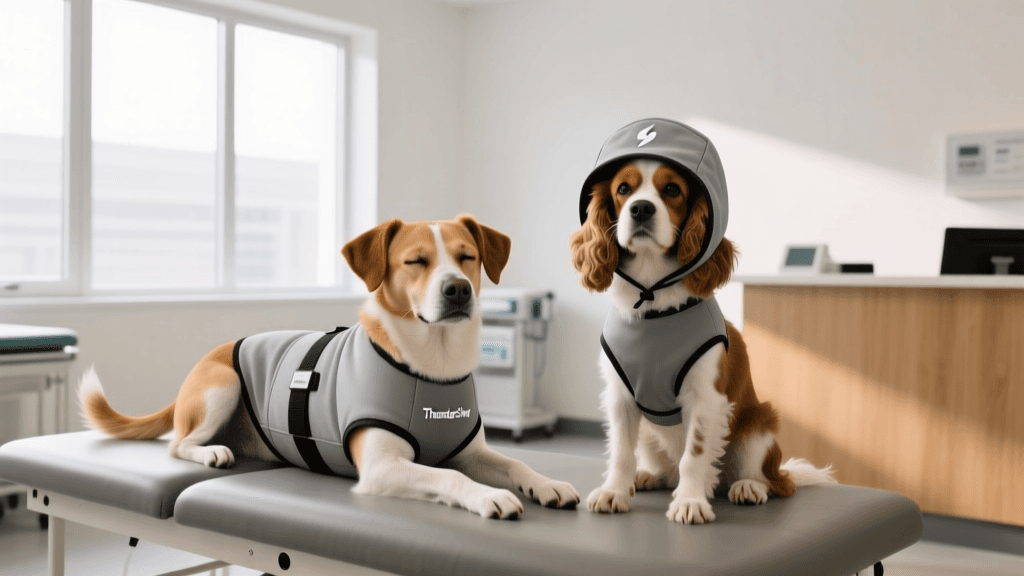
The ThunderShirt operates on the principle of Deep Pressure Therapy (DPT). By applying gentle, constant pressure to the dog's torso, it mimics the soothing sensation of swaddling an infant or the grounding effect of a weighted blanket for humans. This pressure stimulates the parasympathetic nervous system, encouraging the release of endorphins and oxytocin while lowering heart rate.
2026 Updates and Fit Guide
The 2026 iterations of the ThunderShirt feature enhanced breathable mesh panels, addressing older complaints of overheating during summer vet visits. Available in sizes from XX-Small to XX-Large, proper fit is critical. The wrap should be snug enough to provide pressure but loose enough to allow you to slide two fingers comfortably under the chest straps. If the shirt is too tight, it can restrict breathing and exacerbate panic; if it is too loose, it simply acts as a cumbersome harness, providing zero therapeutic benefit.
As noted by the American Kennel Club's overview of anxiety wraps, while ThunderShirts are highly effective for noise phobias and generalized anxiety, their success rate in high-stress environments like vet clinics varies depending on the dog's specific triggers.
The Calming Cap: Managing Visual Overstimulation
While the ThunderShirt addresses the dog's internal physiological state, the Calming Cap addresses external environmental triggers. Resembling a soft, sheer muzzle, the Calming Cap slips over the dog's snout and eyes, filtering out harsh fluorescent lights and blocking direct eye contact with other animals in the waiting room.
It is vital to understand that the Calming Cap is not a muzzle. It does not restrict the dog's ability to pant, drink water, or accept treats through the mesh. Instead, it acts as sensory deprivation goggles. For visually reactive dogs—those who lunge at other dogs or become hyper-fixated on veterinary staff—removing the visual stimulus can instantly lower their arousal levels.
Proper Sizing and Safety Precautions
The 2026 models of the Calming Cap utilize a highly elastic, tear-resistant lycra blend that conforms to various snout shapes, from the elongated snout of a Greyhound to the brachycephalic profile of a French Bulldog. However, because it covers the eyes, it should never be used on dogs with a history of claustrophobia or those who panic when their vision is obscured. Always introduce the cap in a safe, familiar environment before attempting to use it in a clinical setting.
2026 Comparison Chart: ThunderShirt vs. Calming Cap
To help you decide which tool best suits your dog's specific reactivity profile, review the comparison table below.
| Feature | ThunderShirt (Anxiety Wrap) | Calming Cap (Visual Blocker) |
|---|---|---|
| Primary Mechanism | Deep Pressure Therapy (Somatic) | Visual Sensory Deprivation (Environmental) |
| Best For | Dogs with generalized anxiety, noise phobia, or trembling. | Visually reactive dogs, lungers, and dogs overstimulated by clinic movement. |
| Treat Compatibility | Excellent (Mouth is completely free) | Good (Treats can be passed through the mesh) |
| Panting/Drinking | Unrestricted | Unrestricted |
| Average 2026 Cost | $50.00 - $65.00 | $35.00 - $45.00 |
| Acclimation Time | 1 to 2 weeks | 3 to 4 weeks (Requires careful desensitization) |
The 30-Day Pre-Vet Desensitization Protocol
A common mistake pet parents make is pulling the ThunderShirt or Calming Cap out of the closet on the morning of the vet appointment. If a dog associates the gear exclusively with the trauma of the clinic, the gear itself becomes a predictor of doom. To prevent this, follow this 30-day protocol recommended by modern behaviorists.
Week 1: Introduction and Positive Association
- ThunderShirt: Lay the shirt flat on the floor next to your dog's food bowl or scatter high-value treats (like freeze-dried liver) over it. Do not attempt to put it on the dog. Let them investigate it freely.
- Calming Cap: Place the cap near their favorite resting spot. Reward any sniffing or interaction with a lick mat or a long-lasting chew.
Week 2: Partial Fitting
- ThunderShirt: Drape the shirt over the dog's back without fastening the velcro straps. Feed a high-value meal (like a stuffed Kong) while it rests on them. Remove the shirt as soon as the meal is finished.
- Calming Cap: Gently rest the cap over the dog's snout for just one second, then remove it and immediately deliver a treat. Repeat 10 times per session, gradually increasing the duration by half-second increments.
Week 3: Full Fitting in Safe Environments
- ThunderShirt: Fasten the shirt completely. Engage your dog in a fun, low-stress activity like a sniffari in the backyard or a short, positive-reinforcement training session in the living room. Keep sessions under 20 minutes to prevent chafing.
- Calming Cap: Secure the cap fully. Guide your dog through familiar, safe spaces in your home using a verbal lure and treat rewards. Ensure they are comfortable navigating stairs and doorways with filtered vision.
Week 4: Environmental Generalization
- Put the chosen gear on your dog and take them for a car ride to a pleasant location, such as a quiet park or a drive-thru for a pup cup. The goal is to break the associative bond between the gear and the veterinary clinic.
Combining Tools and Veterinary Pharmacology
It is entirely possible—and often recommended by Fear Free Pets certified professionals—to use both the ThunderShirt and the Calming Cap simultaneously. For a dog that is both physically trembling and visually reactive, the combination of deep pressure and visual filtering can create a 'portable safe space' in the backseat of your car and the clinic waiting room.
However, gear alone is not a cure-all for severe panic disorders. If your dog's anxiety is so profound that they are injuring themselves, breaking teeth on crates, or exhibiting aggressive defensiveness, it is time to consult a veterinary behaviorist. In 2026, the standard of care for severe veterinary anxiety often involves a combination of management tools and situational pharmacology, such as Trazodone or Gabapentin, administered 90 minutes prior to the appointment. Medication lowers the chemical threshold of fear, allowing the management tools and your training protocols to actually take effect.
'Management tools like anxiety wraps and visual blockers are not magic switches; they are scaffolding. They support the dog while you build a foundation of trust and positive associations. When combined with modern veterinary pharmacology and fear-free handling, we can completely rewrite a dog's emotional response to healthcare.' — Canine Behavior Modification Principles, 2026 Edition
Final Thoughts for 2026
Choosing between the ThunderShirt and the Calming Cap ultimately depends on your dog's unique reactivity profile. If your dog shuts down, trembles, and seeks physical comfort, the deep pressure of the ThunderShirt is your best ally. If your dog is a visual scanner who lunges at movement and becomes overstimulated by the clinical environment, the Calming Cap will provide the sensory relief they desperately need. By investing the time to properly desensitize your dog to these tools, you are advocating for their mental health and ensuring that their veterinary care is as safe, humane, and stress-free as possible.
robin-maitland
All our authors care for dogs every day — read more of their work on the authors page.