Teaching Kids to Safely Interact With a New Puppy
Learn how to safely introduce your new puppy to young children. Discover actionable tips, supervision rules, and socialization milestones for families.

The Importance of Early Puppy and Child Socialization
Bringing a new puppy into a household with young children is one of the most rewarding experiences a family can share. However, it also requires careful planning, constant supervision, and a deep understanding of both canine and child behavior. Puppies are fragile, easily overstimulated, and still learning how to navigate the world, while young children are naturally loud, unpredictable, and lack fine motor control. Without proper guidance, these differences can lead to stress for the puppy and potential injuries for the child. According to the Centers for Disease Control and Prevention (CDC), children are among the most common victims of dog bites, and many of these incidents occur in the home with familiar pets. By establishing clear boundaries and teaching your children how to interact respectfully, you can foster a lifelong, safe bond between your kids and your new puppy.
Preparing Your Children Before the Puppy Arrives
Before your puppy ever crosses the threshold of your home, preparation is key. Children, especially toddlers and preschoolers, thrive on routine and clear expectations. If you suddenly introduce a chaotic, nipping puppy into their environment without warning, it can cause anxiety or overly excited behavior. Start by having a family meeting a week before the puppy arrives. Discuss the responsibilities of dog ownership and the specific rules that will govern how the family interacts with the new pet.
Setting the Ground Rules
Establish non-negotiable rules that are easy for children to understand and remember. Write these rules down and post them on the refrigerator at the child's eye level. Some essential rules include:
- No tail or ear pulling: Explain that puppies feel pain just like humans do.
- Let sleeping dogs lie: Never wake a puppy up from a nap, as startle reflexes can lead to accidental nipping.
- Respect the crate: The puppy's crate is its bedroom. Children are never allowed to reach inside or throw toys into the crate.
- Ask before petting: Even with your own family dog, teaching kids to ask an adult for permission builds a habit of consent and caution.
Using Roleplay and Stuffed Animals
For children under the age of six, abstract concepts like 'gentle' can be difficult to grasp. Use a realistic stuffed animal dog to demonstrate proper petting techniques. Show your child how to use an open palm to stroke the stuffed animal's back and shoulders, avoiding the face and paws. Practice 'freezing' like a tree when the puppy gets too excited. Roleplaying these scenarios repeatedly will build muscle memory, ensuring your child knows exactly how to react when the real puppy arrives.
The First Introduction: Step-by-Step Guide
The first meeting sets the tone for the relationship. Avoid the common mistake of bringing the puppy inside and immediately dropping it into a pile of excited children. Instead, manage the environment to keep the puppy's stress levels low.
Step 1: The Neutral Territory Meeting
Meet the puppy outside in a quiet, fenced yard or on a calm sidewalk. Have the children sit on the ground or on a bench, remaining as quiet and still as possible. Allow the puppy to approach them at its own pace. If the puppy sniffs them and wags its tail, the children can gently offer the back of their hand for a sniff, followed by slow, gentle strokes on the puppy's shoulder. Keep this initial interaction under five minutes to prevent the puppy from becoming overstimulated.
Step 2: Managing the First Indoor Interactions
Once inside, keep the puppy on a leash for the first few hours. This allows you to gently guide the puppy away from the children if it starts to nip or jump. A general rule of thumb for puppy play is five minutes of structured activity per month of age, twice a day. For a two-month-old puppy, this means only ten minutes of active play with the kids before the puppy needs a mandatory nap in its crate.
Age-Specific Interaction Guidelines
Children develop at different rates, and their ability to safely interact with a puppy changes drastically between toddlerhood and the early school years. The American Veterinary Medical Association (AVMA) emphasizes that active, uninterrupted supervision is the single most important factor in preventing dog bites among children. Below is a structured guide to help you manage interactions based on your child's developmental stage.
| Child's Age Group | Supervision Level Required | Allowed Interactions | Common Risks & Management |
|---|---|---|---|
| Toddlers (1-3 Years) | Touch-supervision (Adult must be within arm's reach at all times) | Handing treats to an adult to give to the puppy; gentle, guided back-petting. | Risk of falling on the puppy or grabbing fur. Use baby gates to separate them when adult cannot maintain touch-supervision. |
| Preschoolers (4-5 Years) | Direct visual supervision (Adult in the same room, actively watching) | Tossing toys for fetch; practicing basic commands like 'sit' with adult guidance. | Risk of high-pitched squealing triggering puppy's prey drive. Teach kids to use 'indoor voices' and cross arms if puppy jumps. |
| School-Age (6-10 Years) | Indirect supervision (Adult in the home, checking in frequently) | Leash walking in fenced areas; filling puzzle toys; basic grooming with soft brush. | Risk of dropping the leash or misreading stress signals. Review canine body language weekly with the child. |
Recognizing Puppy Stress Signals
Puppies cannot speak, so they rely on body language to communicate discomfort. Children are notoriously bad at reading these subtle cues, often mistaking a stressed puppy for a 'smiling' or 'playful' one. It is your job as the parent to intervene the moment you see early warning signs. Teach your children that if the puppy does any of the following, it is time to leave the puppy alone:
- Whale Eye: The puppy turns its head away but keeps its eyes on you, showing the whites of its eyes.
- Lip Licking and Yawning: When not tired or eating, frequent yawning and licking of the nose are classic calming signals indicating stress.
- Pinned Ears and Tucked Tail: The puppy is trying to make itself look smaller to avoid conflict.
- Stiff Body Posture: A rigid, frozen body means the puppy is highly uncomfortable and may bite if pushed further.
As noted by the American Kennel Club (AKC), proper socialization involves exposing your puppy to new experiences in a positive, controlled manner. Forcing a stressed puppy to endure rough handling from children is the exact opposite of good socialization; it creates fear and reactivity.
Creating Safe Zones for Both Puppy and Kids
To ensure the mental well-being of both your children and your puppy, you must create physical boundaries within your home. A puppy needs a sanctuary where it can retreat when overwhelmed, and children need spaces where they can play without being tripped over or having their toys chewed.
Invest in Hardware-Mounted Baby Gates: Pressure-mounted gates are easily pushed over by a determined medium-to-large breed puppy. Invest in hardware-mounted gates, such as the Regalo Easy Step Walk Thru Baby Gate (approximately $45 to $60), which stands 30 inches tall. Install these at the entrance to the puppy's designated 'quiet room' and at the top of any staircases. The cost of outfitting a home with three to four high-quality gates ($150 to $250) is a small price to pay for guaranteed safety.
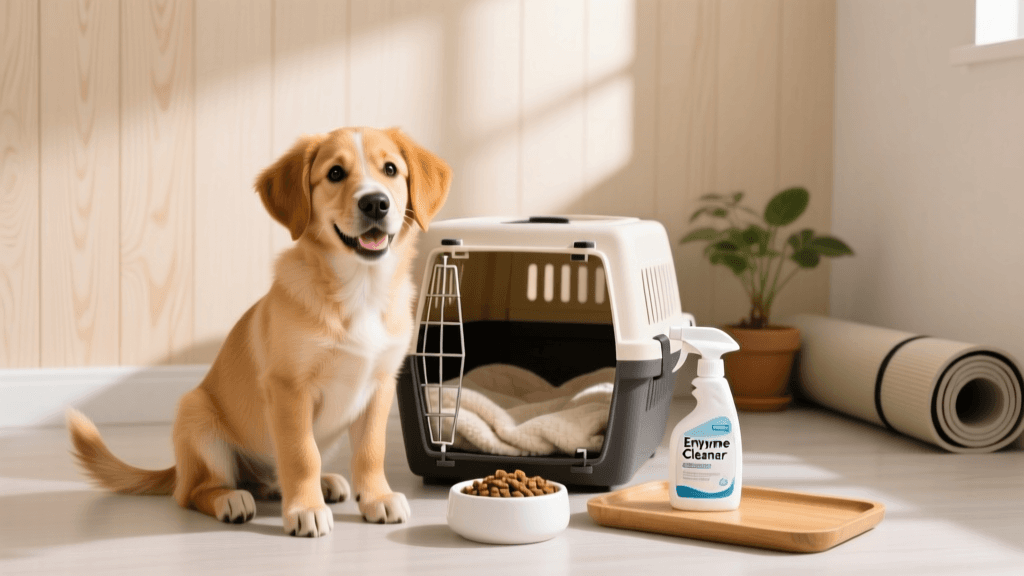
The Crate as a Sanctuary: The crate should never be used as a punishment. Place it in a low-traffic area of the living room or a quiet corner of the kitchen. Cover the top and sides with a breathable crate cover (around $25 to $40) to create a den-like atmosphere. Establish a strict rule: when the puppy is in the crate, it is invisible. Children must not talk to it, look at it, or tap on the wire.
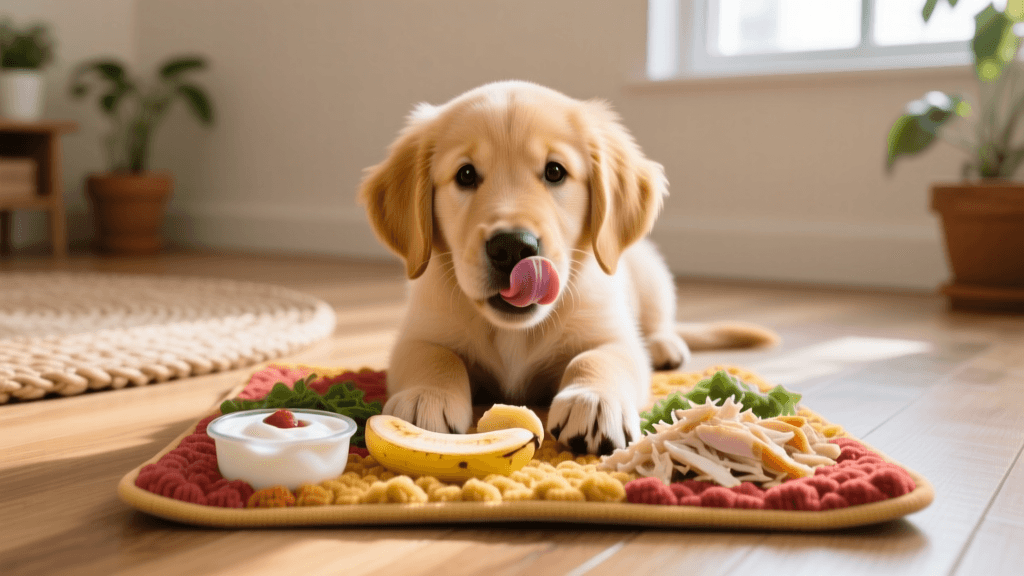
Toy Management: Puppies explore the world with their mouths, and a child's favorite plastic action figure can easily become a choking hazard or cause an intestinal blockage requiring expensive surgery. Use lidded toy bins for all children's toys. Provide the puppy with appropriate alternatives, such as the KONG Classic Puppy Toy (around $15), stuffed with frozen peanut butter or plain yogurt to soothe teething gums and keep them occupied for up to 45 minutes.
Expert Advice on Socialization Boundaries
'The goal of socialization is not just to expose your puppy to children, but to ensure the puppy feels safe and confident during those interactions. Quality of the interaction always trumps quantity. If a puppy shows signs of stress, the interaction must end immediately to prevent negative associations.'
Final Thoughts on Family Harmony
Raising a puppy alongside young children is a marathon, not a sprint. There will be days when the puppy nips a heel, steals a sock, or whines through the night. There will be days when the kids forget the rules and overwhelm the dog. Grace, patience, and consistent enforcement of boundaries are your best tools. By prioritizing safety, respecting the puppy's need for rest, and actively teaching your children empathy and canine body language, you are not just preventing accidents—you are raising compassionate humans and a well-adjusted, confident family dog.
priya-sutaria
All our authors care for dogs every day — read more of their work on the authors page.