How to Teach Kids and Dogs Safe Boundaries Together
Learn how to foster a safe, loving bond between your children and family dog with practical tips on boundaries, body language, and supervised play.

The Joy and Responsibility of Raising Kids with Dogs
Bringing a dog into a family with children is one of the most rewarding experiences a parent can have. Dogs teach kids about empathy, responsibility, and unconditional love. However, the intersection of toddler tantrums, unpredictable movements, and canine instincts requires careful management. According to the Centers for Disease Control and Prevention (CDC), children are the most common victims of dog bites, and these incidents frequently occur in the home with a familiar family pet. The key to prevention is not necessarily rehoming or avoiding dogs, but rather implementing strict, consistent boundaries and educating both the child and the dog.
As a parent, your role shifts from simply being a pet owner to becoming a mediator and safety advocate. This guide will walk you through actionable, age-appropriate strategies to ensure your children and your dog coexist peacefully, safely, and happily under one roof.
Understanding Canine Body Language: A Kid-Friendly Guide
Dogs communicate primarily through body language, but children are naturally wired to look for human cues like smiling or hugging. A dog showing its teeth is not smiling; a dog leaning away is not playing hard to get. The American Veterinary Medical Association (AVMA) stresses that teaching children to read canine stress signals is the first line of defense against accidental bites.
To make this digestible for young minds, translate complex canine behaviors into simple, kid-friendly concepts. Below is a chart you can use to teach your children what the family dog is trying to say.
| Dog Behavior | What the Dog is Feeling | Kid-Friendly Translation | Action for the Child |
|---|---|---|---|
| Lip licking, yawning, turning head away | Mild stress or discomfort | "I am feeling a little nervous and need space." | Stop petting, take a step back, and call an adult. |
| Whale eye (showing whites of eyes), stiff body | High stress, potential warning | "I am very upset and might snap if you do not stop." | Freeze, do not make eye contact, and slowly back away. |
| Wagging tail (stiff and high) | Arousal, agitation, not always happiness | "I am highly excited and might not be gentle." | Do not approach; let the dog sniff you first if an adult allows. |
| Rolling over, exposing belly (relaxed) | Trust, contentment | "I feel safe and love gentle belly rubs." | Pet gently on the chest or belly for a few seconds, then stop to see if they ask for more. |
Creating "Kid-Free" and "Dog-Free" Zones
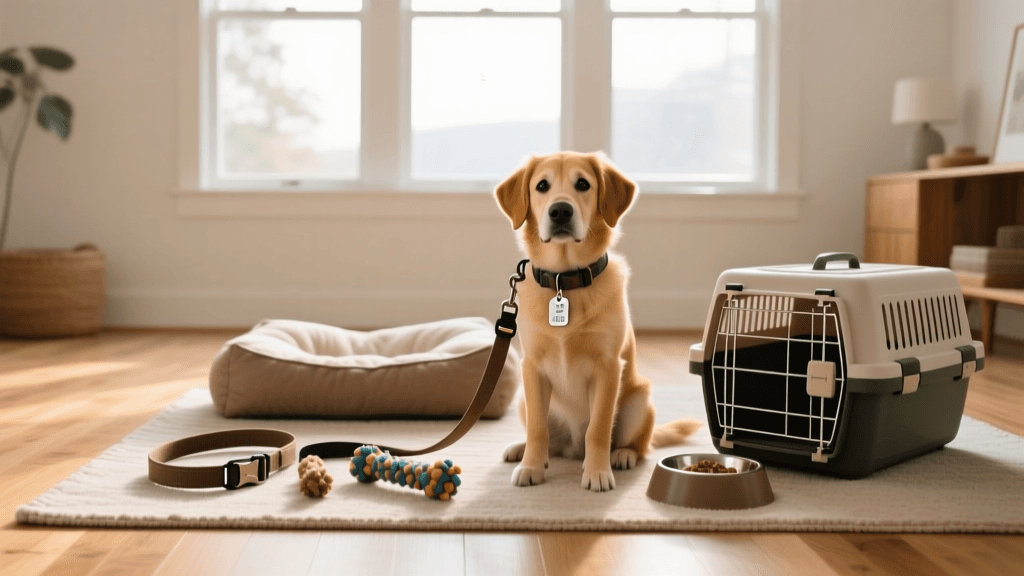
Both toddlers and dogs need a sanctuary where they can retreat without being bothered. Establishing physical boundaries in your home is crucial for mental decompression. For the dog, a crate or a gated room serves as a safe haven where they know no child will pull their tail or disrupt their sleep. For the child, a playpen or a gated living room area ensures they can play with loud, noisy toys without startling a resting dog.
Actionable Setup Tips:
- Hardware-Mounted Baby Gates: Invest in a hardware-mounted gate (like the Regalo Easy Step Walk Thru Gate, typically costing around $45 to $60) for high-traffic areas. Pressure-mounted gates can be pushed over by large, determined breeds like Labrador Retrievers or German Shepherds.
- Height Considerations: Ensure gates are at least 28 to 32 inches tall to prevent medium-to-large dogs from jumping over them.
- The Crate Rule: Teach children the golden rule: "If the dog is in their bed or crate, they are invisible." Never allow a child to reach into a crate, throw toys at the crate, or disturb a sleeping dog.
The "Be a Tree" Method for Safe Encounters
Kids are naturally inclined to run, scream, and flail their arms when excited. To a dog with a high prey drive or a nervous disposition, this behavior can trigger chasing or defensive biting. Teaching your children the "Be a Tree" method gives them a physical protocol to follow when the dog becomes too excited or if an unfamiliar dog approaches them.
How to Teach "Be a Tree":
- Stop Moving: Plant feet firmly together like tree roots.
- Fold Branches: Cross arms over the chest and tuck hands into armpits or fists.
- Look at Roots: Stare down at their own shoes. Direct eye contact can be seen as a challenge by an aroused dog.
- Be Quiet: Do not scream or squeal. Count silently in your head.
Practice this game in the living room when the dog is calm, rewarding your child with a sticker or small treat for holding the pose. Once mastered, it becomes an automatic reflex when the family dog gets the "zoomies" or jumps up on them.
Age-Appropriate Dog Care Chores
The American Society for the Prevention of Cruelty to Animals (ASPCA) emphasizes that involving children in pet care fosters empathy and respect. However, tasks must be matched to the child's developmental stage to ensure the safety of both the child and the dog. Resource guarding (where a dog becomes protective over food or toys) is a leading cause of bites, so food-related chores require strict age limits.
Toddlers (Ages 2-3)
- Task: Helping to pour pre-measured kibble into a bowl (with an adult holding the heavy bag).
- Task: Tossing a treat on the floor for the dog after the dog performs a sit command.
- Rule: Never allow toddlers near the dog while the dog is actively eating or chewing a high-value bone.
Young Children (Ages 4-6)
- Task: Filling the water bowl using a small, manageable pitcher.
- Task: Helping to brush the dog using a soft-bristle brush, strictly supervised, avoiding the face and tail.
- Task: Playing "find it" by hiding treats on the floor and encouraging the dog to sniff them out.
Older Children (Ages 7-10)
- Task: Walking the dog in a secure, fenced backyard or quiet neighborhood (only if the dog is leash-trained and the child is strong enough to hold the leash).
- Task: Teaching the dog new tricks using clicker training and positive reinforcement.
- Task: Washing the dog's paws after a muddy walk with a damp towel.
Active vs. Passive Supervision
Many parents believe they are supervising because they are in the same room as the child and the dog. However, there is a massive difference between passive and active supervision. Passive supervision means you are cooking dinner, checking your phone, or watching television while the child and dog are on the floor together. Active supervision means your eyes are on the interaction, your phone is put away, and you are ready to intervene within a fraction of a second.
If you cannot actively supervise, you must physically separate the dog and the child. Use a baby gate, put the dog in their crate with a Kong toy stuffed with frozen peanut butter, or place the child in a high chair. Management is always easier than dealing with the aftermath of a preventable bite.
Final Thoughts on Building a Lifelong Bond
Raising kids and dogs together is a marathon, not a sprint. There will be days when the toddler drops a crayon and the dog snatches it, or when the dog gets overly excited and knocks the child over. By focusing on proactive education, establishing safe zones, and modeling respectful behavior yourself, you lay the groundwork for a beautiful, lifelong friendship. Remember that your dog looks to you for guidance, and your children look to you to learn how to treat animals. Be the calm, consistent leader your family needs, and watch the magical bond between your child and your dog flourish safely.
jonas-cole
All our authors care for dogs every day — read more of their work on the authors page.