Stop Puppy Biting Fast: Diagnosis and Proven Solutions
Discover why your puppy bites and nips. Learn proven, step-by-step solutions, teething timelines, and the best toys to stop puppy biting fast.
The 'Land Shark' Phase: Understanding Puppy Biting
Bringing a new puppy home is an exhilarating experience, but many new owners are quickly introduced to the 'land shark' phase. Puppy biting and nipping are among the most common behavioral complaints during the first year of a dog's life. While it is entirely natural for puppies to explore their world using their mouths, sharp puppy teeth can cause pain, damage clothing, and frustrate families. To effectively stop puppy biting, we must first diagnose the root cause of the behavior before applying targeted, science-backed solutions.
Diagnosing the Root Cause of Puppy Nipping
Puppies do not bite out of malice or dominance. Instead, nipping is a symptom of an underlying physical or emotional need. According to the ASPCA, puppy mouthing is a normal developmental stage, but it requires consistent redirection to prevent it from becoming a problematic habit in adulthood. Diagnosing the trigger is the first step toward a solution.
Teething vs. Play Biting vs. Overstimulation
1. Teething Pain: Puppies go through an intense teething process. The discomfort of adult teeth pushing through the gums drives them to chew on anything that provides relief, including your fingers.
2. Play Biting: In the litter, puppies play-wrestle and bite their siblings. They are simply treating you like a littermate.
3. Overstimulation: Puppies lack emotional regulation. When they miss a nap, they become overtired, resulting in frantic, aggressive biting and 'zoomies'.
| Trigger | Symptoms & Signs | Immediate Solution |
|---|---|---|
| Teething Pain | Drooling, swollen gums, chewing furniture | Frozen KONG toy or chilled carrot |
| Play Biting | Nipping hands during interaction, wagging tail | Redirection to a tug toy |
| Overstimulation | Frantic biting, ignoring commands, zoomies | Enforced crate nap (1-2 hours) |
| Prey Drive | Biting moving ankles, pant legs, or shoelaces | Stop moving completely, toss a treat away |
The Puppy Teething Timeline
Understanding the biological timeline of teething helps set realistic expectations. VCA Animal Hospitals outlines the following developmental milestones for puppy teeth:
- 3 to 4 Weeks: Baby teeth (deciduous teeth) begin to erupt.
- 12 to 16 Weeks: Baby teeth begin to fall out, and adult teeth push through the gums. This is the peak period for painful nipping and destructive chewing.
- 6 Months: All 42 adult teeth should be fully erupted. If baby teeth remain, a veterinary extraction may be necessary.
Proven Solutions to Stop Puppy Biting
Once you have diagnosed the trigger, you can implement the following actionable solutions. Consistency from every family member is critical for these methods to work.
1. Teaching Bite Inhibition (The 'Ouch' Method)
Bite inhibition is the ability of a dog to control the force of its bite. The American Kennel Club (AKC) recommends mimicking littermate behavior. When your puppy's teeth touch your skin, let out a high-pitched 'Ouch!' or yelp, and immediately let your hand go limp. This startles the puppy and teaches them that human skin is entirely off-limits. If the puppy backs off, praise them calmly and offer an appropriate chew toy.
2. The Reverse Time-Out Technique
Some puppies become more excited when you yelp, interpreting it as a game. If the 'Ouch' method fails, use the Reverse Time-Out. The moment the puppy bites, stand up, cross your arms, and completely ignore them for 30 to 60 seconds. If they persist, calmly step over a baby gate or leave the room for one minute. This teaches the puppy a clear cause-and-effect lesson: biting makes the fun and attention disappear.
3. Strategic Redirection with Teething Toys
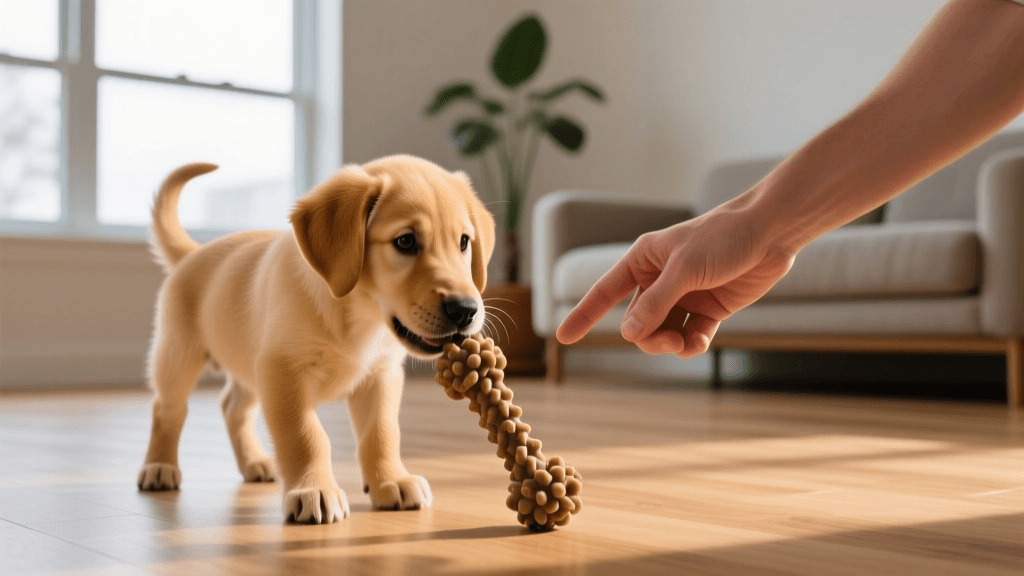
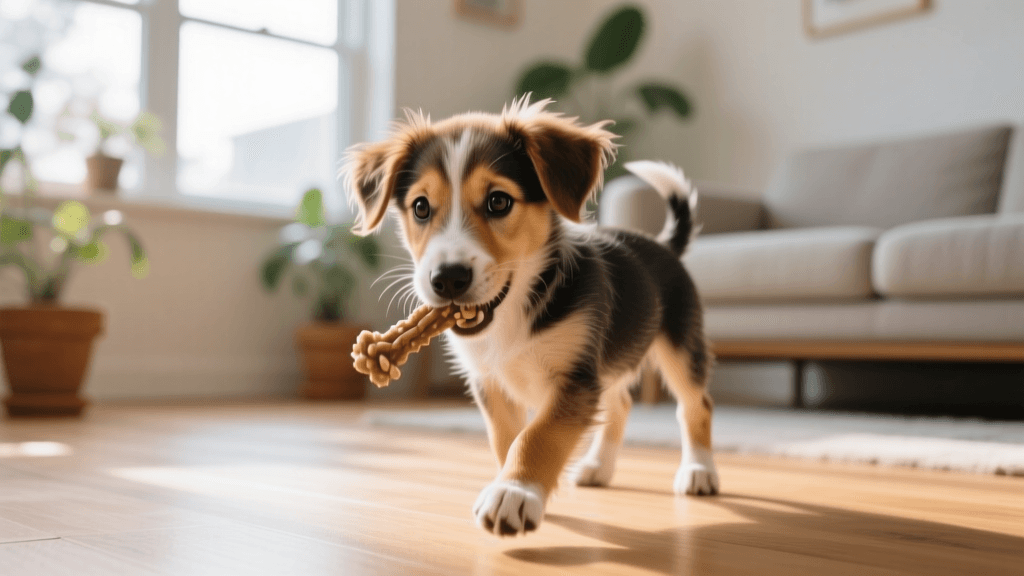
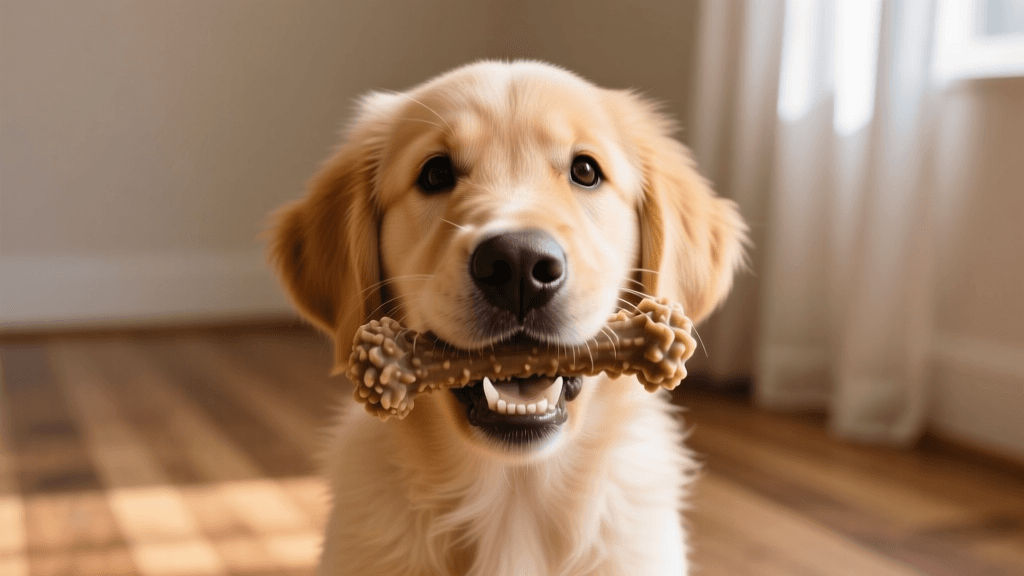
You cannot simply tell a teething puppy to stop chewing; you must give them an acceptable alternative. Always have a toy within arm's reach to trade for your hand. Recommended products include:
- KONG Classic (Red): Costing around $12-$15, this durable rubber toy can be stuffed with plain pumpkin puree or plain Greek yogurt and frozen overnight. The cold rubber numbs sore gums.
- Nylabone Puppy Power Chew: Priced at $8-$10, these are designed specifically for the softer jaws of puppies and feature raised nubs that clean teeth.
- Frozen Carrots: A cost-effective, low-calorie, and natural alternative that provides excellent crunch and cold relief.
Note: Avoid hard antlers or ice cubes, as these can fracture fragile puppy teeth.
4. Enforced Naps for Overtired Puppies
Puppies require 18 to 20 hours of sleep per day. A common mistake new owners make is keeping puppies awake to 'tire them out.' In reality, an overtired puppy is a biting puppy. Implement an 'Enforced Nap' schedule: for every 1 hour the puppy is awake and playing, they must spend 2 hours asleep in their crate or a quiet playpen. Using a product like the Snuggle Puppy ($30-$40), which includes a simulated heartbeat, can drastically reduce crate anxiety and help overtired puppies settle down quickly.
What NOT to Do: Avoiding Outdated Punishments
Modern veterinary behavioral science strongly advises against physical punishment. Tapping a puppy on the nose, holding their mouth shut, or performing 'alpha rolls' will not teach bite inhibition. Instead, these aversive methods induce fear, damage the bond of trust, and can lead to defensive aggression later in life. Furthermore, using bitter sprays (like Bitter Apple, ~$10) on your hands is ineffective; these sprays are designed for static objects like furniture legs, not for active, moving targets like human hands.
When to Consult a Professional
While most puppy biting resolves with consistent redirection and maturity, you should consult a certified professional dog trainer (CPDT) or a veterinary behaviorist if your puppy breaks the skin, exhibits resource guarding (growling when you approach their food or toys), or if the biting is accompanied by stiff body language and a fixed stare. Early intervention is the key to raising a well-adjusted, gentle adult dog.
'Puppies explore the world with their mouths, just as human babies explore with their hands. Our job is not to punish the exploration, but to guide it toward appropriate outlets.' — Veterinary Behavior Consensus
robin-maitland
All our authors care for dogs every day — read more of their work on the authors page.