How to Stop Puppy Biting: Diagnosis and Proven Solutions
Discover why your puppy bites and nips. Learn actionable, step-by-step solutions to stop puppy biting using redirection, timeouts, and bite inhibition.
The Landmine Phase: Diagnosing and Stopping Puppy Biting
Bringing a new puppy home is a joyous occasion, but that joy can quickly turn into frustration when your furry friend's needle-sharp teeth sink into your ankles, hands, or favorite shoes. Puppy biting and nipping are among the most common behavioral challenges new dog owners face. While it is a normal developmental phase, it is a problem that requires immediate, consistent diagnosis and intervention. If left unchecked, playful nipping can evolve into painful, hard-to-break habits in adulthood.
As a senior dog care specialist, I often see owners make the mistake of treating all puppy biting as aggression or, conversely, dismissing it as a phase that will magically resolve. Neither is true. To effectively stop puppy biting, we must first diagnose the root cause of the behavior and then apply targeted, actionable solutions. This comprehensive guide will walk you through the exact developmental milestones, triggers, and proven training techniques to save your skin and raise a well-mannered adult dog.
Diagnosing the Root Cause of Puppy Biting
Before implementing a training protocol, you must understand why your puppy is biting. Puppies explore the world with their mouths, but the motivation behind the nipping usually falls into one of three distinct categories.
1. Teething Pain and Discomfort
Puppies go through a rapid dental development phase. According to the Humane Society of the United States (HSUS), puppies begin getting their baby teeth at 3 to 4 weeks of age. By 12 to 16 weeks, these baby teeth fall out to make room for adult teeth. This process causes significant gum inflammation, itching, and pain. If your puppy is chewing aggressively on hard surfaces, furniture legs, or your fingers, they are likely seeking counter-pressure to soothe their aching gums.
2. Overstimulation and Overtiredness
Puppies are essentially canine toddlers; they do not know how to self-regulate their sleep. A growing puppy requires 18 to 20 hours of sleep per day. When an 8-to-12-week-old puppy has been awake for more than 60 to 90 minutes, they become overtired. The resulting behavior often looks like hyperactivity, 'zoomies,' and frantic, painful nipping. If your puppy turns into a biting landmine in the evening, the diagnosis is almost certainly sleep deprivation, not malice.
3. Prey Drive and Play Behavior
In the litter, puppies learn how to interact with their siblings through wrestling and mouthing. When they move to a human home, they naturally apply these same play rules to your hands and feet. Furthermore, certain breeds (like herding dogs or terriers) have a high genetic prey drive, making moving objects like your ankles highly stimulating. The American Kennel Club (AKC) notes that teaching 'bite inhibition'—the ability to control the force of a mouthing bite—is a critical early developmental milestone that must be taught by the owner if the puppy was separated from its littermates too early.
Actionable Solutions to Stop Puppy Nipping
Once you have identified the trigger, you can deploy the appropriate solution. Consistency is paramount; every member of the household must follow these protocols exactly.
Solution 1: The 'Ouch' Method and Bite Inhibition
For play-biting, your goal is to teach the puppy that human skin is entirely off-limits. When the puppy's teeth make contact with your skin:
- Step 1: Immediately emit a high-pitched yelp or say 'Ouch!' in a sharp, surprised tone. This mimics the sound a littermate would make.
- Step 2: Go completely limp and withdraw your attention for 10 to 15 seconds. Turn your back or step over a baby gate.
- Step 3: Once the puppy is calm, return and redirect their mouth to an appropriate chew toy.
Note: If your puppy gets more excited by the yelp, skip the vocalization and simply use the silent withdrawal of attention.
Solution 2: Strategic Redirection with Appropriate Toys
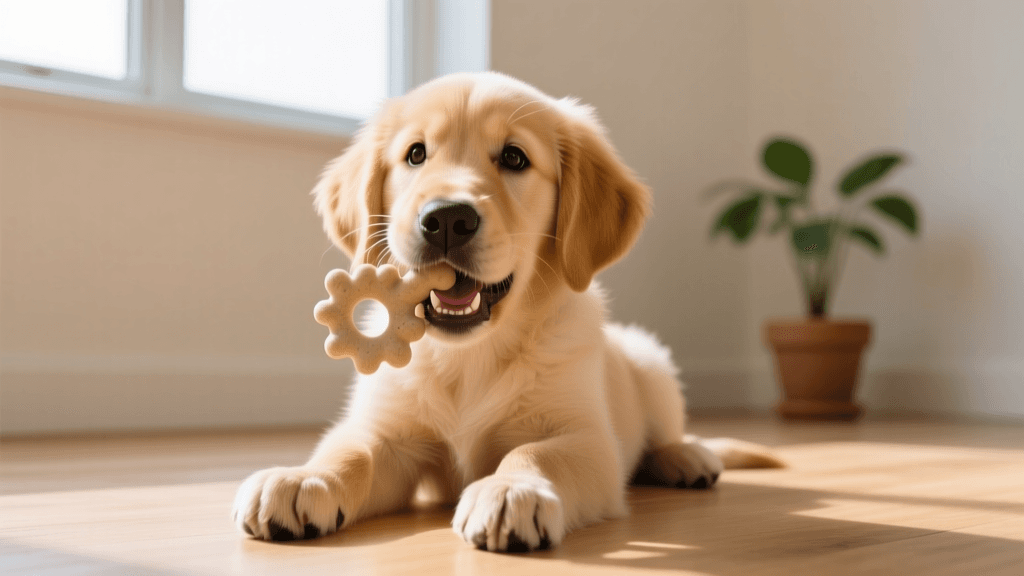
Never tell a puppy what not to do without telling them what to do. Always have a designated chew toy within arm's reach. When teething is the diagnosed cause, temperature and texture matter.
- KONG Classic Puppy (Pink/Blue): Costing around $12, this rubber toy can be stuffed with puppy-safe peanut butter or plain yogurt and frozen. The cold numbs the gums while the texture satisfies the urge to chew.
- Nylabone Puppy Chew: Priced at approximately $8, these are designed specifically for puppies' softer teeth and gums. Avoid adult Nylabones, which can fracture baby teeth.
- Frozen Carrots: A cheap, healthy, and edible alternative that provides excellent relief for inflamed gums.
Solution 3: Enforced Nap Times (The Timeout Method)
If the diagnosis is overtiredness, training will not work. The puppy's brain is too fatigued to learn. You must enforce a nap in a safe, quiet space like a crate or an exercise pen.
Pro Tip: Use the '1-hour awake, 2-hours asleep' rule for 8-to-12-week-old puppies. Set a timer on your phone. When the timer goes off, it is time for a nap, regardless of how much energy the puppy seems to have.
To make the crate a positive sleep environment, consider investing in a Snuggle Puppy with Heartbeat (approx. $40). The simulated heartbeat and included heat pack mimic the feeling of sleeping against littermates, drastically reducing crate anxiety and helping the puppy transition to sleep faster.
What NOT to Do: Common Mistakes That Worsen Biting
When dealing with sharp puppy teeth, human frustration can lead to counterproductive and even harmful reactions. Avoid these common pitfalls:
- Physical Punishment: Never hit, tap, or hold a puppy's mouth shut. According to the American Veterinary Society of Animal Behavior (AVSAB), aversive training methods increase fear and anxiety, which can actually trigger defensive aggression and worsen biting.
- Pushing Away: If a puppy bites your hand and you push them away, they will interpret this as a wrestling game and bite harder. Always pull your hand away or go limp.
- Waving Hands/Face: Keeping your hands close to the puppy's face while talking in a high-pitched voice encourages them to jump and nip. Keep your hands low and calm.
Puppy Biting Triggers and Solutions Chart
Use this quick-reference table to diagnose and treat the specific type of biting your puppy is exhibiting.
| Trigger Scenario | Likely Diagnosis | Immediate Solution | Recommended Tool / Cost |
|---|---|---|---|
| Biting hands during petting | Overstimulation / Play | Yelp, withdraw attention, redirect | Plush Squeaky Toy ($10) |
| Chewing furniture legs or shoes | Teething pain / Boredom | Block access, offer cold chew | Frozen KONG or Carrots ($12) |
| Evening zoomies and frantic nipping | Overtiredness | Enforced crate nap immediately | Covered Crate, Snuggle Puppy ($40) |
| Biting ankles when walking | Prey drive / Herding instinct | Stop moving, U-turns, flirt pole play | Flirt Pole Toy ($20) |
When to Seek Professional Help
While 95% of puppy biting is normal developmental behavior, there are rare instances where professional intervention is required. If your puppy exhibits stiff body language, growling, or snapping when guarding food, toys, or sleeping areas, this is not normal play. This is resource guarding.
Additionally, if you have consistently applied redirection and enforced naps for 3 to 4 weeks with zero improvement, consult a certified professional dog trainer (CPDT-KA) or a veterinary behaviorist. Enrolling in a well-run Puppy Kindergarten class (typically costing $100 to $200 for a 6-week course) is an excellent way to socialize your puppy and allow them to learn bite inhibition directly from other vaccinated puppies in a controlled environment.
Conclusion
Surviving the puppy biting phase requires patience, consistency, and a solid understanding of canine development. By accurately diagnosing whether your puppy is teething, overtired, or simply playing, you can apply the correct solution—from frozen KONGs to enforced naps. Remember, every time you redirect a puppy's teeth from your skin to an appropriate toy, you are actively building the foundation for a gentle, well-behaved adult dog. Stay consistent, protect your skin, and know that this challenging phase is temporary.
hannah-wickes
All our authors care for dogs every day — read more of their work on the authors page.