How to Stop Dog Resource Guarding: Diagnosis and Fixes
Discover why dogs resource guard food, toys, and spaces. Learn expert diagnosis signs and step-by-step solutions to stop canine resource guarding safely.
Understanding Canine Resource Guarding
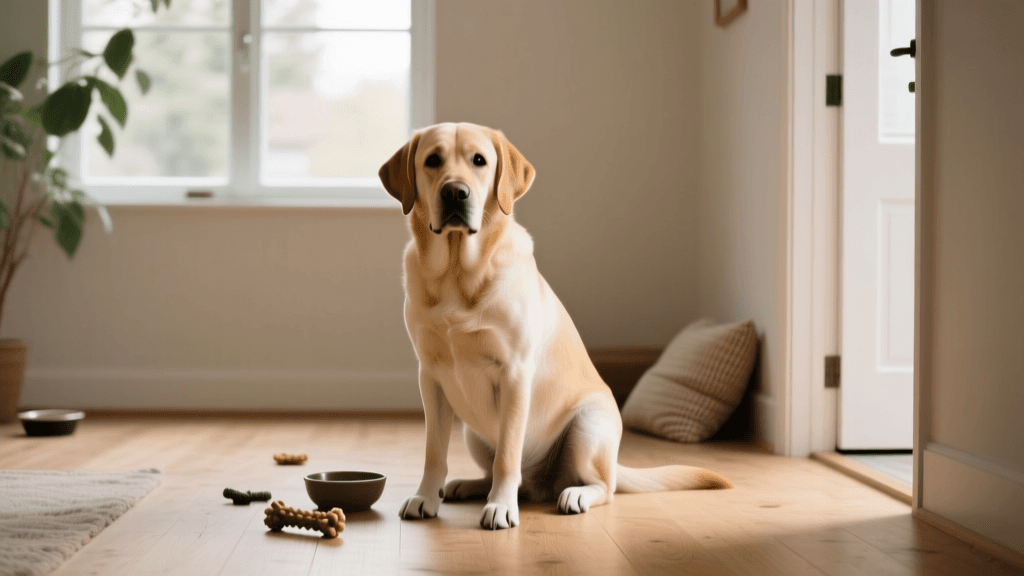
Resource guarding, sometimes referred to as possessive aggression, occurs when a dog exhibits defensive behaviors to retain control over a highly valued item. This item could be anything from a bowl of kibble and a favorite plush toy to a specific sleeping spot, a stolen sock, or even a beloved human family member. While guarding is a deeply ingrained evolutionary survival instinct, it becomes a significant behavioral problem when it poses a bite risk to humans or other pets in the home. Understanding the psychology behind this behavior is the critical first step toward effective rehabilitation and ensuring a safe household.
Diagnosing the Problem: Signs of Resource Guarding
Diagnosing resource guarding requires a keen eye for subtle canine body language. Dogs rarely bite without warning; instead, they escalate through a well-documented ladder of communication signals. Unfortunately, early signs are frequently missed by owners who are not familiar with canine stress indicators, leading to the false assumption that a bite happened 'out of nowhere.'
According to the ASPCA, common early warning signs include:
- Whale Eye: The dog turns its head away from the item but keeps its eyes fixed on the approaching person, showing the whites of the eyes.
- Lip Licking and Yawning: Repeated, out-of-context lip licking or yawning indicates rising anxiety.
- Body Stiffening: The dog freezes completely and tenses its muscles over the item.
- Hovering: Standing rigidly over a food bowl or toy to block access.
- Low Growling: A deep, rumbling vocalization meant to increase distance.
- Snapping or Biting: The final, most severe escalation when distance-increasing warnings are ignored.
The Resource Guarding Severity Scale
Use the table below to diagnose the severity of your dog's guarding behavior and determine the appropriate immediate action plan.
| Severity Level | Canine Body Language | Risk Level | Immediate Action Plan |
|---|---|---|---|
| Level 1 (Mild) | Stiffening, eating faster, whale eye | Low | Begin desensitization; do not punish. |
| Level 2 (Moderate) | Hovering, low growling, lip curling | Medium | Implement management; start 'Trade-Up' game. |
| Level 3 (Severe) | Air snapping, lunging without contact | High | Strict environmental management; consult a pro. |
| Level 4 (Critical) | Biting, puncture wounds, repeated attacks | Critical | Immediate muzzle training; hire a behaviorist. |
Why Do Dogs Guard Resources?
The psychology behind resource guarding stems from a scarcity mindset. In the wild, canines must protect their food and shelter to survive. In a domestic setting, this instinct can be triggered by genetics, early life experiences (such as having to compete with littermates for milk), or past trauma in shelter environments where resources were limited. Furthermore, well-intentioned owners sometimes accidentally reinforce guarding by repeatedly taking items away from puppies without offering a replacement, teaching the dog that human hands near their possessions equal loss.
Proven Solutions to Stop Resource Guarding
Modifying resource guarding requires patience, consistency, and a shift in how the dog perceives human proximity to their valuables. The goal is to change the dog's emotional response from 'I must defend this' to 'When humans approach, amazing things happen.'
1. Environmental Management
Management prevents the dog from practicing the unwanted behavior while you work on training. If a dog guards food, feed them in a separate room or inside a crate. If they guard spaces like the couch, use physical barriers. Investing in a sturdy baby gate, such as the Regalo Easy Step Walk Thru Gate (typically costing between $35 and $45), allows you to block off high-risk areas like the kitchen during meal prep. Management is not a cure, but it is a vital safety net that prevents bites and reduces the dog's daily stress.
2. The 'Trade-Up' Game
Never forcefully pry an item from a guarding dog's mouth. Instead, teach them that giving up an item results in receiving something vastly superior. This builds trust and eliminates the fear of loss.
How to execute the Trade-Up:
- Wait until your dog has a low-value item (e.g., a basic rubber chew toy).
- Approach calmly and present a high-value treat, such as Zuke's Mini Naturals or freeze-dried beef liver (approx. $15 per bag), right in front of their nose.
- The moment they drop the toy to eat the treat, praise them calmly.
- Once they finish the treat, you can either give the original toy back (which builds immense trust) or toss a second treat away from the toy so you can safely pick it up.
- Practice this for 5 to 10 minutes, twice daily, starting with low-value items before moving to high-value bones or stolen objects.
3. Desensitization and Counterconditioning (DS/CC)
For dogs that guard food bowls or stationary locations, DS/CC is the gold standard. The objective is to change the dog's emotional association with your approach.
- Find the Threshold: Determine the distance at which your dog notices you approaching but does not stiffen or growl (e.g., 10 feet away).
- The Toss: As you walk past at that safe distance, toss a high-value treat (like boiled chicken or hot dog pieces) directly into their bowl or near their guarded space. Keep walking past them. Do not stop and loom over them.
- Decrease Distance: Over several weeks, gradually decrease the distance by 1 to 2 feet per session, provided the dog remains relaxed.
- Timing: Keep sessions short—no more than 3 to 5 minutes—to prevent the dog from becoming overwhelmed or satiated.
What NOT to Do: The Danger of Punishment
A common and dangerous misconception is that owners must 'show the dog who is boss' by forcefully taking items away, performing alpha rolls, or using shock collars to suppress growling. The American Veterinary Society of Animal Behavior (AVSAB) strongly advises against the use of dominance theory and confrontational punishment. Punishing a growl does not remove the dog's underlying anxiety or desire to guard; it merely suppresses the warning system. This results in a dog that skips the growl and goes straight to biting, creating a much more dangerous animal.
Managing Multi-Dog Households
Resource guarding between dogs requires strict logistical management. Never feed dogs from the same bowl or leave high-value chews (like rawhide or bully sticks) available when both dogs are loose in the same room. Utilize separate crates or baby gates during feeding times. According to the American Kennel Club (AKC), picking up all toys and only distributing them during supervised, separated play sessions can drastically reduce canine-to-canine conflict. Always monitor body language when both dogs are in the same space, and intervene by redirecting their attention before stiffening or staring begins.
When to Call a Professional
While mild guarding can often be resolved with consistent at-home training, severe cases require professional intervention. You should immediately seek the help of a certified professional if your dog has broken skin, if the guarding involves children, or if the dog is guarding unpredictable items (like dropped medication or trash).
Look for a certified behavior consultant through organizations like the International Association of Animal Behavior Consultants (IAABC) or the Certification Council for Professional Dog Trainers (CCPDT). Expect to invest between $150 and $300 per private session. A professional will provide a customized behavior modification plan, teach you how to read micro-expressions, and guide you through safe muzzle conditioning if necessary.
Conclusion
Resource guarding is a manageable behavioral issue when approached with empathy, science-based protocols, and strict environmental management. By diagnosing the severity of the behavior early, avoiding confrontational punishment, and consistently applying the Trade-Up and Desensitization games, you can help your dog feel secure. Remember, the goal is not to prove dominance, but to build a relationship where your dog trusts that your presence near their valuables always predicts wonderful outcomes.
robin-maitland
All our authors care for dogs every day — read more of their work on the authors page.