How to Stop Dog Leash Reactivity: Diagnosis and Fixes
Discover the root causes of dog leash reactivity. Learn actionable diagnosis steps, counter-conditioning techniques, and the best gear to stop lunging.
Understanding Leash Reactivity: More Than Just 'Bad' Behavior
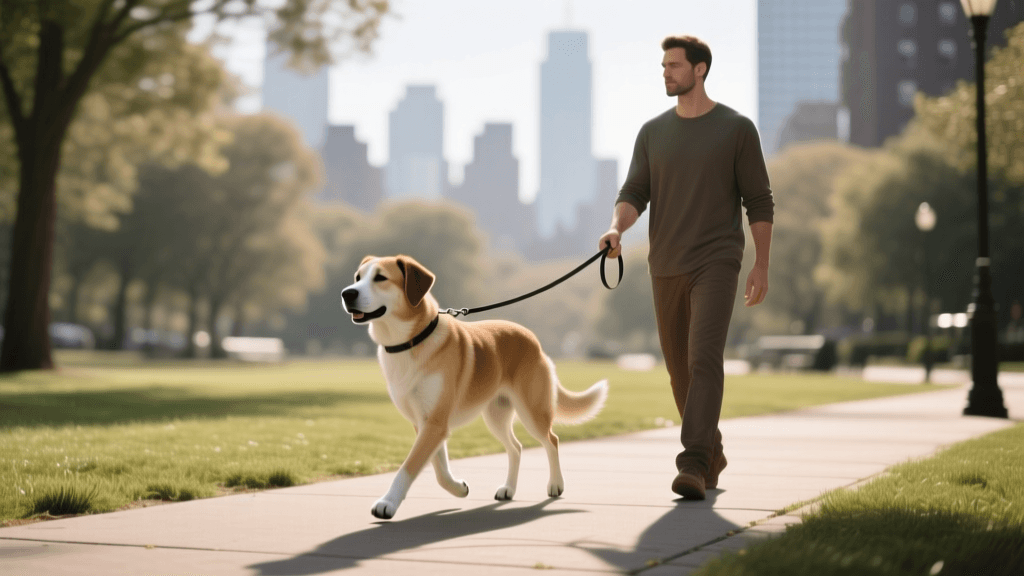
Leash reactivity is one of the most stressful challenges a dog owner can face. If your dog barks, lunges, or growls at other dogs, people, or bicycles while on a walk, you are not alone. Reactivity is not necessarily a sign of an 'aggressive' or 'bad' dog; rather, it is an emotional response to a perceived trigger while the dog feels restricted by the leash. To effectively solve this problem, we must move away from punitive measures and instead focus on problem diagnosis, threshold management, and counter-conditioning. This comprehensive guide will help you diagnose the root cause of your dog's reactivity, select the proper training gear, and implement the highly effective 'Engage-Disengage' protocol to transform your daily walks.
Diagnosing the Root Cause: Fear vs. Frustration
Before implementing a solution, you must accurately diagnose why your dog is reacting. Leash reactivity generally stems from two distinct emotional states: fear-based reactivity and frustration-based reactivity (often called barrier frustration). Misdiagnosing the root cause can lead to training methods that inadvertently make the problem worse.
Fear-Based Reactivity
Fear-based reactivity occurs when a dog perceives a trigger (like an approaching dog) as a threat. The leash prevents the dog from exhibiting their natural 'flight' response, so they resort to 'fight' behaviors—barking and lunging—to create distance and make the threat go away. You can diagnose fear-based reactivity by observing your dog's body language. Look for pinned ears, a tucked tail, 'whale eye' (showing the whites of the eyes), lip licking, yawning, and a tense, lowered posture. According to the Humane Society's resource on helping fearful dogs, forcing a fearful dog into close proximity with their trigger (a technique known as flooding) can lead to severe behavioral fallout and increased aggression. The solution for fear is counter-conditioning: changing the dog's emotional response to the trigger from 'scary' to 'predictor of good things'.
Frustration-Based Reactivity (Barrier Frustration)
Frustration-based reactivity occurs when a dog is highly social and wants to approach the trigger, but the leash acts as a physical barrier. This restriction causes a buildup of arousal that explodes into barking and lunging. These dogs often have a forward-leaning posture, a high and wagging tail, and may whine or paw at the ground. Ironically, these dogs may play beautifully off-leash but look terrifying on a leash. The solution for frustration is impulse control training and teaching the dog that calm behavior, rather than pulling, earns access to what they want.
The Danger of Trigger Stacking
When diagnosing reactivity, owners must understand 'trigger stacking.' This is a physiological phenomenon where multiple minor stressors compound over a few days, raising the dog's baseline cortisol levels. A dog might ignore a bicycle on Monday, tolerate a loud truck on Tuesday, but explode at a distant dog on Wednesday because their stress 'bucket' is overflowing. Recognizing trigger stacking means giving your dog 'decompression days' with sniffaris in quiet areas instead of forcing them into high-stress urban environments.
Essential Gear for Reactive Dog Training
Using the wrong equipment can exacerbate reactivity. Choke chains, prong collars, and slip leads rely on positive punishment (adding pain to stop a behavior). While they may suppress the barking temporarily, they do not change the underlying emotional response. In fact, if a dog feels pain from a collar every time they see another dog, they will begin to associate the other dog with pain, worsening fear-based reactivity. The ASPCA's comprehensive guide on common dog behavior issues strongly advocates for force-free, humane equipment that prioritizes the dog's physical and emotional well-being.
Below is a comparison chart of the most effective gear for managing and training a reactive dog:
| Gear Type | Recommended Product | Approx. Cost | Best For | Sizing & Fit Tip |
|---|---|---|---|---|
| Front-Clip Harness | Ruffwear Front Range | $40 - $50 | Pullers & Mild Reactivity | Measure girth behind front legs; allow two fingers under straps. |
| Head Halter | PetSafe Gentle Leader | $15 - $20 | Severe Lunging & Large Dogs | Nose loop should be snug but loose enough to slide to the back of the neck. |
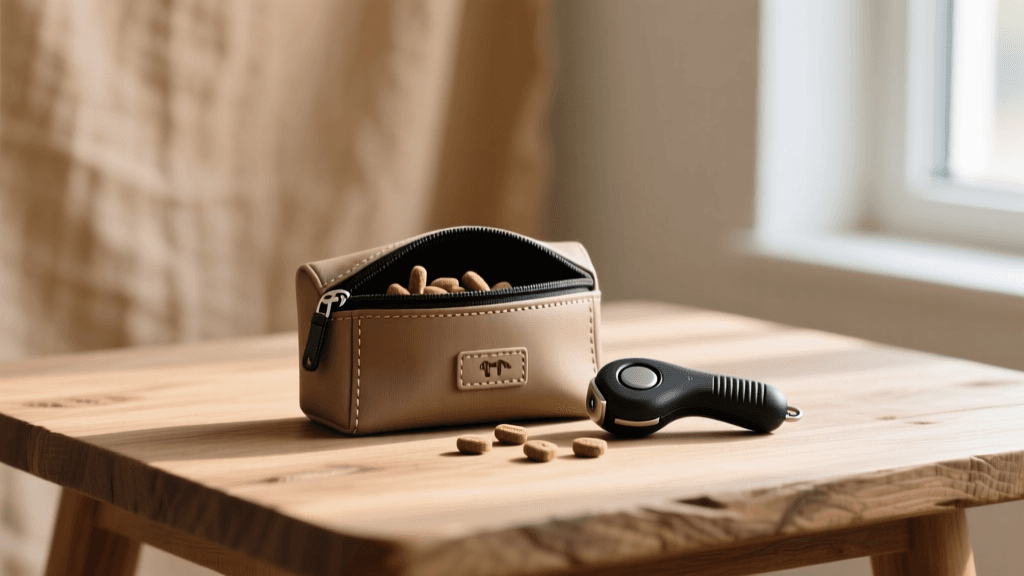
| Treat Pouch | Ruffwear Treat Trader | $25 - $30 | Fast Reward Delivery (0.5s) | Wear on the waist, not across the chest, for fastest hand access. |
| Long Line | Signature K9 Biothane | $30 - $45 | Safe Distance Training | Use a 15-30ft line; attach to the back clip of the harness, never a collar. |
The Engage-Disengage Game: A Step-by-Step Solution
Developed by certified dog behavior consultants, the Engage-Disengage game is the gold standard for treating leash reactivity. It utilizes classical counter-conditioning and operant conditioning to teach the dog to voluntarily look away from a trigger. To succeed, you need a clicker (or a verbal marker word like 'Yes!'), a treat pouch filled with high-value rewards (boiled chicken, freeze-dried liver, or string cheese), and an environment where you can control the distance to the trigger.
Step 1: Find the Sub-Threshold Distance
A dog 'under threshold' is aware of the trigger but is still capable of thinking, learning, and eating treats. A dog 'over threshold' is in fight-or-flight mode and will refuse food. Your first task is to find your dog's threshold distance. For some dogs, this is 50 feet; for others, it is a quarter of a mile. If your dog will not eat a piece of hot dog, you are too close. Increase the distance immediately.
Step 2: Mark the 'Engage' (Level 1)
Stand at your sub-threshold distance with your dog. The moment your dog looks at the trigger (the 'engage'), immediately mark the behavior with your clicker or 'Yes!' within 0.5 seconds. Then, deliver a high-value treat. Do not ask your dog to sit or look at you first. The sequence is: Dog looks at trigger -> Click -> Dog turns to you for treat. Repeat this 10 to 15 times per session. You are rewiring the brain to think, 'Seeing that dog makes chicken appear.'
Step 3: Wait for the 'Disengage' (Level 2)
Once your dog is consistently expecting a treat after looking at the trigger, move to Level 2. When your dog looks at the trigger, wait a beat. Do not click immediately. Wait to see if your dog voluntarily turns their head away from the trigger to look at you (the 'disengage'). The exact second they look away, click and reward. This teaches the dog an active coping skill: looking away from the scary thing to check in with the handler.
Emergency Protocols: When Things Go Wrong
Even with meticulous planning, you will inevitably encounter an off-leash dog or a trigger that appears around a blind corner. When your dog is pushed over threshold, training goes out the window. You must switch from training mode to management mode to prevent a rehearsal of the reactive behavior.
The Emergency U-Turn
Practice the Emergency U-Turn in your living room first. Say a unique cue like 'Let's Go!' in a cheerful, high-pitched voice, pivot 180 degrees on your heel, and run a few steps in the opposite direction. When your dog catches up, deliver a jackpot of treats (3-5 pieces of high-value food). On a real walk, if a trigger appears unexpectedly, use this cue to immediately create distance before your dog can react.
Scatter Feeding ('Find It')
If you are trapped (e.g., waiting at a crosswalk while a dog walks past), use the 'Find It' protocol. Toss a handful of treats into the grass and say 'Find it!' Sniffing is a naturally calming, self-soothing behavior for dogs that actively lowers their heart rate and reduces cortisol levels. It also forces your dog's nose to the ground, breaking their visual lock on the approaching trigger.
Tracking Progress and Final Thoughts
Rehabilitating a reactive dog is a marathon, not a sprint. Keep a training journal to track your dog's threshold distances and note any instances of trigger stacking. Be aware of 'spontaneous recovery,' a psychological phenomenon where a previously extinguished reactive behavior suddenly reappears during a period of stress or environmental change. When this happens, simply return to Level 1 of the Engage-Disengage game at a greater distance.
By accurately diagnosing whether your dog is acting out of fear or frustration, equipping yourself with force-free gear like a front-clip harness, and consistently applying counter-conditioning protocols, you can drastically reduce your dog's leash reactivity. For further reading on canine behavior modification, consult the American Kennel Club's training resources and consider hiring a Certified Professional Dog Trainer (CPDT-KA) or a Veterinary Behaviorist to guide you through the process safely.
priya-sutaria
All our authors care for dogs every day — read more of their work on the authors page.