Best Mental Enrichment Puzzle Toys for Senior Dogs 2026
Discover the best snuffle mats and puzzle toys for senior dogs in 2026. Boost cognitive health, slow aging, and enrich your aging pup's daily routine.
The Hidden Epidemic: Canine Cognitive Dysfunction in 2026
As our canine companions live longer than ever before, thanks to advancements in veterinary medicine and premium nutrition, a new challenge has taken center stage in 2026: cognitive decline. Much like humans, aging dogs are susceptible to neurodegenerative conditions. According to the American Kennel Club (AKC), Canine Cognitive Dysfunction (CCD) affects a significant percentage of dogs over the age of eight. Symptoms often manifest as disorientation, altered sleep-wake cycles, house soiling, and a noticeable decrease in social interactions.
While pharmaceutical interventions exist, veterinary behaviorists are increasingly turning to proactive, non-invasive strategies to maintain brain health. Mental enrichment and puzzle games have emerged as the gold standard for preserving neuroplasticity in senior dogs. By challenging their brains daily, we can build cognitive reserve, effectively slowing the progression of age-related mental decline and keeping our senior pups sharp, engaged, and happy.
The Science Behind Mental Enrichment for Aging Dogs
Why do puzzle toys and snuffle mats work so well for older dogs? The answer lies in neurogenesis and synaptic plasticity. When a dog engages in scent work or problem-solving, their brain releases dopamine, a neurotransmitter associated with reward and motivation. This process stimulates the growth of new neural connections.
Furthermore, mental exercise is remarkably efficient. A widely accepted rule of thumb among canine enrichment specialists is that fifteen minutes of intense mental stimulation (like sniffing out hidden kibble in a complex snuffle mat) can be as physically exhausting as a one-hour walk. For senior dogs suffering from arthritis, hip dysplasia, or general fatigue, this low-impact, high-reward activity is the perfect way to burn off restless energy without stressing aging joints. The ASPCA's Senior Dog Care guidelines strongly recommend adapting a dog's exercise routine to include more mental stimulation as their physical mobility naturally decreases.
Top Rated Puzzle Toys and Snuffle Mats for Senior Dogs (2026 Editions)
Navigating the pet market in 2026 can be overwhelming, with hundreds of new 'smart' toys releasing every month. However, when it comes to senior dogs, simplicity, tactile feedback, and scent-based engagement are far superior to flashy, battery-operated gadgets. Here are the top three vet-recommended enrichment tools for aging dogs this year.
1. Paw5 Wooly Snuffle Mat
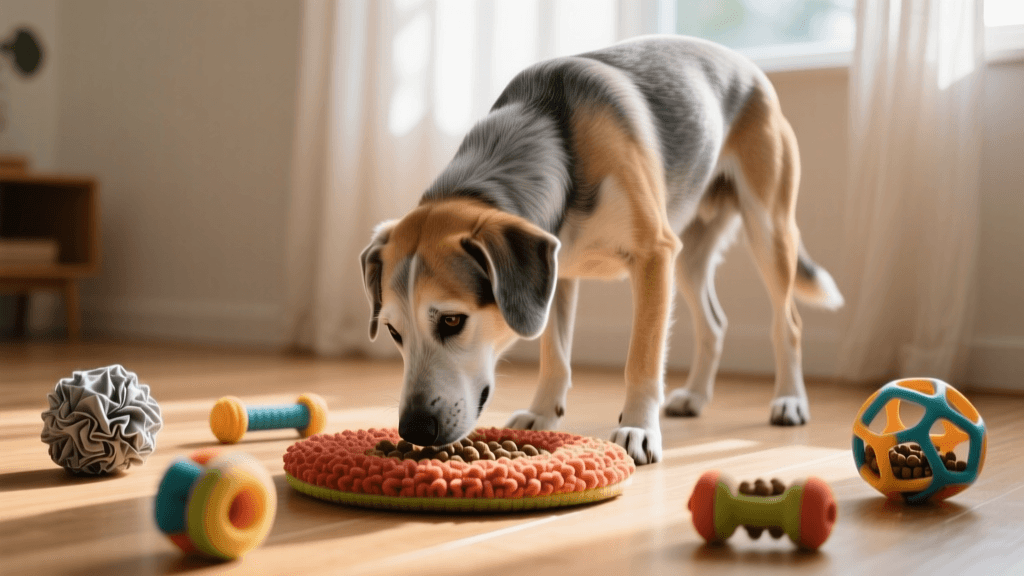
The Paw5 Wooly Snuffle Mat remains a top-tier choice for senior dogs in 2026. Made from sustainable, upcycled materials, this mat mimics the texture of tall grass, allowing dogs to engage in their most primal instinct: foraging. For senior dogs with failing eyesight, the Wooly mat relies entirely on olfactory senses, making it incredibly accessible. You can easily hide soft treats, kibble, or even a portion of their daily meal within the dense fabric strands. It is fully machine washable, which is essential for maintaining hygiene, especially if your older dog occasionally has accidents or drools while focusing.
2. Outward Hound Dog Brick Interactive Puzzle
For seniors who still have good paw dexterity but need cognitive challenges, the Outward Hound Dog Brick is a classic that has stood the test of time. This intermediate-level puzzle features sliding blocks and flip lids. The 2026 models have been updated with heavier, non-slip bases to prevent the toy from sliding across hardwood floors, which is crucial for older dogs with compromised traction and balance. It encourages the dog to use their paws and nose in tandem, promoting cross-lateral brain activity. Just be sure to supervise your senior dog to ensure they do not try to chew the plastic sliding pieces.
3. Nina Ottosson Dog Smart Beginner Puzzle
When introducing puzzle games to a dog that has never played with them before, or for a senior experiencing the early stages of CCD, starting with a beginner-level toy is vital to prevent frustration. The Nina Ottosson Dog Smart features nine removable bone-shaped pegs that hide treats underneath. Because the pegs simply lift out rather than requiring complex sliding mechanisms, it builds confidence. The tactile sensation of picking up the wooden-composite bones is also excellent for maintaining fine motor skills in a dog's aging paws.
2026 Senior Dog Puzzle Toy Comparison Chart
To help you choose the right enrichment tool for your specific senior dog's needs, we have compiled a comparison chart based on current 2026 market data, difficulty levels, and physical requirements.
| Product Name | Primary Enrichment Type | Difficulty Level | Physical Mobility Required | Estimated 2026 Price |
|---|---|---|---|---|
| Paw5 Wooly Snuffle Mat | Olfactory (Scent Work) | Beginner to Intermediate | Low (Neck and Snout only) | $45.00 |
| Outward Hound Dog Brick | Cognitive & Tactile | Intermediate | Medium (Paw swiping, nose nudging) | $16.99 |
| Nina Ottosson Dog Smart | Cognitive & Motor Skills | Beginner | Medium (Grasping and lifting) | $14.99 |
| Hyper Pet IQ Treat Mat | Licking & Foraging | Beginner | Very Low (Licking only) | $12.99 |
Adapting Enrichment for Arthritis and Mobility Issues
According to the American Animal Hospital Association (AAHA), osteoarthritis is one of the most common chronic conditions in senior dogs. When setting up puzzle games, you must consider your dog's physical comfort. Avoid placing snuffle mats or puzzle boards on slippery tile or hardwood floors. Instead, place them on a high-traction yoga mat or a thick rug to prevent splaying.
Additionally, elevate the puzzle if your dog suffers from severe cervical (neck) arthritis. You can place the snuffle mat or puzzle board on a low, stable stool or an elevated feeding stand so your dog does not have to hunch down to the floor level. If your dog has severe dental disease, which is common in older pets, avoid hiding hard, crunchy biscuits in the puzzles. Opt for soft, high-value treats like freeze-dried liver, small pieces of low-sodium cheese, or smearing a canine-safe peanut butter directly onto the puzzle components.
Step-by-Step Training Guide for Senior Pups
Older dogs can absolutely learn new tricks, but they may require a more patient, structured approach. Follow these steps to introduce mental enrichment to your senior dog:
- Step 1: The 'Easy Win' Phase. When introducing a new puzzle toy, do not hide the treats completely. Leave them partially visible so the dog can see and smell the reward immediately. This builds a positive association with the toy.
- Step 2: Demonstrate and Assist. Sit on the floor with your dog. Gently move the sliding pieces or lift the pegs yourself while using an enthusiastic voice. Allow your dog to eat the revealed treat. Repeat this until they understand that interacting with the toy yields food.
- Step 3: Guided Interaction. Encourage your dog to use their nose or paw. If they nudge the toy, immediately praise them and help them complete the action to get the treat.
- Step 4: Independent Problem Solving. Once your dog understands the mechanics, hide the treats fully and step back. Allow them up to five minutes to figure it out. If they become frustrated or walk away, the puzzle is too difficult; revert to an easier setup.
- Step 5: Rotate and Upgrade. To keep the brain engaged, do not leave puzzles out all the time. Use them for specific 15-minute enrichment sessions, then put them away. As your dog masters a toy, gradually increase the difficulty by using toys with more complex locking mechanisms.
Budget-Friendly DIY Enrichment for Senior Dogs
You do not need to spend a fortune to provide top-tier mental enrichment. Many effective puzzle games can be created using safe household items. A classic DIY option is the 'Towel Roll-Up'. Simply lay a clean bath towel flat on the floor, scatter your dog's daily kibble or soft treats across it, and roll the towel up into a tight cylinder. Your dog will have to use their nose and paws to unroll the towel to access the food. For an added challenge, tie the towel into a loose knot, ensuring it is not tight enough to cause jaw strain or frustration.
Another excellent DIY game is 'Muffin Tin Magic'. Take a standard baking muffin tin, place a few treats in the cups, and cover each cup with a tennis ball or a crumpled piece of parchment paper. Your senior dog will have to remove the obstacles to reach the treats. These games are highly customizable, allowing you to adjust the difficulty based on your dog's daily cognitive energy levels.
Monitoring Your Senior Dog’s Cognitive Progress
As you integrate snuffle mats and puzzle toys into your dog's daily routine in 2026, keep a simple journal. Note how long it takes them to solve a specific puzzle, their level of enthusiasm, and any signs of confusion or frustration. A sudden inability to solve a puzzle they previously mastered, or a new, intense fixation on the toy without understanding how to interact with it, can be an early indicator of accelerating cognitive decline. Share these observations with your veterinarian during your bi-annual senior wellness exams. Early detection of CCD allows for timely interventions, including dietary supplements rich in Omega-3 fatty acids and MCT oils, which can further support brain health.
Conclusion
Mental enrichment is not just a luxury for senior dogs; it is a vital component of their overall health and wellbeing. By incorporating high-quality snuffle mats, interactive puzzle boards, and scent-based games into your aging dog's daily life, you are actively fighting cognitive decline, reducing anxiety, and providing them with a profound sense of purpose. The golden years should be rich, engaging, and joyful. With the right mental stimulation, you can ensure your senior dog's mind stays as vibrant and loving as the day you first brought them home.
jonas-cole
All our authors care for dogs every day — read more of their work on the authors page.