Best Snuffle Mat Puzzle Routines for Anxious Dogs 2026
Discover the best snuffle mat and lick mat puzzle routines for anxious dogs in 2026. Learn step-by-step scent work enrichment to calm your rescue.
The Neuroscience of Canine Foraging and Anxiety Relief
As we navigate the landscape of dog ownership in 2026, veterinary behaviorists are increasingly emphasizing mental enrichment over purely physical exercise for managing canine anxiety. While a long walk tires a dog's muscles, engaging their olfactory system tires their brain. A dog's olfactory bulb is proportionally 40 times larger than a human's, meaning that the simple act of sniffing and foraging triggers a massive release of dopamine and serotonin. This neurochemical response actively lowers the heart rate and shifts the dog's nervous system from a sympathetic (fight or flight) state to a parasympathetic (rest and digest) state.
For anxious rescue dogs or high-energy herding breeds suffering from separation anxiety, combining a snuffle mat (which mimics natural foraging) with a lick mat (which promotes soothing, repetitive tongue movements) creates a powerful behavioral intervention. According to training guidelines published by the American Kennel Club (AKC), nose work and scent games are among the most effective ways to build confidence in insecure dogs while providing profound mental exhaustion.
Top Puzzle Mat Combinations of 2026
The pet enrichment market has evolved significantly, moving away from easily destructible fleece mats toward durable, multi-textured foraging systems. When building an anxiety-relief routine, you need equipment that can withstand intense pawing and chewing while remaining easy to sanitize. Below is a comparison of the most effective enrichment tools available this year.
| Product Type | Best For | 2026 Avg Price | Cleaning Method |
|---|---|---|---|
| Heavy-Duty Wooly Snuffle Mat | Beginners, Kibble Hiding | $35 - $45 | Machine Wash (Cold) |
| Silicone Suction Lick Mat | Anxiety, Wet Food Freezing | $15 - $22 | Dishwasher Safe |
| Multi-Level Foraging Box | Advanced, Herding Breeds | $55 - $75 | Spot Clean / Wipe |
When selecting a snuffle mat in 2026, look for models with a non-slip rubber base. Anxious dogs often paw aggressively at the mat when they smell food; if the mat slides across hardwood floors, it can trigger frustration rather than enrichment.
The 14-Day 'Scent & Soothe' Progression Protocol
Do not simply throw a puzzle on the floor and expect your anxious dog to figure it out. Dogs with generalized anxiety or trauma histories can easily become overwhelmed by complex puzzles, leading to avoidance behaviors. Follow this structured 14-day protocol to build a positive association with mental enrichment.
Phase 1: Scent Imprinting (Days 1-5)
During the first five days, your goal is to teach the dog that the snuffle mat predicts high-value rewards. Use a flat, easy-to-navigate mat.
- Setup: Place the snuffle mat on a non-slip yoga mat. Sprinkle 1/4 cup of your dog's regular kibble directly on top of the fabric strips—do not hide it deep inside yet.
- The Lick Mat: Smear a thin layer of plain, unsweetened pumpkin puree on the lick mat and place it two feet away from the snuffle mat.
- Execution: Guide your dog to the snuffle mat. As they eat the easily accessible kibble, their natural foraging instinct will engage. Once the kibble is gone, guide them to the lick mat. The repetitive licking will help them process the excitement and settle their nervous system.
Phase 2: Depth and Difficulty (Days 6-10)
Now that the dog understands the game, it is time to increase the cognitive load. The Humane Society of the United States notes that gradually increasing the difficulty of food puzzles prevents boredom and keeps the dog's brain actively engaged in problem-solving.
- Setup: Push the kibble deep into the base of the snuffle mat's fabric strips. Introduce 3-4 pieces of freeze-dried beef liver or single-ingredient salmon treats as 'jackpot' rewards hidden in the center.
- The Lick Mat Upgrade: Mix plain goat milk yogurt with a dash of low-sodium bone broth. Spread this mixture onto the lick mat and freeze it for two hours before serving. The frozen texture will require 15-20 minutes of sustained licking, dramatically extending the calming effect.
Phase 3: Environmental Proofing (Days 11-14)
Anxious dogs often struggle to generalize behaviors across different environments. A dog that is calm while foraging in the kitchen may still panic when left alone in the living room.
- Setup: Move the snuffle and lick mat combo to the room where your dog experiences the most anxiety (e.g., near the front door where you leave, or in their crate).
- Execution: Set up the puzzle, give your dog the 'find it' cue, and step out of the room for just 30 seconds. Return before they finish. Gradually increase your absence by 1-minute increments over the four days. This teaches the dog that your departure predicts a highly rewarding, calming puzzle session rather than isolation.
DIY Enrichment: Building a Custom PVC Foraging Box
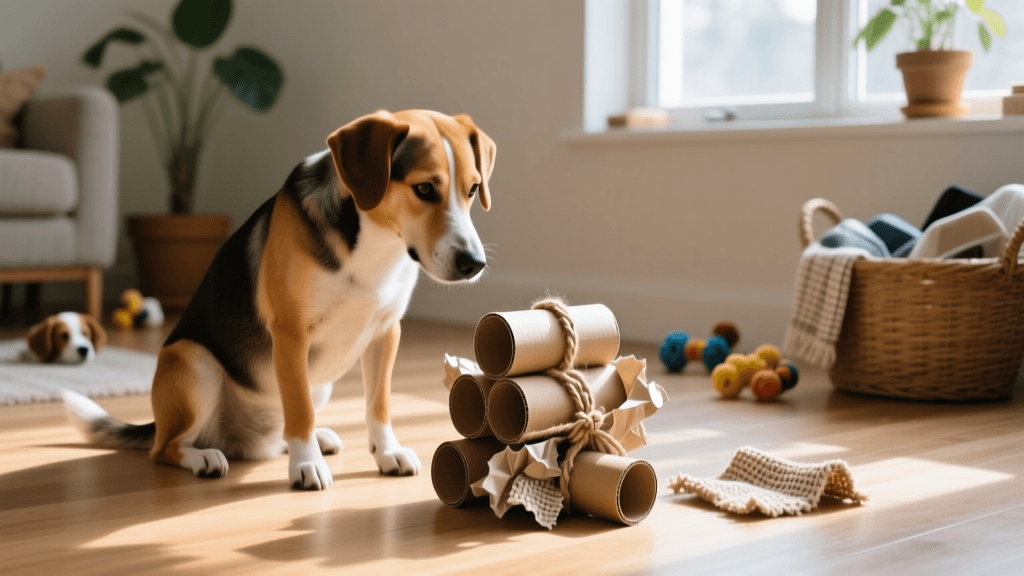
For power chewers or large herding breeds like Belgian Malinois and German Shepherds, commercial fleece mats may not survive a single session. Building a custom PVC foraging box is a highly effective, durable alternative that costs less than $30 in materials at your local hardware store.
Materials Needed:
- 1 wooden base board (24 x 18 inches, sanded smooth)
- 6 pieces of 2-inch diameter PVC pipe, cut to 8-inch heights
- Non-toxic, pet-safe construction adhesive
- Drill with a 1/2-inch spade bit
- 1 cup of loose kibble or training treats
Assembly Instructions:
- Drill 10-15 random holes into the sides of each PVC pipe using the spade bit. These holes allow the scent of the food to escape while forcing the dog to manipulate the pipes to get the food out.
- Arrange the PVC pipes vertically on the wooden base in a scattered pattern, leaving enough space between them for the dog's snout to reach the bottom.
- Secure the pipes to the wood using the pet-safe adhesive. Allow 48 hours to cure completely in a well-ventilated area.
- How to use: Drop kibble into the pipes and scatter some on the base. The dog must sniff out the food and use their paws and nose to knock the kibble through the drilled holes onto the base board.
Breed-Specific Enrichment Adjustments
Not all dogs process mental enrichment in the same way. Understanding your dog's genetic background is crucial for tailoring your puzzle routines in 2026.
Hounds (Beagles, Bloodhounds): Rely heavily on ground-scent tracking. Use snuffle mats with long, dense fleece strips and drag a treat across the floor to the mat to create a visible scent trail.
Terriers (Jack Russells, Rat Terriers): Prone to 'shredding' behaviors. Avoid fleece mats that they can tear apart and ingest. Opt for the DIY PVC box or heavy-duty rubber lick mats bolted to the floor.
Herding Breeds (Border Collies, Australian Shepherds): Require high-cognitive tasks. Combine the snuffle mat with obedience cues. Ask for a 'sit' or 'down' before releasing them to forage, engaging their impulse control.
Common Mistakes to Avoid
The most frequent error owners make is advancing the difficulty too quickly. If your dog flips the snuffle mat over, paws aggressively without sniffing, or walks away, the puzzle is too hard. This creates frustration, not enrichment. Always make the next step slightly easier than you think it needs to be. Additionally, never leave a dog unsupervised with a snuffle mat containing small fabric pieces, and ensure that any food spreads used on lick mats are strictly free of xylitol, garlic, or onion powder.
Conclusion
Mental enrichment is no longer a luxury; it is a fundamental pillar of modern canine behavioral health. By strategically combining the foraging instincts triggered by a snuffle mat with the parasympathetic soothing of a frozen lick mat, you can create a profound anxiety-relief routine. Stick to the 14-day progression protocol, respect your dog's unique breed traits, and watch as your anxious companion transforms into a confident, mentally fatigued, and deeply relaxed dog.
aaron-whyte
All our authors care for dogs every day — read more of their work on the authors page.