Best Snuffle Mat Decompression For Shelter Dogs 2026
Discover how to use snuffle mats and lick mats to ease your newly adopted shelter dog's stress during the critical first week at home in 2026.
The Critical First Week: Why Mental Enrichment Beats Physical Exhaustion
Bringing a newly adopted shelter dog home is one of the most rewarding experiences in a person's life, but it is also a period of immense psychological transition for the animal. When you finally walk through your front door with your new companion in 2026, your first instinct might be to take them on a long, exhausting walk to 'tire them out.' However, modern veterinary behaviorists strongly advise against this approach during the first 72 hours. Shelter environments are chronically stressful, characterized by high noise levels, lack of privacy, and elevated cortisol. Physical exhaustion in an already stressed dog can actually lead to a cortisol spike, resulting in reactive behavior, sleep disturbances, and a weakened immune system.
Instead, the gold standard for the first week of dog ownership is mental enrichment and decompression. Decompression is the process of allowing a dog's nervous system to return to a baseline state of calm. By utilizing specific puzzle games and foraging tools, you can engage your dog's natural instincts, lower their heart rate, and build a foundation of trust without overwhelming them with the physical demands of a new neighborhood.
The 3-3-3 Rule of Dog Adoption
To understand why mental enrichment is vital, you must understand the timeline of a shelter dog's adjustment. According to the Humane Society of the United States, adopted dogs generally follow the 3-3-3 rule:
- 3 Days to Decompress: The dog may feel overwhelmed, scared, or unsure of their surroundings. They might not eat or drink normally, and they will likely sleep heavily as their body recovers from shelter stress.
- 3 Weeks to Learn the Routine: The dog begins to settle, figure out your schedule, and show their true personality. Behavioral quirks may start to emerge.
- 3 Months to Feel at Home: The dog builds a deep bond with you and feels entirely secure in their environment.
During those crucial first three days, your primary job is not obedience training or socialization; it is creating a safe, low-pressure environment where the dog can process their new reality. This is where scent-based puzzle games become your most valuable tool.
The Science of Sniffing: Lowering Canine Cortisol
Dogs experience the world primarily through their noses. A dog's olfactory cortex is proportionally 40 times larger than a human's, and they possess up to 300 million olfactory receptors. When a dog engages in deep, sustained sniffing, their brain releases dopamine, a neurotransmitter associated with pleasure and relaxation.
The American Kennel Club notes that just 15 to 20 minutes of dedicated sniffing and foraging can tire a dog out as much as a mile-long run, but with the added benefit of actively lowering their heart rate and blood pressure. By replacing high-arousal physical play with low-arousal mental foraging during the first week, you are essentially providing your new dog with a neurological massage.
Top 3 Enrichment Tools for 2026 Adoptees
To properly facilitate decompression, you need the right equipment. Here are the top three vet-recommended mental enrichment tools for newly adopted dogs in 2026:
1. The Paw5 Wooly Snuffle Mat
Snuffle mats mimic the act of foraging for food in tall grass. The Paw5 Wooly Snuffle Mat remains a top-tier choice in 2026 due to its hand-woven, machine-washable cotton strands that hold kibble securely. Priced around $49, it is an investment that prevents the mat from flipping over—a common issue with cheaper, synthetic alternatives. Scatter your dog's daily k allowance of kibble deep into the strands and let them work for their meal.
2. LickiMat Soother (with Freezing Technique)
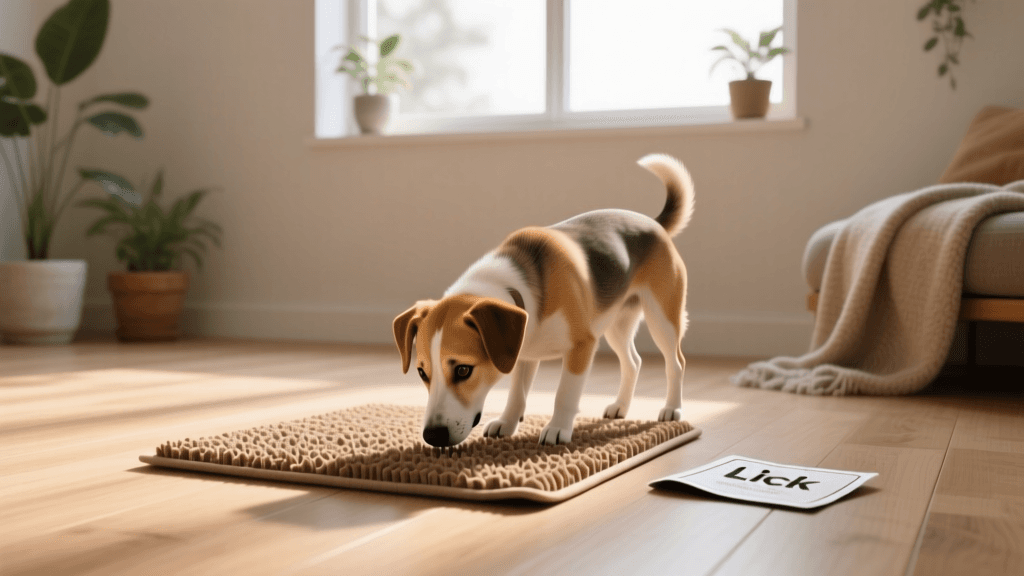
Licking is a self-soothing behavior for dogs. The LickiMat Soother features raised nubs that require the dog to use their tongue to extract soft treats. For a newly adopted dog, the magic happens when you freeze it. Freezing the mat extends the activity from 5 minutes to 25 minutes, providing prolonged, quiet decompression time in their crate or safe space.
3. The Classic Red Kong
The Kong Classic is a staple for a reason. For a new adoptee, stuff it with a mixture of plain canned pumpkin, a dash of low-sodium chicken broth, and their regular kibble, then freeze it solid. This provides a predictable, safe outlet for chewing anxiety without the risks associated with rawhide or hard antlers, which can fracture stressed teeth.
Your First-Week Decompression Schedule
Routine is the antidote to anxiety. Implementing a structured enrichment schedule helps your newly adopted dog predict what will happen next, which drastically reduces stress. Below is a sample first-week decompression schedule designed for a moderately active shelter dog.
| Time of Day | Activity | Tool Used | Duration | Primary Goal |
|---|---|---|---|---|
| Morning (7:30 AM) | Breakfast Forage | Paw5 Snuffle Mat | 15-20 mins | Mental stimulation, calm wake-up |
| Mid-Day (12:00 PM) | Quiet Time Licking | Frozen LickiMat | 20-30 mins | Self-soothing, crate settlement |
| Afternoon (3:00 PM) | Scent Scatter | Towel Burrito (DIY) | 10 mins | Confidence building, sniffing |
| Evening (6:00 PM) | Dinner Puzzle | Kong Classic (Frozen) | 30 mins | Chewing release, pre-bed calm |
DIY Snuffle Mat Alternatives for Day One
If you forgot to order a snuffle mat before bringing your dog home, do not panic. You likely have everything you need in your linen closet to create immediate mental enrichment. The ASPCA frequently highlights household item repurposing as a safe, cost-effective way to provide canine enrichment.
The Towel Burrito
Lay a clean bath towel flat on the floor. Evenly distribute a handful of strong-smelling treats or kibble across the towel. Roll the towel up tightly into a long cylinder (like a burrito). For an added challenge, tie the rolled towel into a loose knot. Place it on the floor and let your dog use their nose and paws to unroll the towel and find the hidden treasures. This is an excellent, zero-cost introduction to foraging.
The Muffin Tin Puzzle
Take a standard 12-cup muffin tin. Place a few pieces of kibble in each cup. Then, cover each cup with a dog-safe toy, such as a tennis ball or a crumpled piece of parchment paper. Your dog must figure out how to remove the obstacles to access the food. This builds problem-solving skills and confidence without requiring them to navigate a large, scary space.
Signs of Overstimulation vs. Healthy Decompression
As a new dog owner, it is crucial to monitor your dog's body language during these puzzle games to ensure they are decompressing and not becoming frustrated. Mental enrichment should be a calming experience, not a test of endurance.
Signs of Healthy Decompression
- Deep Sighs: If your dog lets out a long, shuddering sigh while working on a LickiMat, their nervous system is actively down-regulating.
- Soft Eyes and Ears: Their facial muscles will relax, and their ears will rest in a neutral position.
- Lying Down: A dog that chooses to lie down or sit comfortably while working a puzzle is showing that they feel safe enough to let their guard down.
Signs of Frustration or Overstimulation
- Frantic Pawing or Chewing: If the dog is aggressively destroying the towel or mat rather than sniffing, the puzzle is too difficult, or their arousal levels are too high.
- Lip Licking and Yawning: When not eating, frequent lip licking and yawning are classic canine calming signals indicating stress or confusion.
- Walking Away: If the dog abandons the food puzzle, do not force them to return. Simply remove the item and try an easier variation later.
Transitioning to Active Training in Week Two
Once your dog has successfully navigated the initial 3-to-7-day decompression period using passive foraging tools like snuffle mats and lick mats, you can begin introducing active cognitive puzzles. Interactive board games, such as the Nina Ottosson Dog Brick, require the dog to slide compartments and lift flaps. These should only be introduced once the dog has established a baseline of trust and feels secure in their new home.
Remember, the goal of the first week is not to create a canine genius; it is to create a calm, confident companion. By prioritizing mental enrichment and scent-based decompression over physical exhaustion, you are giving your newly adopted shelter dog the greatest possible gift: a peaceful, stress-free transition into their forever home.
robin-maitland
All our authors care for dogs every day — read more of their work on the authors page.