Sniffari Decompression Walks For Leash Reactive Dogs 2026
Discover how Sniffari decompression walks lower cortisol in leash-reactive dogs. Learn 2026 gear, techniques, and routines for calmer canine mental health.
Understanding Leash Reactivity and the Canine Stress Cycle
Leash reactivity remains one of the most prevalent and stressful challenges for dog owners in 2026. Whether your dog is lunging, barking, or freezing at the sight of other dogs, people, or bicycles, the underlying emotion is rarely true aggression; it is almost always rooted in fear, anxiety, or profound frustration. Managing a reactive dog requires a paradigm shift from traditional obedience training to holistic nervous system regulation. When a reactive dog is constantly exposed to triggers without adequate recovery time, their baseline cortisol levels remain elevated. This chronic stress cycle makes them more prone to explosive reactions, creating a frustrating loop for both the dog and the handler.
To break this cycle, modern veterinary behaviorists emphasize the importance of nervous system decompression. In 2026, the most highly recommended protocol for achieving this is the "Sniffari" or decompression walk. This approach prioritizes mental enrichment and olfactory exploration over physical exercise, providing anxious dogs with a vital outlet to process stress and lower their heart rates naturally.
What Exactly is a Sniffari Decompression Walk?
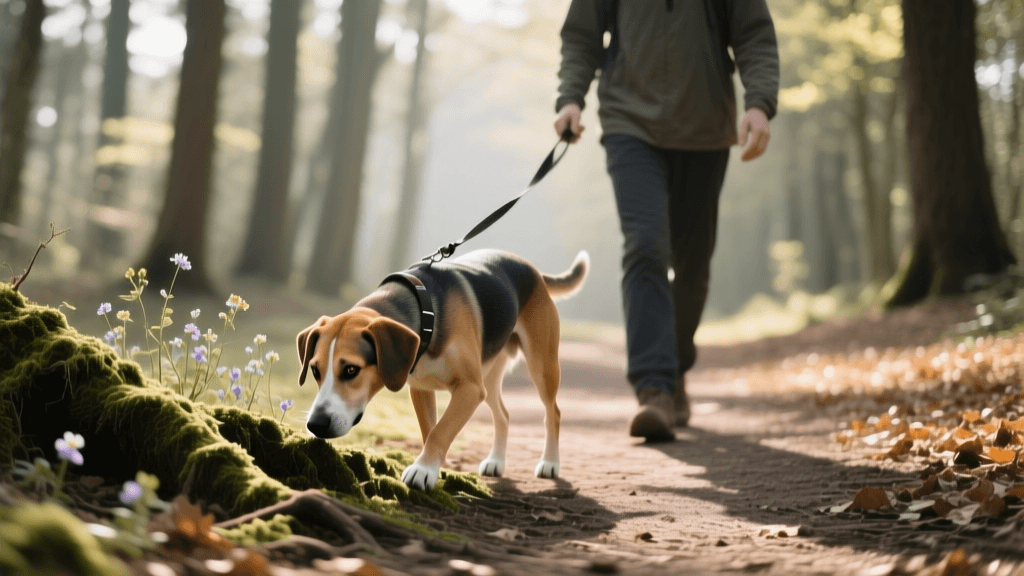
A Sniffari is a dog-led walk where the primary goal is to allow your dog to explore their environment entirely through their nose. Unlike a traditional structured walk—where the dog is expected to heel, maintain a steady pace, and ignore distractions—a Sniffari gives the dog complete autonomy over the route, the pace, and the duration of their sniffing sessions. For a leash-reactive dog, the world is often a chaotic, overwhelming place filled with visual triggers. By shifting their focus from their eyes to their nose, you engage the parasympathetic nervous system, effectively telling the dog's brain that they are safe.
"Allowing a dog to sniff is not just a reward; it is a fundamental biological need. For reactive dogs, sniffing acts as a natural sedative, lowering blood pressure and reducing anxiety-inducing hormones."
The Science: Why Sniffing Lowers Cortisol
The canine olfactory system is incredibly complex. A dog's nose has up to 300 million olfactory receptors, compared to our mere 6 million. When a dog sniffs, the act of processing complex scent data requires immense cognitive energy. According to the American Kennel Club, mental stimulation through scent work can be far more exhausting for a dog than a multi-mile run.
Furthermore, the physical act of deep, rhythmic sniffing mimics the breathing patterns associated with calmness. In 2026, canine cognitive research continues to validate that 20 minutes of intensive sniffing can lower a dog's heart rate and provide the equivalent mental fatigue of an hour of vigorous physical exercise. For a reactive dog who cannot safely engage in off-leash running or dog park play, the Sniffari is the ultimate alternative for burning off anxious energy.
Essential 2026 Gear for Decompression Walks
To safely execute a Sniffari with a leash-reactive dog, you must use gear that provides security without causing physical restriction or pain. Avoid retractable leashes, which offer poor control and can easily snap or cause leash burns. Instead, invest in the following 2026-standard equipment:
- 15-to-30-Foot Biothane Long Line: Biothane is waterproof, durable, and doesn't tangle easily in brush. A 15-foot line is ideal for suburban areas, while a 30-foot line is perfect for open fields. Ensure it has a padded handle for secure grip if your dog suddenly reacts.
- Y-Front Harness: A well-fitted Y-front harness (such as the updated 2026 models from Haqihana or Ruffwear) ensures that the dog's trachea is completely free of pressure. Attach the long line to the back clip to allow natural shoulder movement while sniffing.
- Smart GPS Collar: Devices like the Fi Series 4 or Whistle Go 2026 editions allow you to track your dog's resting heart rate and sleep quality post-walk, giving you hard data on how effectively the Sniffari is reducing their baseline anxiety.
- High-Value Treat Pouch: Carry a silent, magnetic-closure treat pouch filled with high-value, soft treats (like boiled chicken or freeze-dried liver) for emergency disengagement if a trigger suddenly appears.
Step-by-Step: Executing the Perfect Sniffari
Step 1: Location Scouting
The environment is critical. You cannot decompress a reactive dog in a high-traffic area. Use apps like Sniffspot to rent private, fenced-in fields or quiet wooded areas. If using public spaces, go during "off-peak" hours (early dawn or late evening) and choose dead-end streets or quiet cul-de-sacs.
Step 2: The Decompression Phase
When you arrive at the location, stand still and let your dog acclimate to the new environment. Do not prompt them to walk. Let them process the ambient sounds and scents. Once they begin to sniff, give them the full length of the long line and follow them. If they stop to sniff a single bush for five minutes, let them. Patience is the core of this exercise.
Step 3: Scatter Feeding for Anxious Dogs
If your dog is too anxious to sniff naturally, you can encourage the behavior through scatter feeding. Toss a handful of high-value treats into the grass or leaf litter. This forces the dog to use their nose to forage, artificially initiating the parasympathetic calming response. Over time, the dog will begin to transition from sniffing for food to sniffing the environment naturally.
Step 4: Trigger Management and Disengagement
If a trigger (like a distant dog or a loud truck) appears, do not yank the long line. Use a cheerful "Let's go!" cue, drop a few treats on the ground to break the dog's visual fixation, and calmly walk in the opposite direction to increase distance. According to the Humane Society of the United States, managing the environment to prevent rehearsing the reactive behavior is just as important as the training itself.
Traditional Structured Walks vs. Sniffari Walks
Understanding the difference between these two types of walks is crucial for managing a reactive dog's weekly routine. Both have their place, but they serve entirely different physiological and psychological purposes.
| Feature | Traditional Structured Walk | Sniffari Decompression Walk |
|---|---|---|
| Primary Goal | Physical exercise, obedience, loose-leash walking | Mental stimulation, nervous system regulation, stress relief |
| Pacing | Human-led, steady rhythm, continuous movement | Dog-led, erratic, frequent and prolonged stops |
| Leash Type | Standard 4-to-6-foot leash | 15-to-30-foot Biothane long line |
| Sensory Focus | Visual and auditory (focusing on handler and cues) | Olfactory (processing complex environmental scents) |
| Best Time to Use | Morning routines, urban environments, training sessions | After a stressful event, weekends, quiet natural areas |
| Fatigue Type | Physical (muscle tiredness) | Mental (cognitive and neurological tiredness) |
Post-Walk Decompression: Continuing the Calm
The decompression process should not end the moment you walk back through your front door. Reactive dogs often experience an "adrenaline hangover" after being outside, even on a quiet walk. To help their nervous system return to a true baseline, implement a post-walk enrichment routine.
Provide a frozen lick mat smeared with plain pumpkin puree and goat's milk, or a natural chew item like a bully stick or yak cheese chew. Licking and chewing are self-soothing behaviors that release endorphins in the canine brain. Pair this with a quiet, dimly lit room or a covered crate to minimize visual stimulation while they wind down. By 2026, holistic veterinary behaviorists widely agree that pairing the physical Sniffari with indoor oral enrichment creates a comprehensive anxiety-management protocol that drastically reduces indoor reactivity and pacing.
Tracking Progress and Adjusting Your Routine
Consistency is key when managing a leash-reactive dog. Aim to incorporate at least two to three Sniffari decompression walks into your dog's weekly routine, alternating with structured training walks. Monitor your dog's body language: a relaxed, open mouth, soft eyes, and a loosely wagging tail at mid-height indicate that the decompression is working. If your dog remains tense, panting heavily, or refusing treats, the environment may still be too stimulating, and you must increase your distance from triggers.
By embracing the Sniffari, you are not just walking your dog; you are actively participating in their neurological healing. In a world that demands obedience, giving your reactive dog the freedom to simply be a dog and experience the world through their nose is the most profound act of advocacy you can offer.
marcus-aldridge
All our authors care for dogs every day — read more of their work on the authors page.