Dog CPR and Choking First Aid: A Lifesaving Guide
Learn how to perform dog CPR and choking first aid. This emergency guide provides step-by-step instructions to save your pet's life in a crisis.
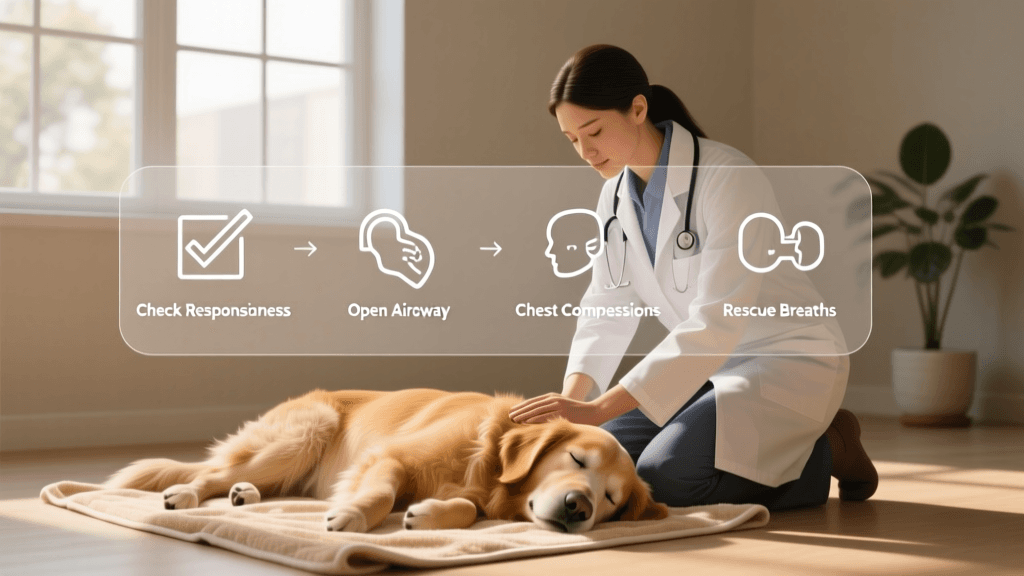
Recognizing a Canine Emergency: Choking vs. Cardiac Arrest
When your dog stops breathing, collapses, or begins to choke, panic is your worst enemy. According to the American Veterinary Medical Association (AVMA), knowing how to quickly identify the nature of the emergency and administer immediate first aid can mean the difference between life and death. Before initiating any life-saving measures, you must determine whether your dog is choking on a foreign object or experiencing cardiopulmonary arrest.
Signs of choking include frantic pawing at the mouth, gagging, retching, high-pitched wheezing, and a panicked demeanor. The dog may still be conscious and moving. Conversely, cardiac arrest is characterized by a complete loss of consciousness, absence of breathing, unresponsiveness to loud noises or touch, and pale or blue-tinged gums. If your dog is choking but still conscious, you must clear the airway immediately. If your dog is unconscious and not breathing, you must begin Canine CPR.
How to Perform the Canine Heimlich Maneuver
If you suspect your dog is choking, do not blindly reach into their mouth. A panicked dog will bite, even their beloved owner. Instead, follow these size-specific steps to perform the canine Heimlich maneuver.
For Small Dogs (Under 20 lbs)
- Hold your dog against your chest with their back facing you.
- Make a fist and place it just below their rib cage, in the soft hollow of the abdomen.
- Thrust your fist inward and upward toward their spine with firm, quick motions.
- Repeat 3 to 5 times, then check the mouth to see if the object has been dislodged.
For Medium to Large Dogs (Over 20 lbs)
- If the dog is standing, wrap your arms around their waist from behind. Make a fist, place it just below the rib cage, and thrust inward and upward 3 to 5 times.
- If the dog is lying down or too heavy to lift, lay them on their side. Kneel behind them and place the heel of one hand on the abdomen just below the ribs, covering it with your other hand. Push sharply toward the spine and head.
- After the thrusts, sweep a finger through the mouth to hook and remove the object. Never push the object deeper into the throat.
The ABCs of Dog CPR: Airway, Breathing, Circulation
If your dog is unresponsive and not breathing, you must initiate CPR. The RECOVER Initiative, the leading authority on veterinary resuscitation guidelines, emphasizes the CAB sequence (Compressions, Airway, Breathing) for veterinary patients, though establishing an open airway remains a critical first step in a home setting before starting compressions.
Step 1: Airway
Lay your dog on a firm, flat surface on their right side. Gently pull the tongue forward to ensure it is not blocking the throat. Look into the mouth and remove any visible debris, vomit, or foreign objects. Extend the neck slightly to create a straight line from the nose to the chest.
Step 2: Circulation (Chest Compressions)
Unlike human CPR, which prioritizes breathing, canine CPR heavily relies on immediate chest compressions to pump blood to the brain. Place your hands over the widest part of the chest wall (for most dogs, this is directly over the heart, just behind the elbow of the front leg when laid against the chest). Push hard and fast.
- Rate: 100 to 120 compressions per minute. A helpful trick is to compress to the beat of the song 'Stayin' Alive' by the Bee Gees.
- Depth: Compress the chest by one-third to one-half of its width.
- Recoil: Allow the chest to fully return to its normal position between each compression to let the heart refill with blood.
Step 3: Breathing (Rescue Breaths)
After 30 compressions, provide rescue breaths. Close your dog's mouth tightly with your hand to seal the lips. Place your mouth over their nostrils and blow gently until you see the chest rise. Give 2 rescue breaths, then immediately resume chest compressions. The ideal ratio is 30 compressions to 2 breaths.
CPR Compression Guidelines by Dog Size
Proper hand placement is critical for generating enough force to circulate blood without causing internal trauma. Refer to the table below for size-specific mechanics.
| Dog Size Category | Weight Range | Hand Placement | Compression Depth |
|---|---|---|---|
| Small Dogs | Under 20 lbs | One hand wrapped around the chest, thumb on one side, fingers on the other | 1/3 to 1/2 chest width |
| Medium Dogs | 20 to 60 lbs | One hand placed flat on the chest wall directly over the heart | 1/3 to 1/2 chest width |
| Large / Giant Dogs | Over 60 lbs | Two hands interlocked, arms kept straight, pushing down on the widest part of the chest | 1/3 to 1/2 chest width |
Essential Items for a Canine Emergency Kit
Preparation is the cornerstone of pet safety. Building a dedicated canine first aid kit costs between $30 and $50 and should be kept in your home and vehicle. Here are the critical items to include:
- Basket Muzzle (e.g., Baskerville Ultra, ~$25): Injured or hypoxic dogs will bite out of fear and pain. A basket muzzle allows the dog to pant and breathe while keeping your hands safe.
- 3% Hydrogen Peroxide (~$5): Used strictly to induce vomiting if your dog ingests a toxin, but ONLY under the direct guidance of a veterinarian or poison control. The standard dose is 1 teaspoon per 5 lbs of body weight, up to a maximum of 3 tablespoons. Never use it on open wounds.
- Digital Rectal Thermometer (~$10): A dog's normal temperature ranges from 101.0°F to 102.5°F. Temperatures above 104°F indicate severe heatstroke, requiring immediate emergency cooling.
- Self-Adhering Bandage (Vetrap, ~$8): Essential for applying pressure to bleeding wounds. It sticks to itself and won't pull on your dog's fur.
- Blunt-Tipped Syringes (~$5): Useful for flushing wounds with saline or administering liquid medications and hydrogen peroxide safely into the side of the mouth.
Common Mistakes to Avoid During Pet CPR
Even well-meaning owners can make critical errors during a crisis. Avoid these common pitfalls:
- Checking for a pulse for too long: Finding a femoral pulse on a furry, panicked dog is incredibly difficult. If the dog is unconscious and not breathing, start compressions immediately. Do not waste 30 seconds searching for a heartbeat.
- Over-ventilating: Blowing too much air into the lungs can cause gastric dilation (bloat) and increase pressure in the chest, which actually prevents blood from returning to the heart. Only blow enough to see the chest gently rise.
- Stopping too early: Continue CPR until you reach a veterinary clinic or the dog begins breathing and moving on their own. It can take 20 minutes or more of continuous CPR to restore spontaneous circulation.
Post-Resuscitation and Transport
If your dog begins to breathe or regain consciousness, the emergency is not over. The American Red Cross Pet First Aid guidelines strongly advise that any animal requiring CPR or the Heimlich maneuver must be evaluated by a veterinarian immediately. Internal organ damage, bruised lungs, or airway swelling may not be immediately apparent. Keep the dog warm with a blanket, restrict their movement, and transport them to the nearest emergency veterinary hospital with their head slightly elevated to promote blood flow to the brain. Consider taking a certified pet first aid course to practice these skills on mannequins before a real crisis occurs.
hannah-wickes
All our authors care for dogs every day — read more of their work on the authors page.