Holistic Sniffari Walks For Canine Reactivity In 2026
Discover how holistic sniffari decompression walks naturally reduce canine reactivity and anxiety in 2026 using instinctual foraging and calming signals.
The Paradigm Shift in 2026 Canine Behavioral Health
As we navigate the landscape of canine behavioral science in 2026, there has been a massive, welcome shift away from purely clinical, obedience-heavy behavior modification toward holistic, natural approaches. Dog owners and certified behaviorists alike are recognizing that many behavioral issues—particularly leash reactivity, generalized anxiety, and hyper-arousal—stem from a fundamental suppression of natural canine instincts. Enter the 'Sniffari' and the decompression walk. Rather than forcing a dog to heel perfectly in a high-stress urban environment, holistic practitioners are advocating for environments and routines that allow dogs to process their world through their most powerful sense: smell. This article explores the psychology, neurology, and practical application of sniffari decompression walks as a natural remedy for canine reactivity.
The Neurology of the Sniffari: Why Smelling is Healing
To understand why a sniffari is so effective for a reactive or anxious dog, we must first look at canine neurology. A dog's olfactory bulb is proportionally 40 times larger than a human's. When a dog sniffs, they are not just passively taking in odors; they are actively processing complex chemical data that requires significant cognitive effort. This mental exertion triggers the release of dopamine and serotonin, the brain's natural calming and reward chemicals.
In holistic canine psychology, sniffing is viewed as a self-soothing behavior. When a dog is allowed to engage in deep, uninterrupted sniffing, their heart rate naturally decreases, and their cortisol (stress hormone) levels drop. For a reactive dog, the environment is often overwhelming. A structured sniffari shifts the dog's brain from the sympathetic nervous system (fight or flight) to the parasympathetic nervous system (rest and digest). In 2026, holistic veterinarians frequently prescribe 'scent time' as a primary intervention for dogs suffering from chronic environmental stress, noting that 20 minutes of intense sniffing can provide the same level of mental exhaustion as an hour of rigorous physical running.
What Exactly is a Decompression Walk?
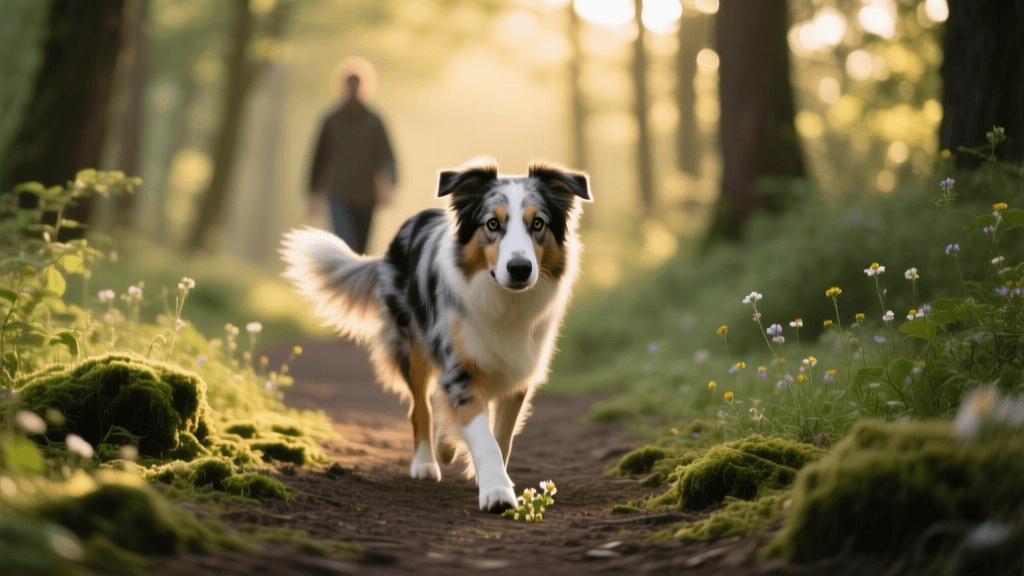
A decompression walk, often referred to as a 'Sniffari,' is an unstructured, dog-led excursion in a natural or semi-natural environment. Unlike a traditional walk where the goal is physical exercise and loose-leash heeling, the sole purpose of a decompression walk is to allow the dog to decompress from the pressures of domestic life.
The golden rule of the sniffari is simple: The dog chooses the pace, the direction, and the duration of the stops. Your only job is to manage the long line and ensure safety.
For reactive dogs, this means avoiding high-traffic areas where they might feel trapped or triggered. Instead, the focus is on wide-open spaces, quiet trails, or even a secluded field where the dog can explore without the pressure of oncoming pedestrians or unfamiliar dogs.
Reading Holistic Calming Signals in the Field
When you remove the pressure of obedience, you can truly observe your dog's natural body language. Pioneered by canine behavior experts, the concept of 'calming signals' refers to the subtle body language dogs use to de-escalate tension and soothe themselves. During a sniffari, you will likely observe several of these natural signals:
- Ground Sniffing: Beyond gathering information, sudden, intense ground sniffing when another dog or person appears in the distance is a natural avoidance and calming behavior.
- Shaking Off: If your dog encounters a mild stressor (like a loud bird or a distant noise) and subsequently shakes their entire body as if wet, they are literally 'shaking off' the adrenaline spike.
- Curving: Dogs naturally move in arcs rather than straight lines. A dog choosing to walk in a wide semi-circle around a bush or tree is exhibiting a natural instinct to avoid direct, confrontational approaches.
- Slow Movement: A sudden shift to slow, deliberate walking is a holistic signal that the dog is trying to lower the energy of the environment.
By recognizing and respecting these signals, you validate your dog's natural coping mechanisms, building deep trust and reducing overall reactivity over time.
2026 Gear Guide: Harnesses and Long Lines
To facilitate a true sniffari, you must abandon restrictive gear. Tight collars or short leashes trigger the opposition reflex, increasing frustration and reactivity. In 2026, the standard for holistic decompression walks involves a well-fitted Y-front harness and a 15 to 30-foot long line. Below is a comparison of the most recommended natural and ergonomic gear setups for this year.
| Gear Type | Material & Design | Best For | Price Range (2026) |
|---|---|---|---|
| Y-Front Harness | Fleece-lined, unrestrictive shoulder movement | Dogs with joint issues or high pulling anxiety | $45 - $85 |
| Biothane Long Line (15ft) | Waterproof, non-porous biothane, 1/2 inch width | Wet, muddy, or brush-heavy natural trails | $30 - $55 |
| Cotton Tracking Line (30ft) | Soft woven cotton with padded handle | Dry, open fields and grassy parks | $25 - $40 |
| Snuffle Scatter Pouch | Organic canvas with multiple scent pockets | Holistic scent scattering and treat tossing | $20 - $35 |
Using a long line gives the dog the illusion of being off-leash, which drastically reduces the feeling of being trapped—a primary trigger for leash reactivity. The Y-front harness ensures that when the dog inevitably reaches the end of the line, the pressure is distributed safely across their chest, avoiding damage to the trachea and thyroid gland.
Holistic Scent Scattering Techniques
If your dog is too anxious to sniff naturally in a new environment, you can initiate the parasympathetic response through holistic scent scattering. This involves tossing high-value, naturally scented treats (like freeze-dried minnows, venison jerky, or fresh herbs like chamomile and lavender) into the grass or brush.
Start by scattering treats in a small, concentrated area to encourage the dog to put their nose to the ground. Once their nose is down, gradually widen the scatter radius. The act of foraging mimics natural scavenging behaviors, grounding the dog in the present moment and overriding the hyper-vigilance associated with reactivity. Many holistic trainers in 2026 recommend incorporating calming herbs like dried valerian root or passionflower into the scatter mix to provide a mild, natural aromatherapy effect.
Step-by-Step Guide to Your First Sniffari
Ready to take your reactive dog on their first decompression walk? Follow these actionable steps to ensure a successful, stress-free outing.
- Scout the Location First: Visit the location without your dog. Ensure there are clear sightlines to avoid surprise encounters with off-leash dogs or wildlife. Look for natural barriers like hedges or tall grasses.
- Time it Right: Go during 'low traffic' hours. Early mornings or late evenings are ideal. Avoid times when the environment is chaotic, as the goal is decompression, not exposure therapy.
- Let Them Lead: Attach the long line to the Y-front harness. Stand still and let the dog choose a direction. Follow them, keeping the line slack. A tight line communicates tension.
- Embrace the Boredom: Your dog might stand in one spot and sniff a single blade of grass for five minutes. Let them. Do not rush them, make kissing noises, or tug the leash. Patience is the core of the holistic approach.
- Advocate for Your Dog: If a stranger or another dog approaches, calmly gather your long line and create distance. Use your body to block your dog from the trigger, giving them the space they need to feel safe.
Post-Walk Integration: The Importance of the Canine Crash
After a successful sniffari, your dog may experience what holistic behaviorists call the 'canine crash.' Because sniffing requires intense neurological processing, your dog will likely sleep deeply upon returning home. It is crucial not to disturb this rest. During this deep sleep cycle, the brain processes the sensory information gathered during the walk, consolidating new, positive neural pathways. Interrupting this rest can lead to residual crankiness or over-arousal. Provide a quiet, dimly lit space, perhaps with a natural white noise machine, and let them recover fully.
The Science of Natural Behavior Modification
The shift toward natural, instinct-based behavior modification is heavily supported by modern animal welfare organizations. According to the ASPCA's comprehensive dog behavior guidelines, allowing dogs to engage in species-specific behaviors like foraging and scent tracking is fundamental to preventing and treating anxiety-related disorders. Suppressing these instincts through rigid obedience in high-stress environments often exacerbates the underlying emotional turmoil.
Furthermore, The Kennel Club's health and training frameworks emphasize that mental stimulation through natural exploration is just as critical to a dog's overall welfare as physical health and nutrition. By integrating sniffari decompression walks into your daily routine, you are not just managing your dog's reactivity; you are honoring their biological needs. In 2026, true holistic dog care means stepping back, dropping the ego of the 'perfect heel,' and letting your dog experience the world exactly as they were designed to: nose to the ground, mind at peace.
aaron-whyte
All our authors care for dogs every day — read more of their work on the authors page.