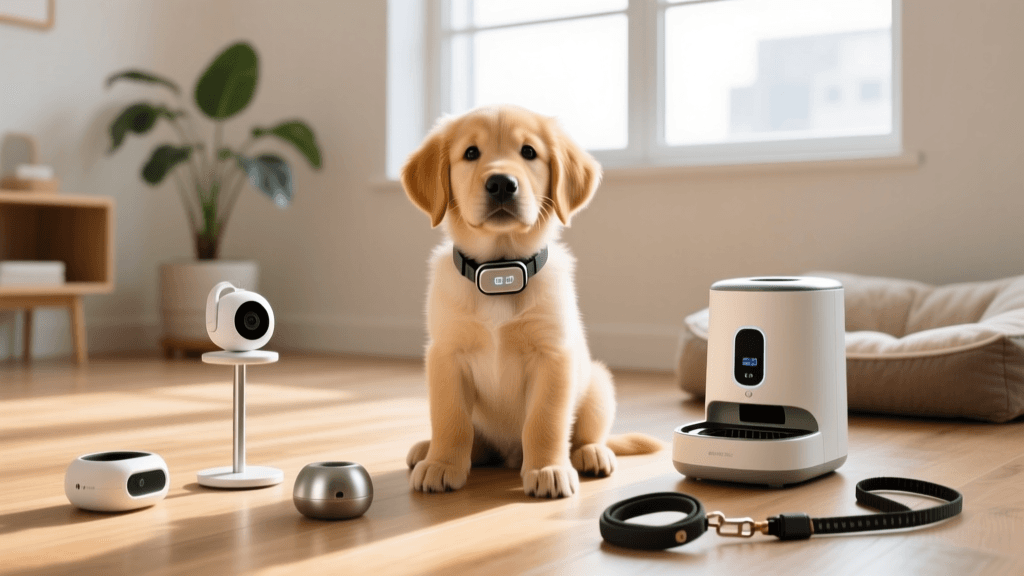
Smart Puppy Tech: GPS Trackers and Potty Training Tools
Discover how smart GPS collars, automated feeders, and tech-enabled potty tools can streamline your puppy's first year. Read our modern tech guide.

Embracing Modern Technology in Your Puppy's First Year
The first year of a puppy's life is a whirlwind of developmental milestones, boundless energy, and inevitable challenges. From navigating the frustrating phases of potty training and teething to ensuring their safety during early socialization, new dog owners have their hands full. Fortunately, the rise of modern pet technology has revolutionized how we raise our canine companions. By integrating smart devices into your daily routine, you can track vital health metrics, automate feeding schedules, and prevent household accidents with unprecedented precision.
While traditional methods of positive reinforcement and patience remain the bedrock of dog ownership, technology acts as a powerful multiplier for your efforts. In this comprehensive guide, we will explore the most effective smart tech for puppies, breaking down specific products, costs, and actionable strategies to help your puppy thrive during their crucial first twelve months.
GPS Tracking and Smart Collars for Puppy Safety
Puppies are notoriously curious and remarkably fast. Even if you have followed the American Kennel Club (AKC) guidelines for puppy-proofing your home and yard, a momentary lapse in attention can result in an escape. During the early months, your puppy's recall command is unreliable, making physical containment and digital tracking essential.
GPS Collars vs. Microchips: Why You Need Both
Many new owners confuse GPS trackers with microchips. According to the American Veterinary Medical Association (AVMA), a microchip is a permanent, passive form of identification that requires a scanner to read. It will not help you locate a lost puppy in real-time. A GPS smart collar, on the other hand, provides live location tracking but requires a power source and a subscription. For optimal safety, your puppy should have both.
Top Smart Collar Recommendations for Puppies
- Fi Series 3 Smart Collar: Ideal for puppies over 8 lbs. It features a secure, escape-proof buckle design that is crucial for strong pullers. The Fi app allows you to set up a custom "Safe Zone" geofence (e.g., a 50-foot radius around your backyard). If your puppy breaches this perimeter, you receive an instant push notification. Cost: $149 for the hardware + $99/year for the cellular subscription.
- Whistle GO SAFE: A slightly bulkier option but packed with health monitoring features. It tracks your puppy's daily activity levels, sleep quality, and even scratching behaviors, which can be an early indicator of allergies or flea infestations. Cost: $129 hardware + $99/year subscription.
Actionable Tip: When introducing a smart collar to an 8-to-12-week-old puppy, ensure the device weighs less than 5% of their total body weight. If your puppy is a small breed (like a Chihuahua or Toy Poodle), wait until they reach 5-6 months of age before attaching a GPS unit, relying on a lightweight harness and leash in the meantime.
Technology-Assisted Potty Training
Potty training is widely considered the most stressful aspect of raising a puppy. The key to success is anticipating your puppy's needs before they have an accident. Smart home technology can provide the data and oversight needed to establish a bulletproof routine.
Smart Dog Doors and Microchip Logging
If you have a secure yard, a smart dog door can be a game-changer for older puppies (4-6 months) who are learning to signal when they need to go out. The SureFlap Microchip Pet Door Connect reads your puppy's existing veterinary microchip, eliminating the need for heavy collar attachments that can get snagged.
Through the companion app, you can lock the door remotely during the night to prevent unwanted midnight wandering. More importantly, the app logs every single time your puppy enters and exits. By reviewing this data, you can identify your puppy's natural biological rhythm and adjust your manual potty breaks to align with their habits. Cost: Approximately $150.
Indoor Cameras for Crate and Pad Monitoring
For apartment dwellers or those using indoor puppy pads, visual monitoring is critical. The Wyze Cam v3 is an affordable, high-definition indoor camera featuring color night vision.
Setup Strategy: Mount the camera at a 45-degree angle overlooking your puppy's playpen or pad area. Use the app's "Motion Detection Zones" to draw a digital box strictly around the potty area. When your puppy steps into the zone, your phone receives an alert. This allows you to immediately offer verbal praise through the camera's two-way audio, reinforcing the correct behavior even if you are in another room. Cost: ~$35 per camera.
Automated Feeders for Developmental Milestones
A puppy's digestive system thrives on routine, and their feeding schedule must evolve as they grow. An 8-week-old puppy requires four small meals a day to maintain stable blood sugar levels. By 4 months, this drops to three meals, and by 6 months, most puppies transition to two meals daily. Manually managing this schedule while working a full-time job is incredibly difficult.
Smart Feeders: Precision and Portion Control
Devices like the PETLIBRO Automatic Pet Feeder with Camera allow you to program complex feeding schedules down to the minute.
Why Precision Matters: Overfeeding is a leading cause of rapid growth spurts, which can result in orthopedic issues like hip dysplasia in large breed puppies. Smart feeders dispense exact portions (often measured in 10-gram increments). If your veterinarian recommends 1.5 cups of kibble daily, you can program the feeder to dispense exactly 0.5 cups at 7:00 AM, 12:00 PM, and 5:00 PM. Furthermore, the built-in camera and voice recording feature allow you to call your puppy to their bowl, reducing separation anxiety during the workday. Cost: $130 - $160.
Managing Teething and Separation Anxiety with Tech
Between 3 and 6 months of age, puppies go through an intense teething phase. Combined with the onset of separation anxiety, this can lead to destructive chewing of furniture and baseboards.
Interactive treat-tossing cameras, such as the Furbo 360 Dog Camera, provide mental stimulation and redirection. When you notice your puppy chewing on an inappropriate item via the live feed, you can use the two-way audio to issue a gentle "Leave it" command, followed immediately by tossing a treat across the room. This redirects their focus, rewards compliance, and satisfies their urge to chew without destroying your home. Pair this with frozen Kong toys filled with puppy-safe peanut butter for a comprehensive teething strategy.
Comparison Chart: Top Smart Collars for Puppies
| Device | Minimum Weight Limit | Battery Life | Subscription Cost | Best Feature for Puppies |
|---|---|---|---|---|
| Fi Series 3 | 8 lbs | Up to 3 months | $8.25/mo (Annual) | Escape-proof buckle & precise geofencing |
| Whistle GO SAFE | 8 lbs | Up to 20 days | $8.25/mo (Annual) | Scratching & licking health alerts |
| Tractive GPS | 9 lbs | 5-7 days | $6.00/mo (Annual) | Live tracking refresh rate (2-3 seconds) |
Budgeting for Your Puppy's First Year of Tech
Investing in technology requires an upfront financial commitment, but it often saves money by preventing emergencies, lost pet flyers, and ruined household items. Here is a realistic budget breakdown for a modern, tech-enabled puppy setup:
- Smart GPS Collar + 1 Year Subscription: $230 - $250
- Automatic Smart Feeder: $140
- Indoor Potty Monitoring Camera: $35 - $50
- Smart Microchip Dog Door (Optional): $150
- Total Estimated Tech Investment: $405 - $590
When compared to the cost of replacing a chewed-up designer sofa or the emotional and financial toll of a lost pet, this investment pays for itself many times over.
Balancing Screen Time with Traditional Socialization
While technology offers incredible oversight, it is vital to remember that an app cannot replace the foundational work of early socialization. The ASPCA emphasizes that the critical socialization window occurs between 3 and 14 weeks of age. During this time, your puppy must be exposed to diverse surfaces, sounds, people, and other vaccinated dogs in a positive, controlled manner.
Use technology as a safety net and a scheduling assistant, not a babysitter. A GPS collar will tell you where your puppy is, but it won't teach them how to walk politely on a leash. A camera will let you see if they are sleeping, but it won't replace the bonding experience of hand-feeding them during training sessions.
By thoughtfully integrating smart feeders, GPS trackers, and monitoring cameras into your routine, you free up valuable time and mental energy. This allows you to focus on what truly matters: building a deep, trusting, and joyful relationship with your new puppy as they navigate their incredible first year of life.
anouk-beaumont
All our authors care for dogs every day — read more of their work on the authors page.