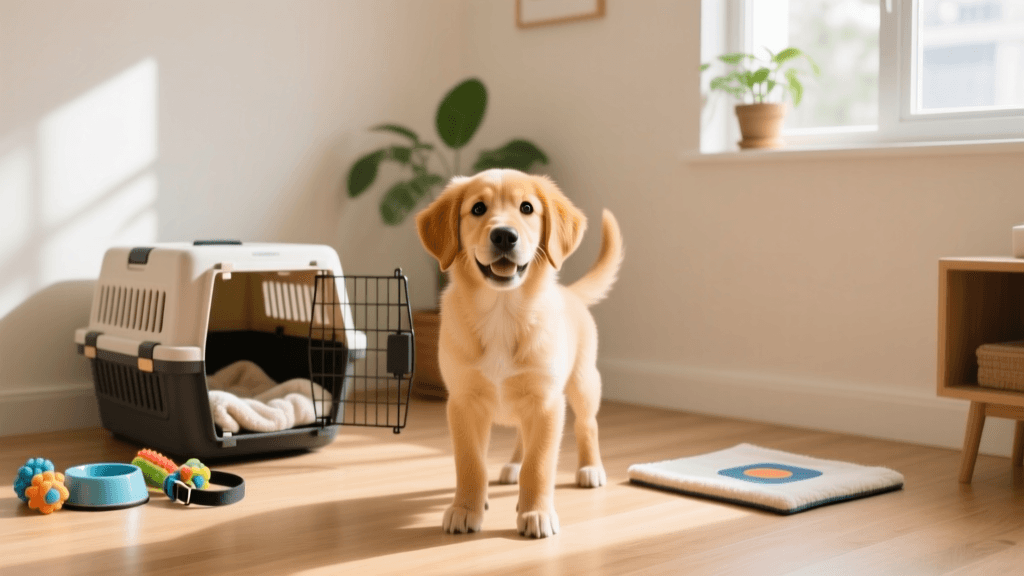
Smart Puppy Cameras: Tech for Training and Separation Anxiety
Discover how smart puppy cameras and treat tossers can ease separation anxiety, reinforce potty training, and modernize your puppy's first year.

The Modern Approach to Puppy Rearing
Raising a puppy during their crucial first year of life is a deeply rewarding experience, but it also demands an extraordinary amount of time, patience, and supervision. From the moment you bring your eight-week-old furball home, you are tasked with navigating a complex series of developmental milestones: potty training, teething, boundary testing, and early socialization. Historically, managing these milestones required owners to be physically present at all times, often leading to immense stress for working professionals and a steep learning curve for the puppy.
Today, the landscape of dog ownership has been revolutionized by technology. The modern approach to puppy care leverages smart home devices to bridge the gap between human schedules and canine needs. Smart puppy cameras, interactive treat tossers, and two-way audio systems have transitioned from luxury gadgets to essential training tools. By integrating these devices into your daily routine, you can provide consistent reinforcement, monitor health and safety, and proactively manage behavioral issues like separation anxiety, all while you are away from home.
Why Smart Cameras Are a Game-Changer for Puppies
The first twelve months of a dog's life are marked by rapid cognitive and physical changes. During this window, puppies are highly impressionable, and their behaviors are easily shaped by immediate feedback. Smart cameras provide a critical advantage: the ability to deliver that feedback even when you are in another room or at the office.
One of the most significant challenges in the first year is separation anxiety, which often begins to manifest between six and nine months of age as the dog matures and becomes more acutely aware of their owner's absence. According to the ASPCA, separation anxiety is triggered when a dog becomes overly attached and distressed when left alone. Smart cameras allow owners to monitor stress signals (like pacing, whining, or destructive chewing) in real-time and intervene with calming audio or a treat toss before the anxiety escalates into a full-blown panic response.
Furthermore, technology aids immensely in potty training. The golden rule of housebreaking is to reward the puppy within one to two seconds of them eliminating in the correct spot. If you are working from home but in a different room, a smart camera allows you to spot the behavior the moment it finishes and use two-way audio to offer verbal praise, or even dispense a treat, ensuring the puppy makes the correct association without you having to sprint across the house.
Top Smart Puppy Cameras and Treat Tossers Compared
Choosing the right hardware depends on your specific training goals, budget, and the layout of your home. Below is a comparison of the top devices currently favored by modern dog trainers and veterinary behaviorists.
| Device Model | Treat Tossing Capability | Two-Way Audio | Estimated Cost | Best Use Case for Puppies |
|---|---|---|---|---|
| Furbo 360 Dog Camera | Yes (Auto & Manual) | Yes (HD) | $150 - $210 | Active puppies needing 360° tracking and auto-play |
| Petcube Bites 2 Lite | Yes (Manual Scheduling) | Yes (HD) | $100 - $140 | Budget-friendly treat reinforcement and scheduled feeding |
| Wyze Cam v3 | No | Yes | $35 - $50 | Basic potty pad and crate monitoring on a strict budget |
| Eufy Security Indoor Cam | No | Yes | $25 - $40 | Multi-room coverage and crying detection alerts |
Note: Prices fluctuate based on seasonal sales and retailer discounts. Subscription fees may apply for advanced cloud storage and AI bark-alert features.
Actionable Tech-Training Strategies for Your Puppy
Owning the technology is only the first step; knowing how to apply it to your puppy's specific developmental stage is where the real magic happens. Here are actionable strategies for using smart cameras during your puppy's first year.
1. Desensitizing Departures (Months 3 to 6)
Before separation anxiety sets in, you must teach your puppy that your departures are temporary and safe. Use your camera's two-way audio to practice 'low-key' exits. Leave the house without making a fuss, wait five minutes, and check the camera. If your puppy is resting calmly on their bed or chewing a toy, use the audio to offer a soft, calm 'Good dog,' and toss a treat if your device supports it. Gradually increase the time you are away. This teaches the puppy that being alone results in positive, low-arousal outcomes.
2. Reinforcing Potty Pad or Indoor Grass Systems
If you live in a high-rise apartment and rely on indoor potty solutions, timing is everything. Mount a camera (like the Wyze Cam v3) approximately 24 to 30 inches off the ground, angled directly at the potty area. When your puppy approaches the pad, watch the live feed. The absolute second they finish eliminating, use the speaker to say your chosen marker word (e.g., 'Yes!' or 'Good potty!'). The immediate auditory marker bridges the physical distance, letting the puppy know exactly which behavior earned the reward, which you can then follow up with a physical treat upon returning to the room.
3. Managing the Teething Phase Remotely (Months 4 to 7)
Teething puppies explore the world with their mouths, often leading to destroyed baseboards and chewed shoes. When you catch your puppy chewing an inappropriate item via your camera feed, do not yell. Yelling through a speaker can startle the puppy and create a fear of the device. Instead, use a neutral interrupter sound, like a gentle 'Ah-ah' or a soft whistle. Once the puppy drops the forbidden item and looks at the camera, immediately toss a treat toward their approved chew toy (like a frozen Kong). This redirects their chewing instinct to an appropriate outlet while you are away.
4. Crate Training and Nap Enforcement
The American Kennel Club (AKC) emphasizes that a crate should be a safe den, not a place of isolation. Puppies often cry in their crates during the first few weeks simply because they have fallen out of their sleep cycle and need reassurance. Position a camera near the crate. If the puppy whines after a long nap, use the audio to soothe them without immediately opening the door. If they settle back down, reward them with a treat toss directly into the crate. This reinforces quiet crate behavior and prevents the puppy from learning that crying equals immediate release.
Setting Up Your Tech: Placement and Wi-Fi Tips
To get the most out of your smart puppy cameras, proper setup is crucial. Puppies are incredibly agile and curious, meaning your tech must be both effective and puppy-proofed.
- Optimal Height: Mount or place cameras between 24 and 36 inches off the ground. This provides a clear view of the puppy's body language and eye level without being so high that you only see the top of their head.
- Cord Safety: Puppies will chew through power cords, posing a severe electrocution risk. Always use cord concealers, run cables behind baseboards, or opt for battery-operated cameras in areas where the puppy has free roam.
- Wi-Fi Bandwidth: Most smart pet cameras require a 2.4GHz Wi-Fi network rather than 5GHz, as 2.4GHz offers better range through walls. Ensure your router is positioned centrally, or use a Wi-Fi extender to guarantee a stable connection in the puppy's primary play area.
- Lighting Considerations: If you work late or your puppy sleeps in a dim room, ensure your camera has high-quality night vision (infrared). Avoid placing the camera directly facing a window, as the glare will blind the lens and trigger false motion alerts.
Expert Insights on Canine Anxiety and Technology
While technology is a powerful ally, it must be used in conjunction with foundational behavioral science. Veterinary behaviorists caution against using two-way audio to comfort a highly distressed dog, as this can inadvertently reinforce the panic response. The Humane Society of the United States recommends that if a dog is exhibiting severe signs of distress (panting, drooling, frantic scratching at doors), the owner should return to the room or home quietly, wait for a brief moment of calm, and then adjust the training protocol to take smaller, more manageable steps.
Smart cameras are best utilized for prevention and positive reinforcement rather than reactive punishment. By observing your puppy's natural rhythms—their sleep cycles, their play preferences, and their early stress signals—you can tailor your training regimen to their unique personality. For instance, if you notice via camera that your puppy consistently becomes restless and destructive around 2:00 PM, you can schedule an automatic treat toss at 1:50 PM to engage them with a food puzzle before the bad behavior begins.
Conclusion
The first year of a puppy's life is a whirlwind of growth, learning, and occasional chaos. By embracing modern technology like smart cameras and interactive treat tossers, you are not replacing the vital bond between human and dog; rather, you are extending your presence and providing consistent, compassionate guidance throughout the day. Whether you are monitoring a crucial potty training session, redirecting a teething puppy from your favorite sneakers, or gently easing them through the onset of separation anxiety, these tools empower you to raise a confident, well-adjusted adult dog in a modern world.
tom-renshaw
All our authors care for dogs every day — read more of their work on the authors page.