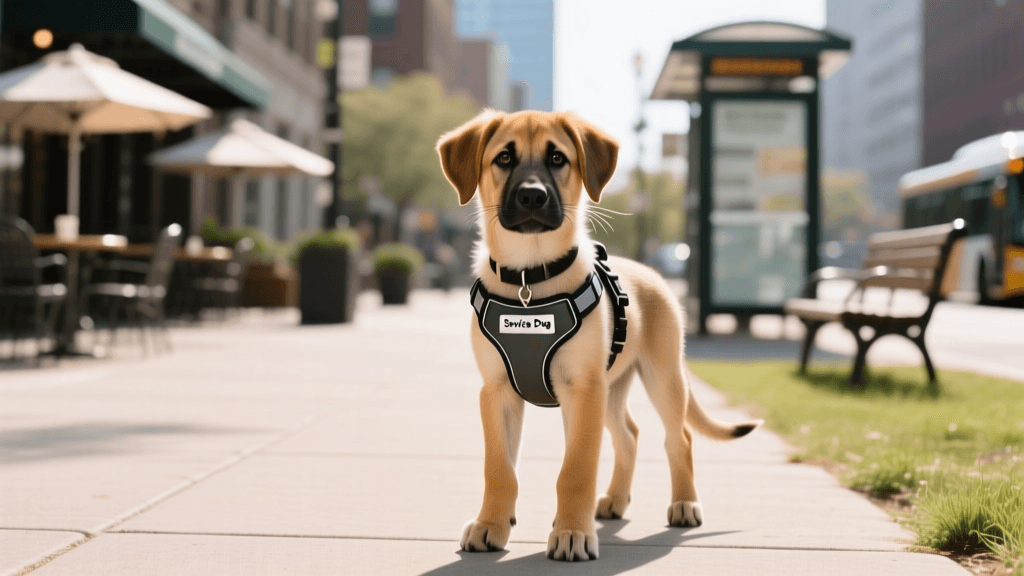
Service Dog Puppy Training: 2026 Public Access Guide
Discover the 2026 protocols for raising a service dog puppy. Learn public access desensitization, essential gear, and milestone tracking for working dogs.
Raising a puppy destined for working or service dog roles is a profound responsibility. In 2026, the standards for early puppy care and public access desensitization have become more refined than ever, leveraging canine behavioral science to ensure these future lifelines are confident, resilient, and focused. According to Assistance Dogs International (ADI), the foundational months of a service dog puppy's life dictate their long-term success in high-stress public environments.
Unlike companion pets, a service dog puppy must learn to ignore distractions, navigate complex surfaces, and remain neutral to strangers while wearing working gear. This guide outlines the exact 2026 protocols for raising a working-line puppy from eight weeks to six months of age, ensuring they are primed for advanced task training.
The Neurological Window: 8 to 16 Weeks
The primary socialization window closes around 14 to 16 weeks. During this period, a puppy's brain is highly plastic. The American Veterinary Medical Association (AVMA) emphasizes that safe, controlled exposure to novel stimuli during this window prevents fear-based reactivity later in life. For a future mobility support or psychiatric service dog, this means introducing the sounds of dropping crutches, the hum of motorized wheelchairs, and the erratic movements of crowds before the fear response fully develops.
The 2026 Public Access Desensitization Protocol
Public access training for a puppy is not about teaching them to 'work' in public; it is about teaching them to 'exist neutrally' in public. Here is the phased approach recommended by modern behaviorists in 2026.
Phase 1: Environmental Auditory Conditioning (Weeks 8-10)
Before venturing into busy shopping centers, you must condition the puppy to the auditory landscape of human environments. Use high-fidelity sound libraries played at low volumes during meal times and play sessions. Gradually increase the volume of sounds like automatic doors, PA system announcements, and rolling shopping carts. Pair these sounds with high-value rewards, such as freeze-dried liver or boiled chicken, to build a positive conditioned emotional response (+CER).
Phase 2: Surface and Texture Navigation (Weeks 10-12)
Future guide and mobility dogs must confidently traverse grates, wet tile, escalators, and tactile paving. In 2026, many puppy raisers utilize modular sensory mats at home to simulate these textures. When venturing out, allow the puppy to investigate metal grates or uneven cobblestone at their own pace. Never force a puppy onto a scary surface; instead, use a 'target' command to encourage them to place their paws on the novel texture, rewarding heavily for bravery.
Phase 3: Human Interaction and Neutrality (Weeks 12-16)
A common pitfall for novice puppy raisers is allowing the public to pet the future service dog. The American Kennel Club (AKC) stresses that service dogs must learn to ignore the public while in harness. Teach the 'say hello' release cue, but default to the 'leave it' or 'watch me' cue when approaching strangers. Use a clearly visible patch on the puppy's vest that reads 'Please Do Not Pet - Future Service Dog in Training' to manage public interactions.
Mastering Public Potty Training Protocols
One of the most challenging aspects of raising a service dog puppy is teaching them to eliminate on command and only in appropriate areas. A working dog cannot afford to have accidents in a hospital, courtroom, or aircraft cabin. In 2026, the gold standard for public potty training involves establishing a strict 'potty zone' routine at home before ever attempting it in public. Use a specific verbal cue, such as 'go potty,' while the puppy is on a designated textured mat or gravel patch in your yard.
Once the puppy reliably eliminates on cue at home, transfer this behavior to novel outdoor surfaces. Carry a portable, foldable potty patch or use natural grass strips in quiet outdoor areas near your destination. Always reward heavily with high-value treats immediately after they finish. Never allow a future service dog to sniff and wander aimlessly in public to find a spot; they must learn to eliminate quickly and efficiently on command so they can return to their handler's side and resume work.
Crate Training and the 'Settle' Command
Service dogs spend a significant portion of their working lives tucked under desks, restaurant tables, or in confined transit spaces. Teaching a puppy to settle quietly in a crate or on a portable mat is non-negotiable. Begin by making the crate the most rewarding place in the house. Feed all meals inside the crate, provide long-lasting enrichment items like frozen Kongs or lick mats, and gradually increase the duration the puppy spends inside with the door closed.
Transition this to a portable 'place' mat that you carry with you to public locations. In 2026, many professional trainers use lightweight, silicone-backed training mats that grip slippery floors and provide a familiar scent profile for the puppy. When you arrive at a coffee shop or veterinary clinic, deploy the mat, cue 'settle,' and reward the puppy for keeping all four paws on the mat and remaining quiet. This builds the muscle memory required for hours of unobtrusive public access work later in life.
Essential Gear for the 2026 Working Puppy
Outfitting a growing puppy requires gear that is safe, adjustable, and clearly identifies their training status. In 2026, the trend has shifted toward ergonomic, lightweight harnesses that do not impede shoulder development, paired with smart-tracking tags for safety. Below is a comparison of the top-rated puppy training vests for working lines this year.
| Brand & Model | Best For | Key 2026 Feature | Price Estimate |
|---|---|---|---|
| Julius-K9 IDC Powerharness Puppy | Broad-chested breeds | Interchangeable patches, breathable lining | $85 |
| Rabbitgoo No-Pull Tactical Puppy Vest | High-distraction environments | Front and back leash clips, lightweight mesh | $32 |
| Bolux Service Dog Puppy Vest | Budget-friendly starters | Reflective trim, lightweight Oxford fabric | $22 |
| Alpine Outfitters Smart-Track Puppy Harness | Tech-savvy raisers | Integrated AirTag pocket, orthopedic padding | $65 |
Health, Nutrition, and Joint Care
Working dogs put immense physical strain on their bodies. Proper nutrition during the first year is critical to prevent orthopedic issues like hip and elbow dysplasia. In 2026, veterinary nutritionists recommend feeding large-breed working puppies a diet specifically formulated to control growth rates, maintaining a lean body condition score (BCS) of 4 out of 9.
Supplementation is also key. Adding a high-quality omega-3 fatty acid supplement rich in DHA supports both joint health and cognitive development, which is vital for the complex problem-solving skills required of service dogs. Always consult with a board-certified veterinary nutritionist to tailor the diet to your specific breed and working line.
Tracking Milestones and Logging Data
Modern puppy raising relies heavily on data. Keeping a meticulous log of your puppy's reactions to new stimuli helps identify triggers before they become ingrained fears. In 2026, many handlers use dedicated canine behavioral apps to log daily socialization outings, noting the environment, the puppy's stress signals (e.g., lip licking, yawning, whale eye), and recovery time. This data is invaluable when transitioning the puppy to a professional organization or advanced trainer at six months of age.
Conclusion
Raising a service dog puppy is a marathon, not a sprint. By adhering to the 2026 public access desensitization protocols, utilizing ergonomic gear, and prioritizing neurological development, you lay an unbreakable foundation. The first six months are about building confidence, resilience, and a deep bond of trust. With patience and precise execution, your puppy will be well on their way to becoming a life-changing partner for someone in need.
aaron-whyte
All our authors care for dogs every day — read more of their work on the authors page.