Service Dog Off-Switch: Decoding Canine Behavior in 2026
Learn how working and service dogs master the behavioral off-switch. Decode body language transitions and support your dog's psychological well-being.
The Psychology of the Service Dog Off-Switch
When we observe a service dog navigating a crowded airport or guiding a handler through a busy intersection, we are witnessing a masterpiece of canine cognitive focus. However, one of the most critical, yet frequently misunderstood, aspects of working dog psychology is the 'off-switch.' As of 2026, advancements in canine behavioral science have given us a much deeper understanding of how task-trained dogs transition between high-stakes working modes and complete psychological decompression. Understanding this transition is not just about giving the dog a break; it is about recognizing the profound physiological and neurological shifts that occur when the harness comes off.
For handlers, puppy raisers, and canine enthusiasts, decoding the off-switch is essential for preventing burnout, managing cortisol levels, and ensuring the long-term mental health of the dog. In this comprehensive guide, we will explore the body language, neurobiology, and breed-specific variations of the working dog's off-switch, providing actionable insights aligned with the latest 2026 training standards.
The Neurobiology of the Working Drive
To understand the off-switch, we must first understand the 'on-switch.' Service dogs are selected and trained to harness specific drives—often a combination of prey drive, pack drive, and a strong desire for cooperative work. When a service dog dons its working gear, its brain enters a state of focused arousal. Dopamine pathways are activated, reinforcing the dog's attention on the handler and the environment. This is not a state of stress, but rather a state of 'eustress' (positive stress), where the dog finds deep satisfaction in performing its duties.
However, maintaining this level of hyper-vigilance requires immense cognitive energy. The canine brain, much like the human brain, cannot sustain peak executive function indefinitely without experiencing decision fatigue. According to guidelines published by Assistance Dogs International (ADI), accredited programs heavily emphasize the necessity of structured downtime to allow the dog's nervous system to reset. Without a reliable off-switch, a working dog can develop chronic anxiety, hypervigilance, or stereotypic behaviors (such as excessive licking or pacing) as maladaptive coping mechanisms for unspent cognitive energy.
Decoding the Harness: The Ultimate Environmental Cue
The most powerful tool in a service dog's psychological toolkit is the working harness or vest. Through thousands of repetitions, the dog learns a clear binary association: the gear on means 'I am responsible for my human's safety and needs,' and the gear off means 'I am just a dog.' This environmental cue triggers a cascade of physiological changes. Heart rate variability (HRV) shifts, breathing patterns change, and muscle tension dissipates.
In 2026, the use of canine biometric wearables has allowed researchers and top-tier training facilities to quantify this transition. Data shows that a well-trained service dog's resting heart rate can drop by 15 to 20 beats per minute within ten minutes of the harness being removed, provided the dog is in a safe, familiar environment. This rapid decompression is the hallmark of a psychologically sound working dog.
Body Language Comparison: On-Duty vs. Off-Duty
Recognizing the physical manifestations of the off-switch is crucial for handlers to ensure their dogs are truly decompressing. Below is a detailed comparison of the body language signals exhibited by a working dog in active duty versus relaxation mode.
| Physical Feature | On-Duty (Working Mode) | Off-Duty (Relaxation Mode) |
|---|---|---|
| Eye Contact | Focused, checking in with handler, scanning environment | Soft gaze, slow blinking, averted eyes, squinting in contentment |
| Ear Position | Pricked forward, swiveling to track auditory cues | Relaxed, pinned back slightly, or resting in natural neutral position |
| Tail Carriage | Still, level with spine, or stiff, controlled wags | Loose, sweeping wags, full-body wags, or tucked comfortably while resting |
| Breathing | Closed mouth, rhythmic, shallow chest breathing | Open mouth, relaxed panting, deep abdominal sighs |
| Posture | Lean, weight shifted forward, ready to move, rigid spine | Sprawled out, curled up, weight completely dropped, 'splooting' |
| Vocalization | Silent, suppressing natural whines or barks | Groaning when settling, playful barks, 'talking' or howling |
Breed-Specific Variations in Decompression
While the concept of the off-switch is universal across all working breeds, the way it manifests can vary significantly depending on the dog's genetic lineage. Understanding these breed-specific quirks is vital for tailoring decompression routines.
- Labrador Retrievers & Golden Retrievers: These breeds are the backbone of the mobility and guide dog world. Their off-switch often involves intense physical closeness. When off-duty, a Retriever's decompression looks like 'velcro dog' behavior—leaning heavily against the handler, demanding physical touch, and engaging in soft-mouthed carrying of toys to self-soothe.
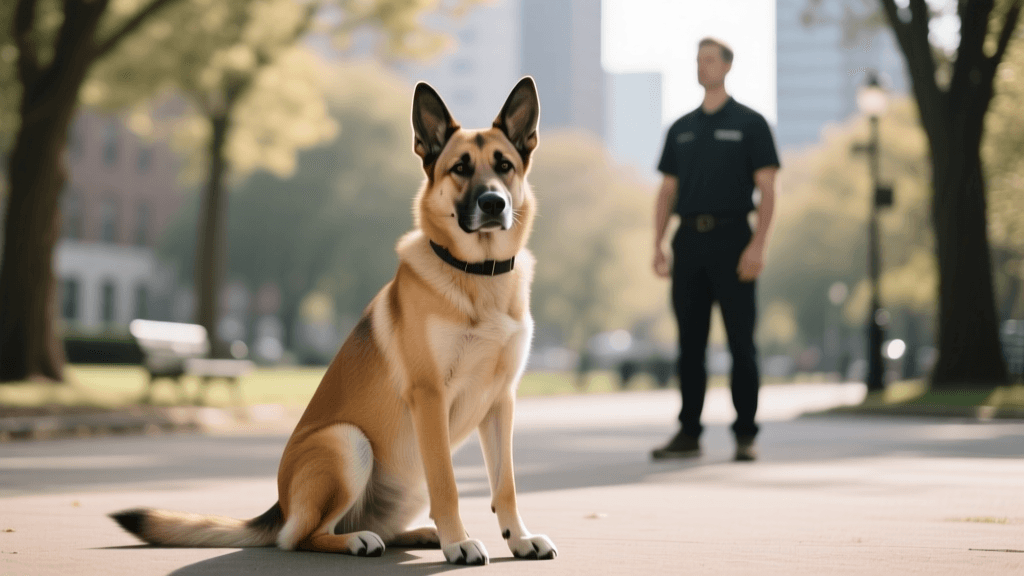
- German Shepherds & Belgian Malinois: Often utilized in detection, psychiatric, and protection roles, these herding breeds possess a notoriously high motor. Their off-switch is harder to flip and requires active decompression. Simply taking the harness off may not be enough; they often require a structured 'cool down' period, such as a slow sniffari walk or a session with a snuffle mat, to transition their brains from high-arousal tracking to rest.
- Standard Poodles: Highly intelligent and sensitive, Poodles excel in medical alert and psychiatric service work. Their off-switch is often mental rather than physical. A Poodle decompresses best through puzzle-solving and quiet observation. They may choose to sleep in a separate room or a designated crate to escape the sensory input of the household.
Training the Transition: 2026 Protocols
The Americans with Disabilities Act (ADA) mandates that service dogs must be under control and unobtrusive in public. This legal requirement inherently demands that the dog possesses a robust 'on-switch.' However, modern behavioral science dictates that the off-switch must be trained with equal rigor. You cannot simply expect a dog to know how to relax; relaxation is a trained behavior.
1. The 'Mat Training' Protocol
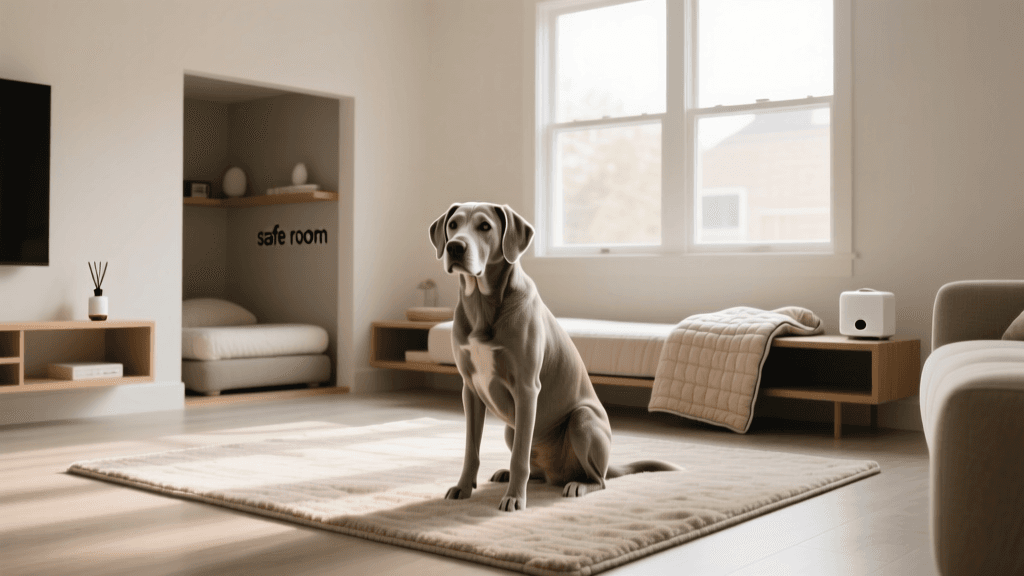
One of the most effective methods for teaching the off-switch is place or mat training. By associating a specific textured mat with a state of total relaxation, the dog learns to generalize this behavior. In 2026, trainers utilize biofeedback techniques, rewarding the dog not just for lying down, but for specific physiological markers of relaxation, such as a deep sigh or a resting chin. The American Kennel Club (AKC) frequently highlights mat training as a foundational skill for all working dogs, providing them with a portable 'safe zone' wherever they go.
2. The Harness Removal Ceremony
Handlers are encouraged to make the removal of the working gear a deliberate, calm ritual. Rather than simply unbuckling the vest and walking away, the handler should use a specific release cue (e.g., 'Free dog' or 'All done'), followed by a gentle massage along the dog's topline and shoulders. This physical touch helps release muscle tension built up during public access work and signals to the dog's nervous system that the threat level is zero.
3. Decompression Walks (Sniffaris)
Working walks are highly structured; the dog heels, ignores distractions, and focuses on tasks. A decompression walk, by contrast, is entirely dog-led. The handler uses a long line (15 to 30 feet) in a safe, enclosed area and allows the dog to dictate the pace and direction. Sniffing lowers a dog's pulse rate and engages the parasympathetic nervous system. For a working dog, 20 minutes of uninterrupted sniffing is neurologically equivalent to an hour of rigorous physical exercise.
Common Misconceptions About Working Dogs
'A good service dog is always working.' This is a dangerous myth that leads to canine burnout. A truly exceptional service dog is one that can flip the switch to 'off' with absolute certainty, allowing them to recharge their cognitive batteries for the next shift.
Another common misconception is that service dogs are deprived of a 'normal' dog life because they work. In reality, the structured nature of their work, combined with the deep bond they share with their handlers, provides immense psychological fulfillment. The key is ensuring that when the workday ends, the dog is permitted to engage in species-typical behaviors: digging, playing, chewing, and sleeping in awkward positions.
Conclusion: Honoring the Whole Dog
As our understanding of canine cognition continues to evolve in 2026, the industry standard for working and service dogs has shifted from mere obedience to holistic psychological well-being. The off-switch is not a sign of laziness or a lack of dedication; it is a vital biological necessity. By learning to read the subtle body language transitions, respecting breed-specific decompression needs, and actively training for relaxation, handlers can ensure their canine partners remain healthy, happy, and capable of performing their life-changing duties for years to come. Remember, behind every life-saving task and steady guiding step is a dog that, at the end of the day, just wants to be a dog.
marcus-aldridge
All our authors care for dogs every day — read more of their work on the authors page.