Separation Anxiety in Dogs: A Behaviorist's Treatment Guide
Discover a behaviorist's step-by-step guide to treating canine separation anxiety, including desensitization schedules, costs, and top calming products.
The Clinical Reality of Canine Separation Anxiety
As an applied animal behaviorist, one of the most pervasive and misunderstood conditions I treat is canine separation anxiety. Often dismissed by well-meaning owners as mere 'clinginess' or 'bad behavior,' true separation anxiety is a profound panic disorder. When a dog with this condition is left alone, their sympathetic nervous system triggers a massive fight-or-flight response. Cortisol and adrenaline flood their system, resulting in destructive behavior, excessive vocalization, inappropriate elimination, and sometimes severe self-mutilation. According to the ASPCA, separation anxiety affects a significant portion of the canine population, and it requires a clinical, structured approach to resolve.
Differential Diagnosis: Isolation Distress vs. True Anxiety
Before initiating a behavior modification protocol, we must differentiate between isolation distress and true separation anxiety. Isolation distress means the dog simply does not want to be alone and will settle if any human or even another dog is present. True separation anxiety is hyper-attachment to a specific figure or a profound panic when left in a specific environment, regardless of who else might be home. Furthermore, we must rule out confinement phobia (panic specifically related to crates or small rooms) and juvenile destruction (boredom-driven chewing common in puppies). Accurate diagnosis relies heavily on video analysis of the dog's behavior during the first 20 minutes of departure.
The Behaviorist's Toolkit: Environmental Management
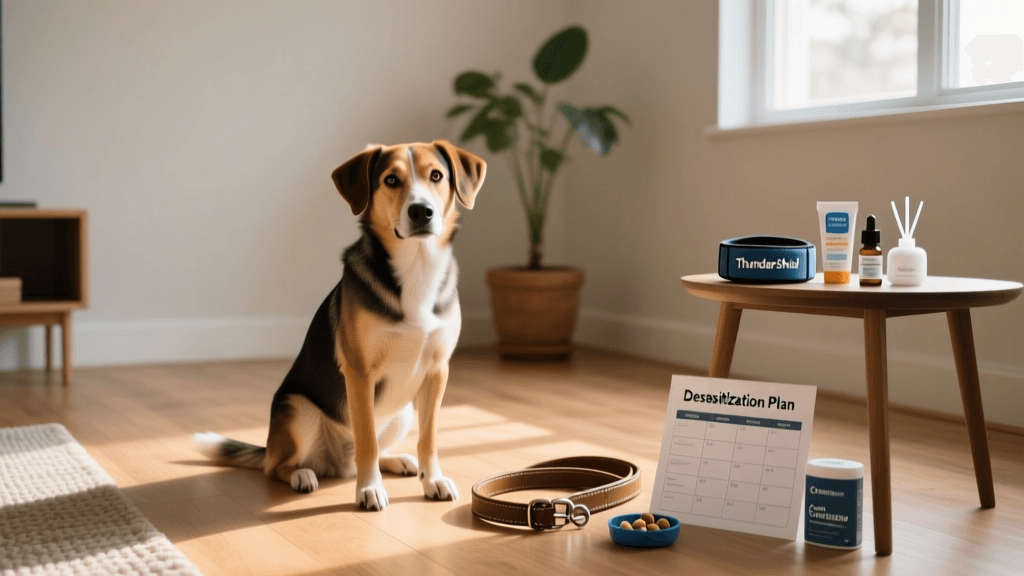
Management is not a cure, but it prevents the rehearsal of panic behaviors while we work on underlying emotional modification. Rehearsal strengthens neural pathways associated with fear. Below is the essential toolkit I recommend to clients, including specific products, estimated costs, and clinical applications.
| Product Category | Specific Recommendation | Est. Cost | Behaviorist Application |
|---|---|---|---|
| Remote Monitoring | Furbo 360 Dog Camera | $175 | Essential for tracking sub-threshold metrics and identifying exact trigger points (e.g., pacing vs. sleeping). |
| Pheromone Therapy | Adaptil Optimum Diffuser | $80 | Synthetic dog-appeasing pheromones that create a baseline of environmental security. Plug in 2 weeks before training. |
| Enrichment Feeders | KONG Extreme (Black) | $25 | Used for classical counterconditioning. Must be stuffed with high-value, freeze-dried liver or boiled chicken. |
| Nutraceuticals | Zylkene (Alpha-Casozepine) | $40 | A milk-protein derivative that acts on GABA receptors. Dosed at 15mg/kg daily to lower baseline arousal levels. |
| Acoustic Masking | LectroFan White Noise Machine | $50 | Masks outside environmental triggers (footsteps, cars) that can trigger anticipatory anxiety before the owner leaves. |
Systematic Desensitization: The Core Protocol
The gold standard for treating separation anxiety is systematic desensitization combined with classical counterconditioning. The goal is to expose the dog to pre-departure cues (triggers) at an intensity so low that it does not provoke a panic response. This is known as keeping the dog 'sub-threshold.' If your dog pants, paces, or whines, you have pushed them over threshold, and learning is impossible. The American Kennel Club emphasizes that patience and micro-steps are the only ways to rewire the anxious brain.
Below is a sample sub-threshold departure protocol. Note that progression is non-linear; some dogs may require weeks on a single step. Timing is critical: the dog must remain relaxed for the entire duration of the step before advancing.
| Step | Trigger / Action | Duration | Success Metric |
|---|---|---|---|
| 1 | Touch the front doorknob | 1 second | Dog remains seated or lying down, no ear flicking or whale eye. |
| 2 | Jingle car keys in hand | 3 seconds | Dog shows no change in respiration rate; continues chewing a mat. |
| 3 | Put on shoes and coat | 5 seconds | Dog remains relaxed; accepts a high-value treat from hand. |
| 4 | Open door 2 inches, close it | 2 seconds | No forward movement or whining from the dog. |
| 5 | Step outside, close door, return | 0.5 seconds | Camera shows dog remains in place, no immediate vocalization. |
| 6 | Step outside, wait, return | 10 seconds | Heart rate remains normal upon review of camera footage. |
Classical Counterconditioning and Timing
While desensitization addresses the physical triggers, counterconditioning changes the emotional response. We pair the scary event (the owner leaving) with an exceptionally high-value stimulus. For most dogs, dry kibble is insufficient. We use single-ingredient treats like freeze-dried minnows or pureed chicken in a lick mat. The timing of this reward is paramount. The high-value item must be presented exactly 1 to 2 seconds before the trigger occurs, and it must be removed the moment the owner returns. This builds a predictive association: 'Owner's departure equals the arrival of the best food on earth.' As noted by Fear Free Pets, creating positive emotional associations is foundational to reducing chronic stress in companion animals.
The Role of Physical Exercise and Mental Fatigue
A common misconception is that exhausting a dog physically will cure separation anxiety. While a tired dog is generally a well-behaved dog, physical exhaustion does not cure a panic disorder. However, structured exercise plays a crucial supporting role in lowering overall sympathetic nervous system arousal. I recommend 45 minutes of aerobic exercise (like fetch or flirt-pole work) followed by 20 minutes of mental enrichment (like scent work or puzzle toys) at least two hours before a planned desensitization session. This timeline allows the dog's heart rate and core body temperature to return to baseline, ensuring they are in a calm, receptive learning state rather than a hyper-aroused or physically depleted state. Mental fatigue, achieved through olfactory work, is particularly effective as sniffing naturally lowers a dog's pulse rate and encourages parasympathetic nervous system engagement.
Adjunct Therapies and Holistic Support
Behavior modification does not exist in a vacuum. A dog with chronically elevated cortisol will struggle to form new, positive neural pathways. This is where adjunct therapies become vital. In addition to the Zylkene mentioned in the toolkit, I frequently recommend L-theanine supplements (such as Virbac Anxitane), which promote alpha-brain wave production without sedation. Environmental enrichment is also non-negotiable. A dog that engages in 30 minutes of sniffing and foraging via a snuffle mat or scatter feeding prior to a training session will have a lower baseline arousal level, making them more receptive to desensitization work.
Critical Mistakes to Avoid
As a behaviorist, I spend a significant amount of time undoing the damage caused by outdated training advice. Never use punishment-based tools like shock collars or citronella spray collars to stop vocalization. These devices suppress the symptom (barking) but do nothing to address the underlying panic, often resulting in a dog that is silently terrified and may resort to self-mutilation. Similarly, avoid the 'cry it out' method (flooding). Flooding a dog with their worst fear until they stop moving is not relaxation; it is learned helplessness, a state of severe psychological depression. Finally, do not crate a dog with separation anxiety unless they have a documented, positive history of crate training. Confinement often exacerbates the panic, leading to broken teeth and torn nails as the dog attempts to escape.
Tracking Progress and Knowing When to Seek Help
Progress in separation anxiety treatment is measured in weeks and months, not days. Keep a detailed log of your camera footage, noting the exact minute your dog shows the first sign of stress (pacing, panting, lip licking). If your dog cannot tolerate a 1-second departure after three weeks of consistent, daily training, it is time to consult a board-certified veterinary behaviorist (DACVB). They can prescribe psychotropic medications, such as selective serotonin reuptake inhibitors (SSRIs) like fluoxetine, which act as a chemical scaffold to support your behavior modification efforts. By combining clinical management, precise timing, and empathetic understanding, we can help our canine companions find peace when left alone.
anouk-beaumont
All our authors care for dogs every day — read more of their work on the authors page.