Creating A Decompression Space For Reactive Dogs 2026
Learn how to build a sensory decompression space for reactive and anxious dogs in 2026. Discover top calming gear, setup steps, and daily routines.
Understanding the Canine Cortisol Hangover
Living with a reactive or highly anxious dog requires more than just positive reinforcement training on the sidewalk; it demands a holistic approach to their nervous system. In 2026, veterinary behaviorists increasingly emphasize the concept of the 'cortisol hangover.' When a reactive dog encounters a trigger—such as an unfamiliar dog, a loud truck, or a chaotic environment—their body releases a surge of cortisol and adrenaline. While the immediate reaction might last only a few minutes, the physiological recovery period can take anywhere from 48 to 72 hours. During this window, your dog's baseline anxiety is elevated, making them significantly more likely to react to subsequent, smaller triggers. This phenomenon, known as trigger stacking, is why a dedicated decompression space is no longer a luxury, but a fundamental necessity for reactive dog management.
A sensory sanctuary provides a controlled environment where your dog's nervous system can down-regulate. By carefully managing acoustic, visual, olfactory, and tactile inputs, you can actively accelerate your dog's recovery time. According to behavioral guidelines published by the American Kennel Club, creating a predictable, safe haven is one of the most effective ways to manage chronic canine anxiety and reactivity at home.
Selecting the Right Location for Your Sanctuary
Before purchasing any gear, you must choose the right physical location. The ideal decompression space is in a low-traffic area of your home, away from the front door, the kitchen, and main hallways. A spare bedroom, a finished basement corner, or a large, enclosed walk-in closet works best. The goal is to eliminate the element of surprise. Your dog should not be startled by family members walking past or the sudden arrival of guests. Furthermore, the space should have a door that can be closed to muffle household noise, or at least be sectioned off by a heavy, sound-dampening room divider.
Core Components of a 2026 Sensory Sanctuary
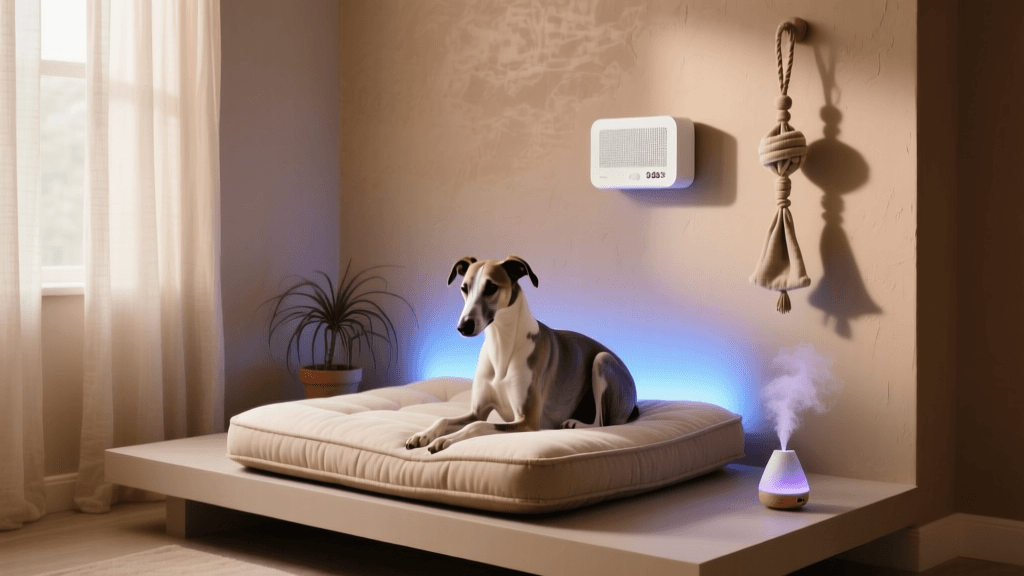
Building an effective decompression zone requires addressing all of your dog's primary senses. Here is the essential gear and environmental setup required for a modern canine sanctuary.
1. Acoustic Regulation and Sound Masking
Reactive dogs often suffer from noise sensitivity and hyper-vigilance, constantly monitoring the environment for auditory threats. Sound masking is critical to prevent sudden noises (like a neighbor's dog barking or a delivery truck) from spiking their arousal levels. In 2026, the gold standard for acoustic regulation is the use of adaptive white noise machines. The Adaptive Sound Technologies LectroFan Evo remains a top choice due to its non-looping, dynamically generated soundscapes that effectively mask unpredictable outdoor frequencies. Alternatively, specialized audio tracks designed for canine auditory ranges, such as Pet Acoustics playlists, utilize bio-acoustic music featuring classical piano and cello tempos proven to lower canine heart rates.
2. Visual Decompression and Smart Lighting
Fluorescent or harsh LED lighting can contribute to visual overstimulation. A true sanctuary should mimic the calming effects of dusk. Install heavy, thermal-backed blackout curtains to eliminate visual triggers from the street, such as passing cars or pedestrians. For interior lighting, smart bulbs like the Philips Hue White Ambiance allow you to program a 'Decompression Routine' that automatically shifts the room to a dim, warm amber glow (around 2200K) the moment you return from a stressful walk. This specific color temperature supports the natural production of melatonin, signaling to your dog's brain that it is time to rest and recover.
3. Olfactory Support: Pheromones and Aromatherapy
A dog's olfactory system is directly linked to the limbic system, which governs emotion and memory. Utilizing synthetic pheromones can create an invisible blanket of security. The Adaptil Optimum diffuser, the latest iteration in pheromone technology, releases a complex profile of dog-appeasing pheromones that mimic the comforting signals of a nursing mother. For dogs that do not respond to pheromones, certified veterinary behaviorists sometimes recommend diluted lavender or sweet marjoram essential oils applied to a felt pad and placed out of reach. However, always ensure the scent is mild; a dog's nose is incredibly sensitive, and overpowering aromas can cause respiratory irritation and increase stress.
4. Tactile and Proprioceptive Input
Proprioceptive input—awareness of the body in space—can be deeply grounding for an anxious dog. The ThunderShirt provides gentle, constant pressure that stimulates the release of endorphins and oxytocin, acting as a physical 'hug.' For resting, invest in an orthopedic calming bed with raised, bolstered edges, such as the Furhaven Orthopedic Sofa Bed or the premium Big Barker Calming Crate Pad. The raised edges provide a sense of physical security and allow the dog to rest their head, which helps align the spine and promote deeper REM sleep, crucial for neurological recovery.
Comparison: Environmental vs. Wearable Calming Aids
Choosing the right combination of tools depends on your dog's specific triggers and physical sensitivities. Below is a comparison of the top calming interventions utilized in 2026.
| Aid Type | Best For | Onset Time | 2026 Top Pick | Approx. Cost |
|---|---|---|---|---|
| Pheromone Diffuser | Generalized anxiety, shelter dogs, multi-dog tension | 24-48 Hours | Adaptil Optimum Plug-In | $85 |
| Compression Wearable | Storm phobia, acute reactivity, travel stress | Immediate | ThunderShirt Platinum | $45 |
| Adaptive Sound Machine | Hyper-vigilance, noise sensitivity, urban living | Immediate | LectroFan Evo | $50 |
| Bolstered Orthopedic Bed | Senior reactive dogs, joint pain compounding anxiety | Immediate | Big Barker Orthopedic | $240 |
Step-by-Step Setup Protocol
To ensure your dog actually views this space as a sanctuary rather than a confinement zone, follow this gradual introduction protocol:
- Step 1: Scent Soaking. Before introducing your dog, place an unwashed t-shirt you have worn recently on the bed. Your familiar scent provides a baseline of security.
- Step 2: Positive Association. For the first week, leave the door open. Toss high-value treats (like freeze-dried liver or chicken) into the space. Do not force the dog to enter; let them choose to explore.
- Step 3: Meal Relocation. Move their daily meals into the sanctuary. Feeding is a primary positive reinforcer and will quickly rewire their emotional response to the room.
- Step 4: Introduce Sensory Elements Gradually. Turn on the white noise machine at a very low volume while they eat. Introduce the dim lighting a few days later. Do not overwhelm them with all sensory inputs at once.
- Step 5: The Decompression Chew. Provide a long-lasting, species-appropriate chew (like a coffee wood root or a stuffed, frozen Kong) exclusively in this space. Chewing is a self-soothing behavior that actively lowers canine heart rates.
- Step 6: Respecting the Boundary. Establish a strict household rule: when the dog is in the sanctuary, they are invisible. No children, guests, or other pets are allowed to enter or disturb them.
Integrating the Sanctuary into Your Daily Routine
A decompression space is most effective when paired with a 'decompression walk' or 'sniffari.' After a stressful encounter on your walk, or simply as part of your evening routine, take your dog on a 20-minute walk on a long line in a quiet, grassy area. Allow them to sniff at their own pace without demanding heel or obedience. Sniffing engages the parasympathetic nervous system, naturally lowering arousal. Upon returning home, guide them directly into their dimly lit, sound-masked sanctuary with a frozen enrichment toy. This transition from active mental engagement to passive environmental soothing creates a powerful physiological off-switch.
Experts associated with the Fear Free Pets certification program heavily advocate for these environmental modifications, noting that reducing chronic stress at home directly improves a dog's threshold for reactivity outdoors. When a dog's nervous system is chronically frayed, no amount of treats or leash corrections will fix their reactivity. They simply lack the neurological bandwidth to learn.
Common Mistakes to Avoid
Even with the best gear, human error can ruin a sanctuary's effectiveness. First, never use the decompression space as a time-out or punishment area. If you place your dog in the room when you are angry, the space will become associated with your negative emotional state and their own anxiety. Second, avoid placing the bed directly under an air conditioning vent or heater, as sudden drafts or temperature spikes can startle a hyper-vigilant dog. Finally, do not expect overnight miracles. The ASPCA reminds owners that behavioral modification and environmental management are long-term commitments. It may take several weeks for a deeply reactive dog to fully trust and utilize the space.
Conclusion
Managing a reactive dog in the modern world is undeniably challenging, but creating a dedicated sensory decompression space is one of the most profound ways you can advocate for their well-being. By leveraging 2026's best acoustic, visual, and olfactory tools, you are not just giving your dog a place to sleep; you are providing a vital neurological reset button. A dog that can properly decompress is a dog that has the emotional resilience to face the outside world with a calmer, more balanced mindset.
robin-maitland
All our authors care for dogs every day — read more of their work on the authors page.