Senior Dog Nutrition: Daily Routines For Joint Health
Discover practical daily routines and nutrition deep dives to support your senior dog's joint health, mobility, and overall vitality as they age gracefully.

The Intersection of Daily Life and Senior Canine Nutrition
Sharing your home with an aging dog is one of the most profoundly rewarding experiences in a pet owner's life. However, as your canine companion transitions into their senior years, the practical aspects of your shared daily routine must evolve. The 'Life with Your Dog' category often highlights the joy of active adventures, but managing an older dog requires a nuanced approach to health and nutrition. Specifically, joint health and gastrointestinal vitality become the twin pillars of your dog's quality of life. According to veterinary nutritionists at Tufts University Cummings Veterinary Medical Center, aging dogs experience distinct metabolic shifts that require targeted dietary adjustments rather than simply switching to a generic 'senior' kibble formula.
The Nutritional Shift: What Aging Joints and Guts Need
Canine osteoarthritis affects an estimated 20% of adult dogs and over 80% of senior dogs. To combat this, a deep dive into anti-inflammatory nutrition is essential. The foundation of joint-supportive nutrition lies in Omega-3 fatty acids, specifically Eicosapentaenoic acid (EPA) and Docosahexaenoic acid (DHA). While many commercial senior diets claim to contain fish oil, the therapeutic dose required to actively reduce joint inflammation is often much higher than what is preserved in extruded kibble.
For a 50-pound dog, veterinary guidelines often recommend a combined EPA/DHA dose of 1,000mg to 2,000mg daily. Products like Nordic Naturals Omega-3 Pet or Grizzly Salmon Plus (typically costing between $25 and $40 per bottle) provide verified, concentrated doses. Furthermore, gut health directly influences systemic inflammation. Incorporating a multi-strain probiotic, such as Purina Pro Plan Veterinary Supplements FortiFlora or Nutri-Vet Probiotic Soft Chews, helps maintain the intestinal barrier, ensuring that nutrients meant for joint repair are properly absorbed rather than lost to age-related digestive inefficiencies.
Supplementing Smartly: A Breakdown of Joint Supports
Beyond Omega-3s, the supplement market is flooded with joint chews and powders. Choosing the right one requires understanding the active ingredients and their timelines for efficacy. Below is a structured comparison of the most evidence-based joint supplements for senior dogs.
| Supplement Type | Primary Benefit | Recommended Dosage (per 50 lbs) | Time to See Results | Estimated Monthly Cost |
|---|---|---|---|---|
| Glucosamine HCl & Chondroitin | Cartilage building blocks and synovial fluid support | 1,000mg Glucosamine / 800mg Chondroitin daily | 4 to 6 weeks | $30 - $45 |
| Omega-3 Fatty Acids (EPA/DHA) | Reduces systemic and joint-specific inflammation | 1,000mg - 2,000mg combined EPA/DHA | 2 to 4 weeks | $25 - $40 |
| Green-Lipped Mussel (GLM) | Broad-spectrum support via natural glycosaminoglycans | 15mg - 20mg per lb of body weight | 4 to 8 weeks | $20 - $35 |
| Undenatured Type II Collagen (UC-II) | Modulates immune response to prevent cartilage attack | 10mg daily (micro-dose) | 4 to 6 weeks | $25 - $30 |
Building a Joint-Friendly Daily Routine
Nutrition is only half the battle; how you structure your dog's daily environment and activities dictates how their joints hold up over time. A rigid, high-impact routine (like playing intense fetch for 45 minutes every evening) can accelerate cartilage degradation in senior dogs. Instead, implement a 'low-impact, high-engagement' daily schedule.
Morning: The 'Sniffari' Walk
Replace the brisk, heel-focused morning walk with a 20-minute 'Sniffari.' Allow your dog to dictate the pace and stop to smell as often as they like. Mental enrichment through scent work tires a dog out just as effectively as physical exercise but places a fraction of the mechanical load on aging hips and elbows. Use a well-padded, no-pull harness (such as the Ruffwear Front Range) to distribute any sudden pulling forces across the chest rather than the neck or shoulders.
Afternoon: Enrichment Over Exertion
When the afternoon energy spike hits, avoid throwing balls or frisbees. Opt for frozen KONG toys stuffed with plain canned pumpkin, a spoonful of plain Greek yogurt, and a dash of low-sodium bone broth. Licking and chewing release endorphins that soothe anxiety and boredom, while the cold temperature can mildly numb oral inflammation. This routine costs less than $15 to set up and saves your dog's joints from repetitive concussive impacts.
Evening: Orthopedic Rest and Massage
Senior dogs spend up to 18 hours a day resting. The surface they rest on is critical. Thin, flat beds do not prevent pressure points from forming over bony prominences like the hocks and elbows, leading to painful calluses and hygromas. Invest in a true orthopedic bed with a minimum of 4 inches of high-density memory foam, such as the Big Barker Orthopedic Dog Bed (priced around $250-$300). While a premium investment, it drastically improves overnight joint recovery. Pair this with a 5-minute evening massage using gentle, sweeping strokes to promote local blood circulation to stiff muscles.
Managing Digestion and Weight: The Silent Joint Killers
It is impossible to discuss joint health without addressing body weight. The Association for Pet Obesity Prevention (APOP) consistently reports that over 50% of dogs in the United States are overweight or obese. Every extra pound on a dog's frame exerts roughly four pounds of additional pressure on their joints. For a senior dog already battling osteoarthritis, being just three pounds overweight can be the difference between comfortably navigating stairs and requiring assistance to stand.
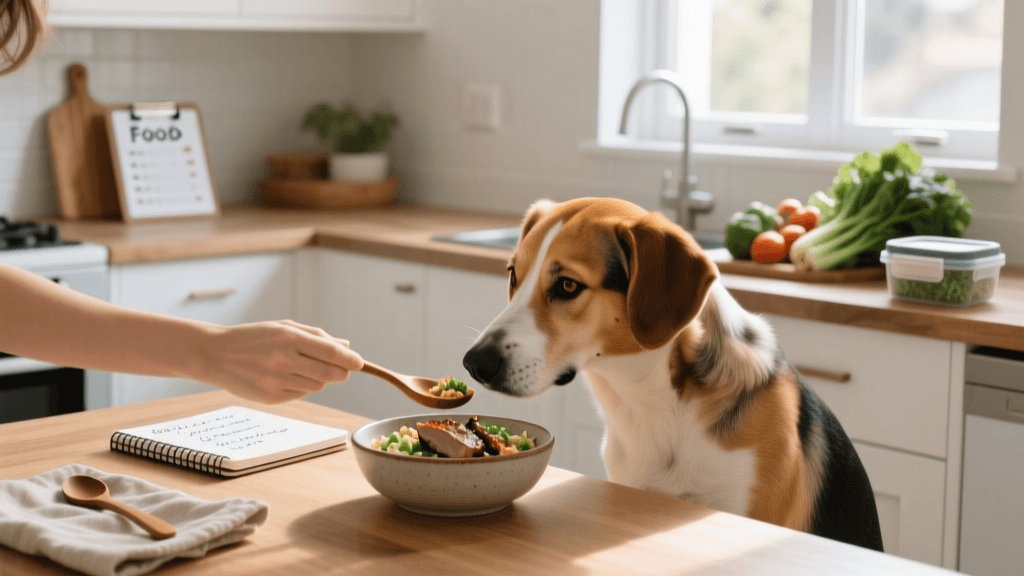
To manage this, abandon the standard measuring cup. Kibble density varies wildly between brands, meaning a 'cup' of one brand can contain 30% more calories than a 'cup' of another. Purchase a digital kitchen gram scale (costing around $15) and weigh your dog's food based on the exact caloric requirements provided by your veterinarian. Furthermore, as dogs age, their stomach acid production can decrease, leading to slower digestion. Feeding two smaller, slightly warmed meals a day (adding a tablespoon of warm water to kibble to release aromas and soften the food) can significantly reduce post-meal bloating and gastrointestinal distress.
Tracking Progress and Veterinary Collaboration
Adjusting your senior dog's routine and nutrition is not a 'set it and forget it' endeavor. It requires continuous monitoring and professional collaboration. The World Small Animal Veterinary Association (WSAVA) emphasizes that nutritional assessment should be the 'fifth vital sign' in every veterinary examination. This means your dog's diet, supplement regimen, and body condition score (BCS) should be evaluated bi-annually.
Keep a simple daily journal tracking three metrics: morning stiffness duration (e.g., 'took 5 minutes to stand up'), enthusiasm for the Sniffari walk, and stool quality. If morning stiffness begins to last longer than 10 minutes, or if your dog starts lagging behind on walks, it is a clear biological signal that the current nutritional protocol or daily routine needs recalibration. By merging targeted, evidence-based nutrition with a compassionate, low-impact daily routine, you can profoundly enhance your senior dog's twilight years, ensuring that your life together remains as vibrant and comfortable as possible.
tom-renshaw
All our authors care for dogs every day — read more of their work on the authors page.