Senior Dog Dementia: Managing Canine Cognitive Dysfunction
Discover how to identify and manage canine cognitive dysfunction in senior dogs with practical tips, supplements, and environmental adjustments.

As our beloved dogs enter their golden years, we often expect them to slow down physically. However, a significant number of senior dogs also experience a decline in mental acuity. Canine Cognitive Dysfunction (CCD), commonly referred to as doggie dementia, is a progressive neurological disorder that affects older dogs in ways strikingly similar to Alzheimer's disease in humans. Recognizing the early signs and implementing a comprehensive care strategy can dramatically improve your aging dog's quality of life. This guide provides actionable, veterinary-aligned advice for managing CCD, from environmental modifications to targeted nutritional support.
Understanding Canine Cognitive Dysfunction (CCD)
Canine Cognitive Dysfunction is characterized by the accumulation of beta-amyloid plaques in the brain, leading to neuronal loss and decreased brain function. According to VCA Animal Hospitals, while CCD is most commonly diagnosed in dogs over the age of 11, early onset can occur in dogs as young as eight. The condition is not a normal part of aging; it is a specific medical syndrome that requires proactive management. Studies suggest that up to 28% of dogs aged 11-12 years, and nearly 68% of dogs aged 15-16 years, show at least one clinical sign of cognitive decline. Early intervention is critical to slowing the progression of the disease and maintaining your dog's daily functioning.
Recognizing the Signs: The DISHA Checklist
Veterinary behaviorists utilize the DISHA acronym to categorize the primary clinical signs of cognitive decline. If your senior dog exhibits multiple behaviors from this list, it is time to consult your veterinarian. The Washington State University College of Veterinary Medicine outlines these core symptoms as follows:
- Disorientation: Your dog may wander aimlessly, get stuck in corners or behind furniture, stare blankly at walls, or fail to recognize familiar rooms and family members.
- Interactions: Noticeable changes in social behavior, such as increased clinginess, uncharacteristic irritability, aggression, or a sudden withdrawal from affection and family activities.
- Sleep/Wake Cycles: Severe disruptions in circadian rhythms. Dogs with CCD often sleep deeply during the day and pace, whine, or bark relentlessly throughout the night (a phenomenon known as sundowning).
- House Soiling: A previously house-trained dog begins having accidents indoors. They may forget their training, fail to signal to go outside, or eliminate in their sleeping areas due to confusion.
- Activity Levels: A shift in purposeful activity. Dogs may exhibit repetitive, purposeless behaviors like licking the floor or snapping at the air, while simultaneously showing a decreased interest in play, walks, and exploring their environment.
Environmental Enrichment and Safety Modifications
A dog with CCD relies heavily on routine and spatial memory. When their cognitive map begins to fail, the home environment must be adapted to reduce anxiety and prevent injury. Start by maintaining a strict daily schedule for feeding, walks, and bathroom breaks. Predictability reduces the cognitive load on your aging dog's brain.
Physically modify your home to accommodate sensory and cognitive deficits. Place non-slip rugs or yoga mats over slippery hardwood floors to provide tactile feedback and prevent falls. If your dog tends to get stuck in corners, use baby gates or furniture blocks to restrict access to tight spaces. Keep the home well-lit during the evening hours; consider using motion-sensor LED nightlights in hallways and near their sleeping area to combat nighttime disorientation.
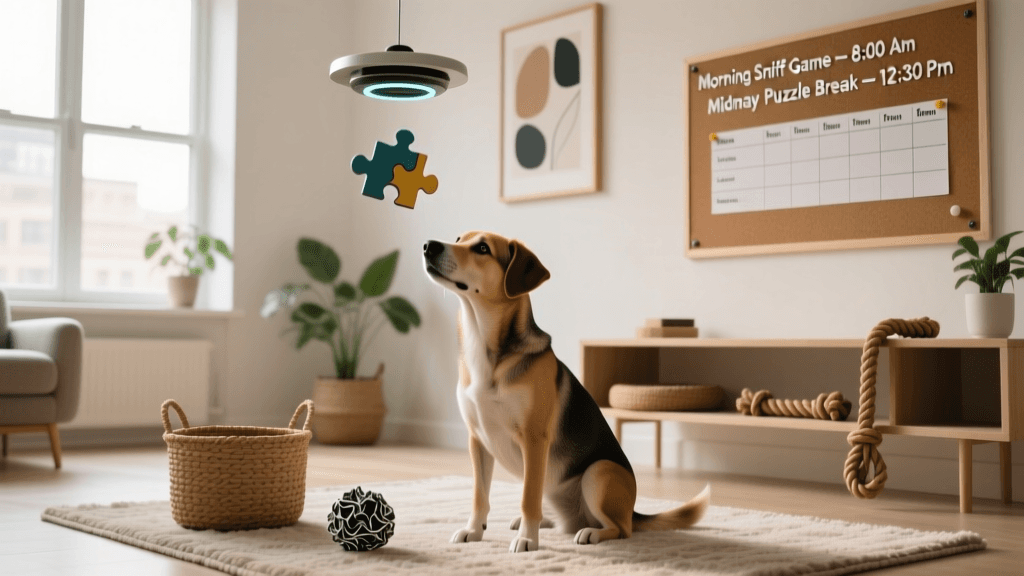
Mental stimulation remains crucial, but it must be tailored to their current abilities. Swap complex training for gentle, scent-based enrichment. Use puzzle toys like the Kong Senior (made from softer, purple rubber designed for aging teeth) filled with easily digestible wet food. The Outward Hound Nina Ottosson Dog Brick puzzle is another excellent, low-frustration option that encourages natural foraging behaviors without causing undue stress.
Nutritional Support and Brain-Boosting Supplements
Dietary interventions can play a pivotal role in managing CCD. Brains affected by cognitive dysfunction suffer from increased oxidative stress and altered glucose metabolism. Transitioning your dog to a diet rich in antioxidants, mitochondrial cofactors, and medium-chain triglycerides (MCTs) can provide alternative energy sources for struggling neurons. Always consult your veterinarian before introducing new supplements, especially if your dog is on prescription medications.
Below is a comparison chart of widely recommended veterinary supplements and nutritional additives for canine cognitive support:
| Supplement / Product | Active Ingredients | Typical Dosage Protocol | Est. Monthly Cost | Primary Benefit |
|---|---|---|---|---|
| Senilife | Phosphatidylserine, Ginkgo Biloba, Vitamin B6, Grape Seed Extract | 1 capsule daily (weight-dependent) | $30 - $45 | Protects cell membranes, reduces oxidative stress, improves memory. |
| Novifit | S-adenosylmethionine (SAMe) | 1 tablet daily (given on an empty stomach) | $40 - $60 | Supports liver function, increases neurotransmitter production, boosts mood. |
| MCT Oil (e.g., NOW Foods) | Medium-Chain Triglycerides (Caprylic/Capric acids) | Start at 1/4 tsp per 10 lbs of body weight, gradually increasing | $15 - $25 | Provides ketones as an alternative brain fuel source when glucose metabolism fails. |
| Omega-3 Fish Oil | EPA and DHA | Consult vet for EPA/DHA specific mg/kg dosing | $20 - $35 | Reduces neuroinflammation, supports overall cellular health. |
Note: When introducing MCT oil, increase the dosage slowly over two weeks to avoid gastrointestinal upset, such as diarrhea or pancreatitis flare-ups.
Veterinary Interventions and Prescription Medications
When environmental and nutritional modifications are insufficient, pharmaceutical intervention may be necessary. The most common FDA-approved medication for treating CCD in dogs is Selegiline hydrochloride, sold under the brand name Anipryl. According to the U.S. Food and Drug Administration (FDA), Anipryl works as a monoamine oxidase inhibitor (MAOI). It helps to increase the levels of dopamine and other catecholamines in the brain, which can improve sleep-wake cycles, reduce house soiling, and increase overall activity levels.
The standard dosage for Anipryl is typically 1 mg per kilogram of body weight, administered orally once daily in the morning. It generally takes 4 to 8 weeks to observe noticeable clinical improvements. Because Anipryl is an MAOI, it has strict contraindications and cannot be used concurrently with certain other medications, including SSRIs (like fluoxetine), tricyclic antidepressants, or opioid-based pain relievers like tramadol. Your veterinarian will need a complete medical history before prescribing this medication.
Managing Nighttime Anxiety and Sundowning
Nighttime restlessness is often the most exhausting symptom of CCD for pet owners. Dogs may pace, pant, whine, or bark at shadows, unable to settle. To manage sundowning, create a dedicated, secure nighttime sanctuary. This should be a quiet room with a high-quality orthopedic memory foam bed, such as the Big Barker Orthopedic Dog Bed, which provides essential joint support for aging bodies.
Utilize synthetic pheromones to promote a sense of security. The Adaptil Calm Home Diffuser releases a synthetic copy of the dog-appeasing pheromone produced by nursing mothers. Plug the diffuser into the wall in the room where your dog sleeps, ensuring it covers the appropriate square footage, and replace the refill vial every 30 days. Additionally, playing continuous white noise or classical music designed for dogs (such as playlists from 'Through a Dog's Ear') can mask unsettling household sounds and help regulate their nervous system.
If anxiety remains severe, your veterinarian may prescribe short-term, fast-acting anti-anxiety medications like Trazodone or Gabapentin to be administered specifically in the evenings to help your dog achieve restorative sleep.
Conclusion
Watching a beloved companion struggle with cognitive decline is emotionally challenging, but a diagnosis of Canine Cognitive Dysfunction is not a reason to lose hope. By combining environmental safety modifications, targeted brain-boosting nutrition, and appropriate veterinary therapies, you can significantly enhance your senior dog's twilight years. Stay observant, maintain a consistent routine, and work closely with your veterinary team to provide the compassionate, specialized care your aging dog deserves.
jonas-cole
All our authors care for dogs every day — read more of their work on the authors page.