Choosing a Puppy for Agility Sports: 2026 Evaluation Guide
Learn how to evaluate puppy litters for agility and flyball using the 2026 Volhard Puppy Aptitude Test. Find your perfect sports companion today.
Introduction to Selecting a Sports Dog in 2026
Bringing a new dog into your home is always an exciting milestone, but when your ultimate goal is to compete in high-level dog sports like agility, flyball, or obedience, the selection process requires a highly technical approach. In 2026, the landscape of canine sports science has evolved significantly, giving prospective handlers better tools than ever to predict a puppy's future working potential. Getting a dog for companionship is vastly different from acquiring a canine athlete. A sports prospect must possess a specific blend of physical conformation, neurological drive, and environmental stability.
Whether you are aiming for local weekend trials or national championships, the foundation of your success begins the moment you select your puppy from the litter. This comprehensive guide will walk you through the exact methodologies used by top competitors in 2026 to evaluate litters, ensuring you bring home a dog capable of thriving in the high-demand world of canine athletics.
Why Breed and Lineage Matter for Agility
While any healthy dog can enjoy recreational sports, competitive agility requires specific physical and mental traits. According to the American Kennel Club's agility guidelines, the most successful competitors possess a blend of explosive speed, a tight turning radius, and an intense desire to work in partnership with their handler. Genetics play a monumental role in these traits.
When researching breeders in 2026, look for pedigrees that prioritize 'working lines' over 'show lines.' Working lines are selectively bred for stamina, trainability, and structural soundness under extreme physical exertion. A puppy from a lineage of champion agility dogs is statistically far more likely to possess the innate 'switch' required to transition from a calm house pet to a focused, high-drive athlete on the course.
Top Breeds for 2026 Agility Competitions
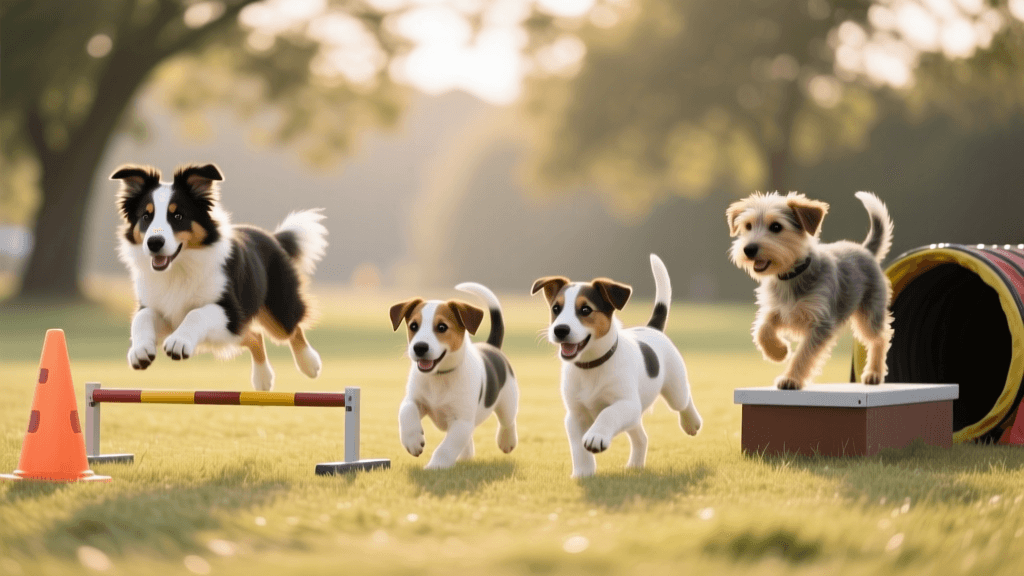
- Border Collies: Still the undisputed gold standard in agility. Their ability to read handler body language at a distance and their natural collection (ability to wrap tightly around jumps) make them unbeatable on technical courses.
- Shetland Sheepdogs: Excellent for smaller handlers or those preferring a more vocal, enthusiastic partner. Shelties are incredibly fast and possess a natural affinity for the sport.
- Belgian Malinois: Known for unmatched drive and endurance. While they require experienced handling due to their intense prey drive and sensitivity, they dominate the larger height classes.
- All-American Mixes: Rescue sports leagues in 2026 have seen a massive surge in mixed breeds. When evaluated correctly for structure and drive, many shelter dogs make phenomenal, resilient agility partners.
The Volhard Puppy Aptitude Test (PAT) Explained
To predict a puppy's working potential, breeders and sports enthusiasts rely heavily on standardized behavioral assessments. The Volhard Puppy Aptitude Test remains the premier tool in 2026 for evaluating a litter at exactly 49 days of age. At this precise developmental window, a puppy's neurological responses are highly indicative of their adult temperament, yet they have not yet been heavily influenced by learned behaviors or environmental conditioning.
The Volhard PAT consists of ten distinct tests, scored on a scale of 1 to 6. For an agility or flyball prospect, you are generally looking for a puppy that scores predominantly 3s and 4s. A score of 3 indicates a dog that is active, confident, and willing to work with people, while a 4 indicates a slightly more submissive, highly tractable dog that will be easy to train. Scores of 1 or 2 indicate dominance and potential aggression issues, while scores of 5 or 6 indicate fearfulness and a lack of resilience—both of which are disqualifying for a high-stress sports environment.
Key Volhard Tests for High-Drive Sports Dogs
While all ten tests are important, four specific metrics are critical for agility prospects:
- Social Attraction: Measures the degree of social attraction to people, confidence, or dependence. You want a puppy that approaches willingly and engages, scoring a 3.
- Following: Measures the willingness to follow a person. A puppy that follows readily with a high tail (Score 3) shows the natural biddability required for complex course navigation.
- Retrieving: Measures the degree of willingness to do something for its owner. This is the ultimate indicator of 'prey drive' and 'play drive.' A puppy that chases the object, picks it up, and brings it back (Score 3) is showing the foundational drive needed for tug-reward systems used in agility training.
- Stability: Measures the degree of startle response to a strange object (usually an umbrella opening). A sports dog must be environmentally stable. A puppy that startles but quickly recovers and investigates the object (Score 3) is ideal. A puppy that runs away and hides (Score 6) will likely struggle with the loud noises and chaotic environments of trial venues.
Evaluating Physical Conformation in 8-Week-Old Puppies
Beyond temperament, structural soundness is non-negotiable for a jumping dog. The Orthopedic Foundation for Animals (OFA) emphasizes that early structural evaluation and rigorous genetic screening are critical to preventing early-onset osteoarthritis and catastrophic injuries in canine athletes. Agility dogs endure immense repetitive impact on their joints, particularly the shoulders, spine, and hocks.
When evaluating an 8-week-old puppy, you must look beyond the 'cuteness' factor and assess the biomechanics of the animal. Ask the breeder to 'stack' the puppy on a table so you can evaluate its angles.
Structural Red Flags for Jumping Sports
- Straight Shoulders: A puppy with a steep shoulder assembly (lack of layback) will not have the necessary shock absorption for landing jumps. This transfers the impact directly to the spine and neck.
- Long, Weak Pasterns: The pasterns act as the dog's shock absorbers. If they are overly long or slope too much, the dog will 'break down' in the front end over time, leading to carpal injuries.
- Cow Hocks: Rear legs that turn inward at the hock joint compromise the dog's ability to push off powerfully and land squarely, increasing the risk of cruciate ligament tears.
- Level Topline: While a slight arch over the loin is acceptable in some breeds, a severely roached (humped) or swayed back in a puppy is a major red flag for future spinal issues.
2026 Costs: Budgeting for a Competition Prospect
Acquiring a well-bred sports prospect is a significant financial investment. The days of picking up a random farm dog and winning national championships are largely behind us. Modern canine sports require deliberate breeding, early neurological stimulation, and specialized foundation training. Below is a breakdown of the expected costs for acquiring and starting a competition puppy in 2026.
| Item / Service | 2026 Estimated Cost | Notes |
|---|---|---|
| Working-Line Puppy | $2,500 - $4,500 | Includes OFA health testing of parents and early socialization protocols. |
| Initial Veterinary & Preventatives | $400 - $600 | Vaccinations, microchipping, and first year of flea/tick/heartworm prevention. |
| Sports Foundation Gear | $350 - $500 | Includes jump cups, practice wings, tug toys, and a specialized sports harness. |
| Puppy Foundation Classes | $600 - $900 | 12 weeks of specialized 'puppy agility' focusing on body awareness and flatwork. |
| Canine Sports Rehabilitation/Therapy | $200 - $400 | Baseline assessment by a canine physical therapist to establish muscle symmetry. |
Questions to Ask Your Breeder
When interviewing breeders, your questions should reflect your specific goals. A reputable breeder of sports dogs will welcome these inquiries and provide documented proof of their claims.
- What specific early socialization protocol do you use? Look for breeders who utilize structured programs like Puppy Culture or Avidog. These programs introduce neurological stimulation, surface training, and problem-solving exercises during the critical first weeks of life.
- Can I see the OFA and genetic health clearances for both parents? Do not accept 'vet checked' as an answer. You need official OFA or PennHIP certifications for hips, elbows, and eyes, as well as DNA panels for breed-specific genetic defects.
- What is the drive level of the parents? Ask to see videos of the parents working or competing. If the parents lack focus or enthusiasm, the puppies are unlikely to possess the drive you need.
- How do you evaluate the litter for sports homes? The breeder should be able to explain their methodology (such as the Volhard PAT) and show you how they match specific puppies to specific types of handlers based on experience level and lifestyle.
Conclusion
Getting a dog for competitive sports is a journey that begins long before you bring your puppy home. By prioritizing working-line genetics, utilizing standardized behavioral assessments like the Volhard Puppy Aptitude Test, and rigorously evaluating physical conformation, you drastically increase your chances of finding a true canine athlete. In 2026, the resources available to prospective handlers are better than ever. Take your time, ask the hard questions, and partner with a breeder who shares your passion for the sport. The result will be a resilient, driven, and joyful partner ready to tackle the agility course by your side.
aaron-whyte
All our authors care for dogs every day — read more of their work on the authors page.