The Science of Dog Sleep: Optimizing Rest for Your Canine
Discover the science behind your dog's sleep cycles. Learn how to optimize their rest with proven routines, bedding tips, and environmental tweaks.
The Architecture of Canine Sleep
As dog owners, we often marvel at our pets' ability to sleep through the day, only to be greeted by a burst of energy the moment we walk through the door. However, canine sleep is far more complex than simply "napping." Understanding the biological and evolutionary science behind your dog's rest is the first step toward optimizing their health, cognitive function, and overall well-being.
Unlike humans, who are typically monophasic sleepers (meaning we consolidate our sleep into one long nocturnal block), dogs are polyphasic sleepers. According to research highlighted by the Sleep Foundation, dogs experience multiple sleep-wake cycles throughout a 24-hour period. This evolutionary trait stems from their wild ancestors, who needed to remain semi-alert to environmental threats while still securing the rest necessary for cellular repair and memory consolidation.
"Dogs are polyphasic sleepers, meaning they have multiple sleep-wake cycles throughout the day and night. This is a direct evolutionary holdover from their wild ancestors, who needed to remain alert to predators while still securing adequate rest."
REM vs. Non-REM Sleep in Dogs
A critical distinction between human and canine sleep architecture lies in Rapid Eye Movement (REM) sleep. Humans spend approximately 25% of their sleep cycle in REM, the stage associated with dreaming and deep cognitive processing. Dogs, however, spend only about 12% of their sleep in REM. Because their sleep is less efficient in terms of deep restorative cycles, dogs require a significantly higher total volume of sleep to achieve the same physiological benefits. This is why an adult dog typically requires 12 to 14 hours of total sleep per day, while puppies and seniors may need up to 20 hours.
Environmental Optimization: What the Data Tells Us
Creating the optimal sleep environment is not just about buying a comfortable bed; it requires manipulating environmental variables to support your dog's circadian rhythm and thermoregulation. Science-backed adjustments to temperature, light, and sound can drastically improve your dog's sleep efficiency.
Thermoregulation and Bedding Choices
A dog's core body temperature naturally drops as they enter deep sleep. The thermoneutral zone for most indoor dogs is between 68°F and 72°F (20°C - 22°C). When ambient temperatures deviate from this range, dogs experience micro-arousals to adjust their position or seek cooler/warmer surfaces, fragmenting their sleep cycles.
- For Warm Climates/Summer: Utilize conductive cooling technology. Products like the K&H Pet Products Cool Bed III (approx. $45) use water-filled cores to dissipate body heat without requiring electricity, maintaining a surface temperature slightly below the dog's core temperature.
- For Cold Climates/Winter: Radiant heat reflection is key. The Furhaven Thermal Cat & Dog Bed (approx. $35) features a Mylar thermal layer that reflects the dog's natural body heat back to them, preventing the energy expenditure required to stay warm during deep sleep.
Light Exposure and Melatonin Production
Just like humans, dogs rely on light cues to regulate melatonin production. Exposure to artificial blue light from televisions, smartphones, and LED bulbs in the evening can suppress melatonin, delaying sleep onset. To combat this, veterinary behaviorists recommend dimming household lights 60 minutes before your dog's bedtime and utilizing blackout curtains in their primary sleeping area to prevent early morning streetlights from triggering premature waking.
The Science-Backed Pre-Sleep Routine
Establishing a predictable pre-sleep routine lowers cortisol levels and signals to the canine brain that it is time to transition from sympathetic (active) to parasympathetic (rest and digest) nervous system dominance. Here is a highly actionable, timed routine you can implement tonight.
T-Minus 60 Minutes: Environmental Shift
Dim the lights in your home. Turn off high-stimulus environments (like loud televisions) and switch to low-level, warm-toned lighting. This initiates the natural melatonin cascade.
T-Minus 45 Minutes: The Final Elimination
Take your dog out for a low-stimulation potty break. Avoid high-intensity play or tug-of-war, which spikes adrenaline and heart rate, making it difficult for the dog to wind down. Keep this walk slow and sniff-heavy; sniffing has been clinically shown to lower a dog's heart rate and promote mental fatigue.
T-Minus 30 Minutes: Endorphin Release via Licking
Licking and chewing are self-soothing behaviors that release endorphins and serotonin in the canine brain. Provide a frozen lick mat, such as the Hyper Pet Doggie Mat (approx. $15), spread with a thin layer of plain, xylitol-free Greek yogurt or pumpkin puree. The 15 to 20 minutes it takes to clean the mat provides the perfect neurochemical bridge into sleep.
Orthopedic Support and Joint Health
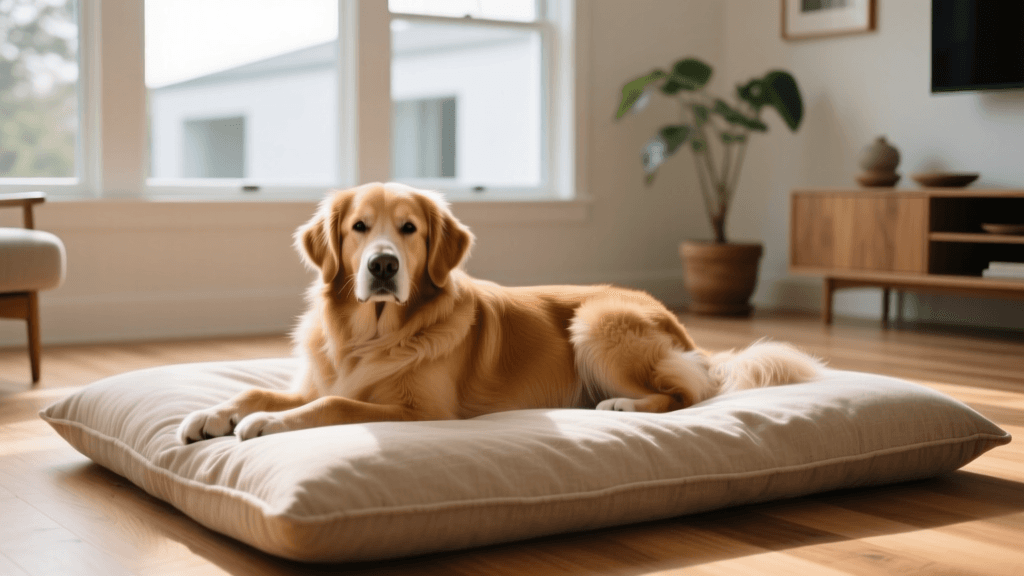
For large breeds, giant breeds, and senior dogs, the physical surface they sleep on directly impacts their joint health and sleep continuity. Hard floors or poorly stuffed beds create pressure points on the hips, elbows, and shoulders, leading to localized ischemia (restricted blood flow) and frequent waking due to discomfort.
A landmark clinical trial conducted by the University of Pennsylvania evaluated the impact of orthopedic beds on canine joint health. The study found that dogs sleeping on high-density, therapeutic foam beds experienced significant reductions in joint pain and stiffness. Products like the Big Barker 7" Pillow Top Orthopedic Dog Bed (ranging from $250 to $350) utilize a multi-layer foam system specifically engineered to prevent "bottoming out," ensuring that heavy joints remain suspended and properly aligned throughout the night.
Sleep Requirements by Life Stage and Size
According to guidelines from the American Kennel Club (AKC), sleep needs fluctuate dramatically based on age, size, and daily activity levels. Use the table below to benchmark your dog's total daily sleep (including nighttime sleep and daytime naps).
| Life Stage / Category | Total Daily Sleep Needed | Key Scientific Notes |
|---|---|---|
| Puppies (0 - 6 months) | 18 - 20 Hours | Brain development and immune system strengthening occur primarily during deep sleep phases. |
| Adult Small Breeds (1 - 7 yrs) | 12 - 14 Hours | Higher metabolic rates may require slightly more frequent, shorter naps throughout the day. |
| Adult Large/Giant Breeds | 14 - 18 Hours | Larger muscle mass and joint stress require extended periods of horizontal rest for tissue repair. |
| Seniors (8+ years) | 16 - 18+ Hours | Cognitive decline and reduced stamina increase the need for restorative REM and Non-REM sleep. |
When to Consult a Veterinary Professional
While changes in sleep patterns can be a normal part of aging, sudden shifts can indicate underlying medical issues. The Texas A&M College of Veterinary Medicine notes that excessive lethargy, restless pacing at night, or sudden sleep disturbances can be early indicators of canine cognitive dysfunction (CCD), hypothyroidism, or osteoarthritis. If your dog's sleep architecture changes abruptly despite environmental optimizations, consult your veterinarian for a comprehensive metabolic and orthopedic evaluation.
Conclusion
Optimizing your dog's sleep is one of the most impactful, yet frequently overlooked, aspects of responsible pet ownership. By understanding the polyphasic nature of canine sleep, controlling environmental variables like temperature and light, and implementing a neurochemically sound pre-sleep routine, you can vastly improve your dog's physical health and behavioral stability. Investing in science-backed bedding and respecting their biological need for extended rest will result in a happier, healthier, and more focused canine companion.
priya-sutaria
All our authors care for dogs every day — read more of their work on the authors page.