The Science of Canine Sleep: Optimizing Your Dog's Rest
Discover the science behind your dog's sleep cycles. Learn how temperature, orthopedic support, and hygiene optimize canine rest and overall health.
The Hidden Complexity of Canine Sleep
When you watch your dog doze off on the living room rug, it is easy to assume they are simply resting. However, canine sleep is a highly complex biological process that directly impacts their immune function, cognitive health, and emotional regulation. As dog owners, we often focus heavily on diet and exercise, yet we frequently overlook the environment in which our dogs spend up to half of their lives. By examining the science of canine sleep architecture, thermoregulation, and environmental allergens, we can make data-driven adjustments to our homes that significantly improve our dogs' longevity and daily vitality.
The Biology of Canine Sleep Cycles
Dogs are polyphasic sleepers, meaning they sleep in multiple shorter bouts throughout a 24-hour period rather than one long consolidated block like humans. According to VCA Animal Hospitals, the average adult dog sleeps between 12 and 14 hours a day, with puppies and senior dogs requiring up to 18 to 20 hours. During these cycles, dogs enter Rapid Eye Movement (REM) sleep, the stage critical for memory consolidation and neurological restoration. Interestingly, while humans spend about 25% of their sleep cycle in REM, dogs only spend about 10% in this restorative phase. Because their REM cycles are shorter and less efficient, dogs must compensate by sleeping more frequently and for longer total durations. Disruptions to these cycles—whether from environmental noise, poor bedding, or incorrect ambient temperatures—can lead to chronic sleep deprivation, manifesting as behavioral issues, weakened immunity, and accelerated cognitive decline in aging dogs.
Thermoregulation: The Hidden Sleep Disruptor
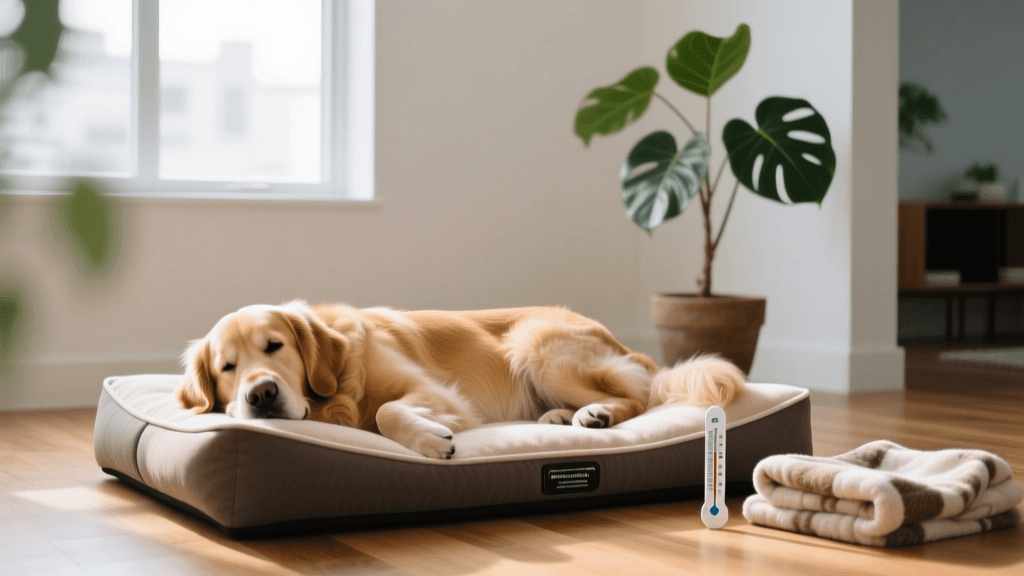
One of the most frequently overlooked aspects of canine sleep science is thermoregulation. Unlike humans, who possess millions of eccrine sweat glands distributed across their skin, dogs primarily regulate their body temperature through panting and vasodilation in their paw pads and facial regions. When a dog lies down to sleep, their metabolic rate drops, and their ability to actively shed heat diminishes. If the sleeping environment is too warm, a dog will experience micro-arousals—brief awakenings that prevent them from entering deep, restorative slow-wave sleep. The ideal ambient room temperature for optimal canine sleep is between 68°F and 72°F (20°C to 22°C). For double-coated breeds like Huskies or Malamutes, temperatures above 75°F can cause significant thermal stress during rest. Conversely, small, short-haired breeds like Greyhounds or Chihuahuas lack the insulating subcutaneous fat required to retain heat, making them susceptible to sleep-disrupting chills in environments below 65°F. Utilizing science-backed bedding solutions, such as pressure-activated cooling mats (like the K&H Pet Products Cool Bed III, averaging $40 to $60) or elevated cot-style beds that promote air circulation, can dramatically improve sleep continuity for temperature-sensitive breeds.
Orthopedic Support and Joint Health
As dogs age, the cartilage cushioning their joints naturally degrades, leading to canine osteoarthritis (OA). The American Kennel Club notes that joint pain is a leading cause of sleep fragmentation in senior dogs. When a dog with OA lies on a flat, unsupportive surface, pressure points develop at the hips, elbows, and shoulders, restricting blood flow and causing localized inflammation. This pain triggers a sympathetic nervous system response, pulling the dog out of REM sleep. To combat this, veterinary orthopedists recommend high-density, medical-grade memory foam beds. Unlike traditional polyester fiberfill beds—which compress and bottom out within weeks, offering zero structural support—high-density foam (measuring a minimum of 4 inches thick for dogs over 50 pounds) evenly distributes the animal's weight. Brands like Big Barker utilize a multi-layer foam system specifically calibrated to prevent the 'hammocking' effect that exacerbates joint strain. While these orthopedic beds represent a higher upfront investment, typically ranging from $150 to $300, the scientific consensus is clear: proper joint support during sleep reduces morning stiffness, improves mobility, and significantly enhances the overall quality of life for aging canines.
Data Table: Matching the Bed to the Biological Need
| Bed Type | Best For | Scientific Benefit | Average Cost |
|---|---|---|---|
| High-Density Orthopedic Foam | Senior dogs, large breeds, dogs with OA | Eliminates pressure points, maintains joint alignment, prevents sleep fragmentation | $150 - $300 |
| Gel-Infused Cooling Mat | Double-coated breeds, dogs in warm climates | Absorbs and dissipates body heat, prevents thermal micro-arousals | $40 - $80 |
| Elevated Cot-Style Bed | Heavy shedders, dogs prone to contact dermatitis | Maximizes convective air cooling, reduces allergen and moisture accumulation | $30 - $60 |
| Bolster / Cave Bed | Small breeds, anxious dogs, burrowing breeds | Provides proprioceptive feedback, mimics den environment to lower cortisol | $50 - $120 |
The Microbiome and Allergen Factor
The microscopic environment of your dog's bed plays a pivotal role in their respiratory health and sleep quality. Research highlighted by the Sleep Foundation emphasizes that pet bedding is a primary reservoir for dust mites, dander, flea dirt, and environmental pollen. Dust mites thrive in the warm, humid microclimate created by a dog's body heat and respiration. When a dog inhales these allergens during sleep, it can trigger low-grade allergic rhinitis or exacerbate canine asthma, leading to snoring, coughing, and restless sleep. To mitigate this, veterinary dermatologists recommend a strict hygiene protocol. Dog bed covers must be washed weekly in water heated to at least 140°F (60°C) to effectively denature dust mite proteins and kill bacteria. Furthermore, investing in beds with waterproof, hypoallergenic inner liners protects the core foam from saliva, urine, and sweat, which can otherwise foster the growth of sleep-disrupting mold and mildew.
Actionable Optimization Protocol
Transform your dog's sleep environment using these science-backed steps:
- Calibrate the Thermostat: Maintain your home's ambient temperature between 68°F and 72°F during the night. If you prefer a colder home, provide a self-warming thermal blanket for short-haired breeds.
- Measure for Support: Ensure your dog's bed is at least 6 inches longer than their body from nose to tail base. For dogs over 50 lbs, the foam core must be a minimum of 4 inches thick to prevent joint compression.
- Implement the 140°F Wash Rule: Strip and wash all removable bed covers every 7 days using a hypoallergenic, fragrance-free detergent. Avoid fabric softeners, which coat fibers and trap odor-causing bacteria.
- Optimize Light Exposure: Dogs possess circadian rhythms regulated by the suprachiasmatic nucleus, which responds to light. Ensure their sleeping area is completely dark at night to promote natural melatonin production, and expose them to bright, natural sunlight within 30 minutes of waking to anchor their biological clock.
- Establish a Pre-Sleep Routine: Engage in a 10-minute low-intensity sniffing walk or puzzle toy session 45 minutes before bedtime. This lowers cortisol levels and transitions the nervous system from sympathetic (active) to parasympathetic (rest and digest) dominance.
Conclusion: Rest as a Pillar of Canine Health
Understanding the science of canine sleep shifts our perspective from viewing rest as mere downtime to recognizing it as a critical pillar of veterinary health. By aligning your dog's sleeping environment with their biological needs—optimizing temperature, providing structural orthopedic support, and maintaining a rigorous allergen-free hygiene routine—you actively extend their healthspan. A well-rested dog is not only more physically resilient but also more emotionally balanced, cognitively sharp, and deeply connected to the humans they share their life with. Invest in their sleep, and you invest in their longevity.
priya-sutaria
All our authors care for dogs every day — read more of their work on the authors page.