The Science of Canine Decompression: Preparing for a New Dog
Discover the science of canine decompression. Learn how to prepare your home, manage cortisol levels, and set up a stress-free zone for your new dog.

The Neurobiology of the New Dog Transition
Bringing a new dog home is often romanticized as an instant bonding experience, but from a neurobiological perspective, it is a profound physiological shock. Whether you are adopting a senior shelter dog or bringing home an eight-week-old puppy, the transition triggers the Hypothalamic-Pituitary-Adrenal (HPA) axis. This is the body's central stress response system. When a dog is uprooted from a familiar environment, their amygdala perceives the sudden change as a threat, flooding their bloodstream with cortisol and adrenaline.
This chemical surge explains why many newly adopted dogs exhibit 'shutdown' behaviors—such as refusing to eat, hiding, or sleeping excessively—while others display hyper-arousal, including pacing, whining, or destructive chewing. Understanding the endocrinology of this transition is the first step in science-backed dog ownership. By preparing your home to actively lower your dog's systemic cortisol levels, you can prevent behavioral fallout and accelerate secure attachment.
According to guidelines published by the ASPCA, managing a dog's environment during the initial transition phase is critical for long-term behavioral health. The goal is not to force immediate socialization, but to facilitate neurological decompression.
The Science-Backed 3-3-3 Decompression Timeline
Animal behaviorists and rescue organizations frequently reference the '3-3-3 Rule' of dog adoption. This framework maps the psychological and physiological milestones a dog experiences during their first three days, three weeks, and three months in a new home. Below is a structured breakdown of what is happening inside your dog's brain and body during these phases, and how you should respond.
| Timeline Phase | Physiological State (Cortisol) | Behavioral Milestones | Owner Action Plan |
|---|---|---|---|
| First 3 Days | Acute Spike (Hyper-vigilance) | Hiding, pacing, lack of appetite, testing boundaries, poor sleep quality. | Strict routine, limited spatial access, enforced naps, zero visitors. |
| First 3 Weeks | Gradual Decline (Acclimation) | Learning routines, showing true personality, minor boundary testing, increased appetite. | Introduce scent games, short 5-minute training sessions, structured walks. |
| First 3 Months | Baseline (Homeostasis) | Secure attachment formed, predictable behavior, relaxed body language, deep REM sleep. | Expand home freedom, introduce complex enrichment, begin group classes. |
During the first 72 hours, your dog's brain is essentially in survival mode. The American Kennel Club (AKC) emphasizes that overwhelming a dog with too many new stimuli—such as trips to the pet store, dog parks, or large family gatherings—during this acute cortisol spike can lead to long-term anxiety and fear-based reactivity.
Designing a Neuro-Friendly Decompression Zone
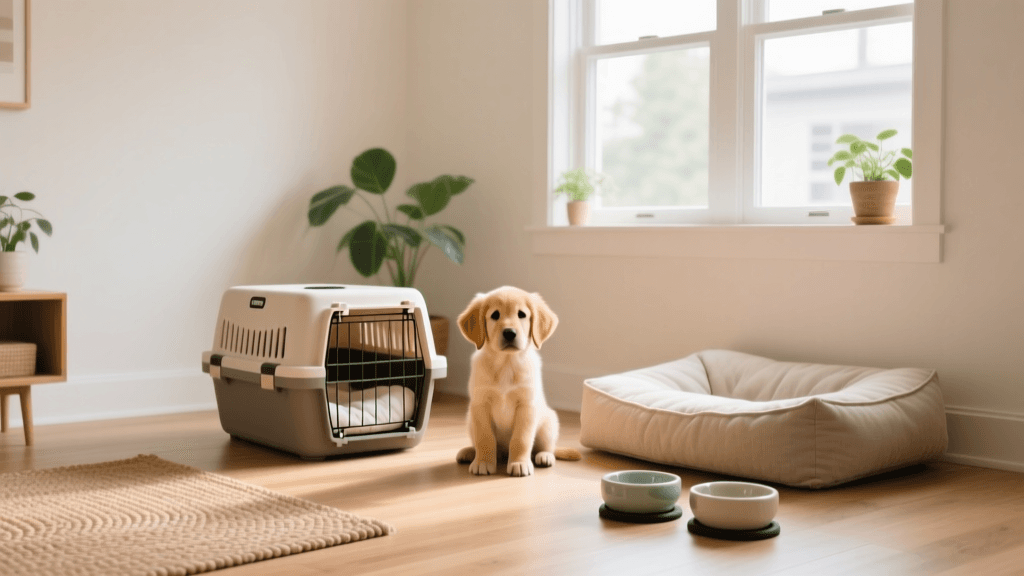
To actively lower your dog's heart rate and encourage the parasympathetic nervous system (the 'rest and digest' state) to take over, you must design a dedicated decompression zone. This is not merely a corner with a bed; it is a scientifically controlled sensory environment.
1. Spatial Constraints and Crate Sizing
Dogs are den animals by evolutionary design, and a properly sized crate provides a neurobiological sense of security. For a medium-sized dog (40-50 lbs), a crate measuring exactly 36 inches long by 23 inches wide by 25 inches high (such as the MidWest Homes for Pets iCrate, costing approximately $65-$85) is ideal. The dog should be able to stand up and turn around, but the space should not be so large that they can pace nervously. Pacing reinforces anxiety loops in the brain.
2. Acoustic Management
Canine hearing is significantly more sensitive than human hearing, capable of detecting frequencies up to 45,000 Hz. Sudden noises like slamming doors or passing trucks can trigger micro-spikes in cortisol. Set up a sound machine playing continuous 'brown noise' (which has a deeper, more soothing frequency profile than white noise) at a volume of 50 to 60 decibels (dB). This acoustic blanket masks unpredictable environmental triggers. A basic sound machine costs around $25 and is a non-negotiable investment for shelter dogs with noise phobias.
3. Visual and Lighting Control
Harsh overhead LED lighting can cause visual stress and disrupt circadian rhythms. Keep the lux levels in the decompression zone below 100 lux during the day, and use warm, amber-toned bulbs (2700K color temperature) in the evening. This specific light spectrum encourages the natural production of melatonin, promoting the deep REM sleep necessary for neurological recovery and memory consolidation.
Olfactory Enrichment and Pheromone Therapy
A dog's olfactory bulb is proportionally 40 times larger than a human's, and they possess up to 300 million olfactory receptors. Engaging a dog's sense of smell is one of the fastest ways to lower their heart rate and induce a state of calm focus. In fact, 10 to 15 minutes of intensive sniffing can burn as much mental and physical energy as an hour of vigorous running.
Synthetic Dog-Appeasing Pheromones (DAP)
Before your dog even crosses the threshold, plug in a synthetic pheromone diffuser, such as the Adaptil Calm Diffuser, in the decompression zone. These devices release a synthetic replica of the pheromones produced by nursing mother dogs, which signals safety to the canine brain. The diffuser covers approximately 700 square feet and costs about $20-$30. Crucially, it must be plugged in 48 hours before your dog arrives so the chemical message fully saturates the room.
Scent Work and 'Sniffaris'
Instead of feeding your new dog from a stainless steel bowl, which requires zero cognitive effort, utilize scent-based enrichment. Invest in a high-density snuffle mat ($25-$40) or hide portions of their kibble around their safe zone. The Fear Free Pets organization highly recommends olfactory enrichment as a primary tool for reducing anxiety and building confidence in newly adopted animals. When a dog uses their nose to forage, their brain releases dopamine, the neurotransmitter associated with reward and pleasure, effectively counteracting the negative effects of cortisol.
Your Actionable Day-One Protocol
The first 24 hours set the neurological baseline for your dog's entire life in your home. Follow this strict, science-backed protocol to ensure a smooth transition:
- The 'Two-Week Shutdown' Mindset: Commit to keeping your dog's world incredibly small for the first 14 days. No trips to the hardware store, no off-leash park visits, and no dinner parties. Their only excursions should be quiet, structured potty breaks and low-stimulation sniffing walks in your immediate vicinity.
- Enforced Nap Schedules: Puppies require 18 to 20 hours of sleep per day, while stressed adult dogs need 14 to 16 hours. Sleep deprivation exacerbates cortisol production and leads to 'zoomies' or nipping. Implement a strict schedule of 1 hour of gentle activity followed by 2 hours of enforced crate rest.
- The 15-Minute Potty Rule: During the first three days, take your dog to the exact same outdoor spot every 2 to 3 hours. The familiarity of their own scent will trigger the parasympathetic response needed to urinate and defecate. Keep these trips under 15 minutes to prevent sensory overload.
- Caloric Management: Stress can cause gastrointestinal upset. Feed a high-quality, easily digestible diet and consider adding a science-backed probiotic supplement (such as Purina FortiFlora, approx. $30 for a 30-day supply) to support the gut-brain axis, as 90% of the body's serotonin is produced in the gut.
'A decompressed dog is a thinking dog. When we prioritize the neurobiology of transition over our human desire for instant companionship, we build a foundation of trust that lasts a lifetime.'
By respecting the biology of your new dog and preparing a home that caters to their sensory and endocrinological needs, you are doing far more than simply providing shelter. You are actively rewiring their brain for safety, confidence, and long-term behavioral success.
marcus-aldridge
All our authors care for dogs every day — read more of their work on the authors page.