Holistic Scent Work Impulse Control Training for Dogs 2026
Discover how to use scent work and snuffle mats for holistic impulse control training in 2026. Natural, force-free methods for reactive dogs.
The Paradigm Shift: Holistic Impulse Control in 2026
As we navigate 2026, the dog training community has seen a massive, welcome shift away from aversive, punitive tools and toward holistic, natural behavioral conditioning. For decades, impulse control was taught through suppression—using corrections to stop a dog from lunging, pulling, or reacting to triggers. Today, we understand that true impulse control is not about suppressing a dog's natural instincts, but rather redirecting them into biologically fulfilling activities. Holistic impulse control training leverages a dog's most powerful sense—olfaction—to naturally lower arousal levels, build focus, and create lasting behavioral changes without inducing fear or stress.
By integrating scent work and natural foraging tools like snuffle mats into your training regimen, you can effectively manage leash reactivity, hyperarousal, and poor impulse control. This guide will walk you through the science, the gear, and the step-by-step protocols required to master holistic impulse control training in 2026.
The Neuroscience of Olfactory Decompression
To understand why scent work is so effective for impulse control, we must look at the canine brain. A dog's olfactory bulb is proportionally 40 times larger than a human's, and the act of sniffing requires immense cognitive processing. When a dog engages in deep, sustained sniffing, their heart rate naturally decreases, and the brain releases dopamine and endorphins. This neurological response is commonly referred to as "olfactory decompression."
According to the American Veterinary Society of Animal Behavior (AVSAB), reward-based and enrichment-driven training methods are not only more humane but significantly more effective for long-term behavioral modification than aversive techniques. When a reactive dog spots a trigger (like another dog or a bicycle), their sympathetic nervous system triggers a "fight or flight" response. Asking the dog to perform a complex obedience trick often fails because their cognitive brain is offline. However, tossing a handful of high-value treats into the grass and cueing "Find It" forces the dog to engage their olfactory system, effectively bypassing the amygdala's panic response and bringing the prefrontal cortex back online.
Selecting the Right Natural Foraging Equipment
While scattering treats on the grass is excellent for outdoor environments, indoor or controlled-environment training requires specialized foraging gear. In 2026, the market is flooded with puzzle toys, but for holistic impulse control, you need gear that mimics natural grazing and foraging.
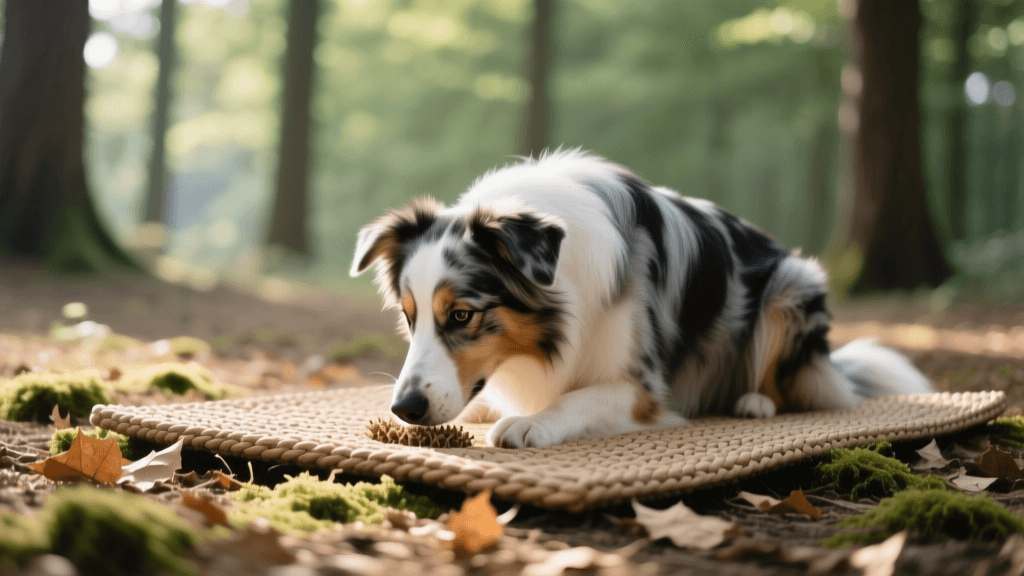
- The Paw5 Wooly Snuffle Mat: Made from sustainable, upcycled wool, this mat mimics the texture of tall grass. It is excellent for deep, sustained sniffing. The 2026 retail price averages around $45 to $55.
- Sniffiz SmartMat with Suction Cups: Ideal for glass doors or windows where a dog might exhibit barrier frustration or territorial reactivity. It allows you to move the foraging zone to the exact location of the trigger.
- Natural High-Value Proteins: Forget processed biscuits. For scent imprinting, use highly aromatic, single-ingredient freeze-dried proteins. Stella & Chewy's freeze-dried raw minnows or K9 Naturals venison bites provide the strong scent trails necessary for high-arousal redirection.
The 3-Phase "Find It" Impulse Control Protocol
Teaching a dog to use their nose as an emotional regulator requires a structured, progressive approach. Do not attempt to use scent work in the presence of a high-level trigger until you have completed Phases 1 and 2.
Phase 1: Scent Imprinting and Value Building
Begin in a low-distraction environment, such as your living room. Place your dog in a "sit" or "down" stay, or have a partner gently hold their harness. Show your dog a handful of freeze-dried minnows, let them smell your closed fist, and then dramatically scatter the treats onto the snuffle mat or a small patch of indoor grass. Use a bright, encouraging cue like "Find It!" or "Search!"
The goal here is not obedience; it is building immense value for the act of sniffing. Repeat this 10 to 15 times per session, twice a day. Over a two-week period, your dog will learn that the cue "Find It" predicts an incredibly rewarding, dopamine-releasing foraging experience.
Phase 2: Snuffle Mat Integration for Threshold Management
Once the dog is enthusiastically diving into the mat, begin using it to manage mild environmental stressors. If your dog is reactive to the doorbell, place the snuffle mat in the foyer. When the doorbell rings, immediately cue "Find It" and guide them to the mat before they have a chance to bark. The ASPCA Professional Dog Training Guidelines emphasize the importance of managing the environment to prevent rehearsal of unwanted behaviors. By preemptively offering the snuffle mat, you replace the barking behavior with a natural, calming foraging behavior.
Phase 3: Real-World Application and Trigger Redirection
Take your training outdoors. Carry a small pouch of freeze-dried treats. When you are walking your dog and you spot a known trigger at a sub-threshold distance (a distance where your dog notices the trigger but does not react), immediately toss a handful of treats into the grass and cue "Find It."
As your dog sniffs the grass, their arousal levels will naturally drop. Once they have finished eating, you can either continue sniffing or calmly walk away from the trigger. You are teaching the dog that the presence of a trigger is not a signal to panic, but rather a cue to engage in a rewarding, grounding natural behavior.
Comparative Analysis: Aversive vs. Holistic Methods
Understanding the differences between traditional suppression-based training and modern holistic approaches is vital for making informed decisions for your dog's mental health. Below is a comparison of how these methodologies stack up in 2026.
| Methodology | Equipment Needed | Canine Stress Response | 2026 Average Cost | Long-Term Retention |
|---|---|---|---|---|
| Aversive Suppression (Shock/Prong) | E-collar, Prong collar | High (Cortisol spikes, fear conditioning) | $150 - $250 | Low (Requires constant enforcement) |
| Holistic Scent Redirection | Snuffle mat, Freeze-dried raw treats | Low (Dopamine release, parasympathetic activation) | $45 - $80 | High (Builds intrinsic emotional regulation) |
| Traditional Obedience (Sit/Watch Me) | Standard leash, Treat pouch | Moderate (Cognitive fatigue in high arousal) | $20 - $40 | Moderate (Fails under extreme stress) |
Somatic Integration: Tellington TTouch and Canine Massage
For a truly holistic approach to impulse control, pair scent work with somatic bodywork. The Tellington TTouch method involves specific, mindful touches and lifts that help release physical tension and anxiety in the canine body. After a stressful encounter or a demanding training session, spend five minutes performing gentle, circular TTouch movements along your dog's ears, back, and tail base.
The Fear Free Pets Certification Standards highlight the importance of reducing fear, anxiety, and stress through multi-modal approaches. Combining olfactory enrichment with physical touch creates a powerful feedback loop that teaches the dog how to self-soothe and physically process adrenaline after a trigger event.
Nutrition and Supplementation for Cognitive Focus
Holistic training extends to the gut-brain axis. A dog struggling with impulse control and chronic reactivity is often dealing with systemic inflammation. In 2026, veterinary nutritionists heavily recommend supplementing a reactive dog's diet with Omega-3 fatty acids (specifically EPA and DHA from wild-caught fish oils) and L-theanine. These natural supplements support neurological health, reduce neuro-inflammation, and improve the dog's baseline ability to focus during scent work and training sessions. Always consult with a holistic veterinarian to determine the correct dosages based on your dog's weight and specific metabolic needs.
Conclusion: Embracing the Natural Dog
Impulse control should not look like a dog frozen in fear, waiting for a correction. True impulse control looks like a dog who possesses the emotional regulation to choose a calming, natural behavior over a reactive one. By leveraging the power of scent work, utilizing high-quality foraging tools like snuffle mats, and integrating somatic bodywork, you are not just training your dog—you are healing their nervous system. As the holistic dog care movement continues to thrive in 2026, embracing these natural methodologies will ensure your dog lives a richer, calmer, and more fulfilling life by your side.
robin-maitland
All our authors care for dogs every day — read more of their work on the authors page.