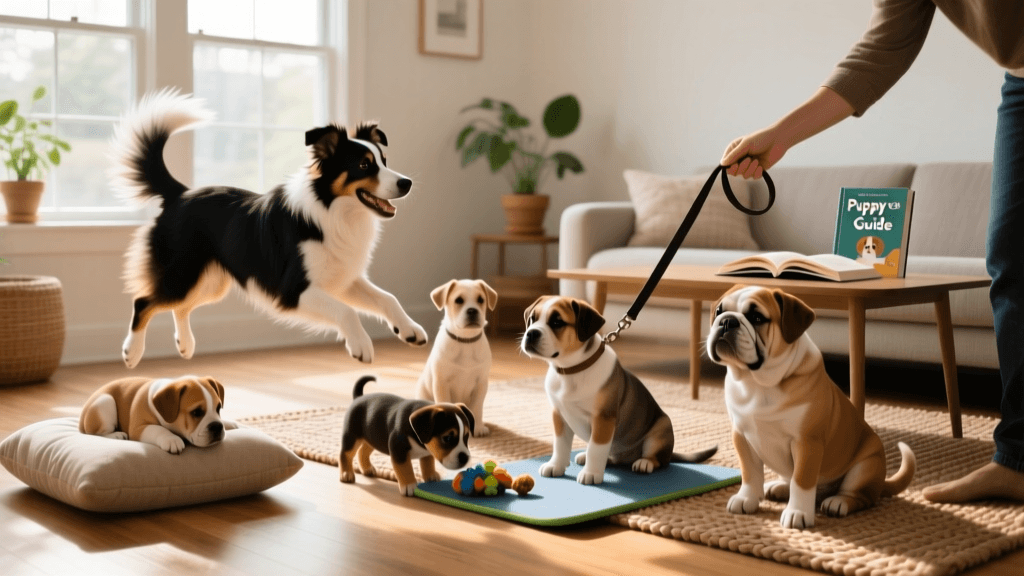
Safe Puppy and Toddler Interactions: A Parent Guide
Learn how to safely introduce your new puppy to toddlers and kids. Discover actionable tips, safe zones, and bite prevention strategies for families.

The Developmental Clash: Mouths vs. Hands
Bringing a new puppy into a home with young children is a magical milestone, but it is also a period that requires intense management and proactive training. From a developmental standpoint, toddlers and puppies are actually very similar: both are highly curious, lack impulse control, and are still learning how to communicate their boundaries. The primary difference lies in how they explore the world. Puppies explore their environment using their mouths, while toddlers explore using their hands. When a toddler reaches out to grab a puppy's fur or ears, the puppy's natural instinct may be to respond with a playful nip or a defensive snap. Without proper supervision and structured guidance, this developmental clash can quickly lead to tears, fear, and potentially dangerous dog bites.
As parents, it is your responsibility to act as the translator and boundary-setter between your child and your new dog. The goal of early puppy care in a family setting is not just to train the dog, but to train the children on how to respectfully interact with a living animal. By implementing physical management tools, teaching safe interaction techniques, and recognizing canine stress signals, you can foster a lifelong, safe bond between your kids and your puppy.
Establishing Physical Boundaries: Kid-Free and Puppy-Free Zones
Before your puppy even arrives, you must establish physical boundaries in your home. Relying solely on verbal commands or constant hovering is exhausting and ultimately unsafe. You need reliable physical barriers to create "kid-free" zones for the puppy and "puppy-free" zones for the children.
Essential Management Products
- Baby Gates: Invest in a high-quality, hardware-mounted gate for high-traffic areas like the kitchen or the puppy's primary room. The Regalo Easy Step Walk Thru Baby Gate (approximately $40-$50) is a popular choice. For medium to large breed puppies, ensure the gate is at least 36 inches high to prevent jumping. For small breeds, a 28-inch gate is usually sufficient.
- Exercise Pens: A foldable metal playpen, such as the MidWest Foldable Metal Dog Exercise Pen (approximately $45-$60), is invaluable. You can set this up in the living room so the puppy can be part of family time without being able to chase running toddlers or chew on children's toys.
- Crate Training: The crate is the ultimate kid-free zone. Teach your children from day one that the crate is the puppy's bedroom. If the puppy is inside, it is invisible and untouchable. Never allow a child to reach into the crate, even if the puppy is awake and wagging its tail.
Teaching the "Be a Tree" Method for Hyper Puppies
Puppies are naturally attracted to fast-moving, high-pitched targets—which perfectly describes a running, squealing toddler. When a puppy begins to chase or nip at a child's heels, the child's instinct is to run faster and scream louder, which only fuels the puppy's prey drive and excitement.
Teach your children the "Be a Tree" method. When the puppy gets too rowdy or starts nipping, the child should immediately stop moving, stand perfectly still, fold their arms across their chest (like branches), and look up at the ceiling. Without movement or high-pitched noises, the puppy will quickly lose interest and wander off. Practice this method with your kids using a stuffed animal first, and then reward them with a small treat or praise when they successfully execute the "tree" pose during real-life puppy encounters.
Managing Puppy Mouthing and Bite Prevention
Puppy mouthing is a normal developmental phase, but it must be carefully managed around fragile toddler skin. According to the Centers for Disease Control and Prevention (CDC), children are the most common victims of dog bites, and many of these incidents occur during seemingly normal play. The American Veterinary Medical Association (AVMA) emphasizes that teaching children how to behave around dogs and supervising all interactions are the most effective ways to prevent bites.
When the puppy bites a child, the interaction must end immediately. Do not yell or physically punish the puppy, as this can increase anxiety and aggression. Instead, use redirection. Keep a basket of approved chew toys, like the KONG Classic Puppy Toy (approximately $12-$15), in every room. If the puppy's teeth touch human skin, calmly say "Oops," withdraw your child's attention, and offer the KONG toy stuffed with frozen puppy-safe peanut butter or plain yogurt. The cold sensation soothes teething gums, and the freezing process extends the chewing time, keeping the puppy occupied for 15 to 20 minutes. For a deeper dive into curbing this behavior, the American Kennel Club (AKC) offers excellent strategies on redirecting puppy biting through positive reinforcement and consistent time-outs.
Reading Canine Stress Signals Before a Bite Occurs
Dogs rarely bite without warning; however, the warnings are often subtle and easily missed by young children and untrained adults. Teaching yourself and your older children to recognize canine stress signals is a critical component of family puppy care. If you notice any of the following signs, immediately separate the puppy from the children and give the dog a quiet nap in their crate:
- Whale Eye: The puppy turns its head away but keeps its eyes fixed on the child, showing the whites of its eyes.
- Lip Licking and Yawning: When not related to food or waking up from sleep, repetitive lip licking and exaggerated yawning are strong indicators of canine anxiety.
- Stiff Body Posture: A relaxed puppy has a loose, wiggly body. A stressed puppy will freeze, become rigid, and may tuck its tail tightly between its legs.
- Avoidance: If the puppy is actively trying to move away, hide behind furniture, or retreat to its crate, do not allow the child to follow or corner it.
Age-Appropriate Puppy Care Chores for Children
Involving your children in the puppy's daily care routine builds empathy, responsibility, and a strong bond. However, tasks must be strictly matched to the child's developmental capabilities to ensure the safety of both the child and the dog. Below is a structured guide to help you assign appropriate puppy care chores.
| Child Age Group | Appropriate Puppy Chores | Required Supervision Level |
|---|---|---|
| 3 to 5 Years | Filling the water bowl, tossing kibble on the floor for foraging, helping to pick up puppy toys. | 100% Direct Adult Supervision (Adult must be within arm's reach). |
| 6 to 8 Years | Measuring and pouring daily food portions, basic grooming (brushing the coat), holding the leash while seated. | High Supervision & Guidance (Adult actively watching and correcting). |
| 9 to 12 Years | Leash walking in low-distraction areas (with adult backup), practicing basic training commands (sit, stay). | Moderate Supervision (Adult present in the same room or yard). |
| 13+ Years | Managing the full feeding schedule, independent neighborhood walks, advanced trick training, cleaning accidents. | Low Supervision (Periodic adult check-ins and accountability). |
Building Lifelong Bonds Through Structured Play
Unstructured, chaotic play is where most accidents happen. Instead, facilitate structured games that teach the puppy impulse control while allowing the child to participate safely. One excellent game is "Find It." Have your child sit on the sofa or a chair (out of the puppy's jumping range) and toss pieces of kibble onto the rug, saying "Find it!" This engages the puppy's powerful sense of smell, tires them out mentally, and keeps their mouth focused on the floor rather than on the child's hands.
Another great activity is bubble chasing. Using a pet-safe, non-toxic bubble solution, children can blow bubbles in the yard while the puppy jumps and snaps at them. This provides excellent cardiovascular exercise for the puppy and creates a joyful, safe distance between the dog's teeth and the child's skin. Remember that puppies require up to 18 hours of sleep a day. Enforce mandatory crate naps every 1.5 to 2 hours to prevent the puppy from becoming overtired, cranky, and prone to nipping. By combining strict management, clear boundaries, and age-appropriate involvement, your family will navigate the challenging puppy months and emerge with a well-mannered dog and a deeply respectful child-animal bond.
anouk-beaumont
All our authors care for dogs every day — read more of their work on the authors page.