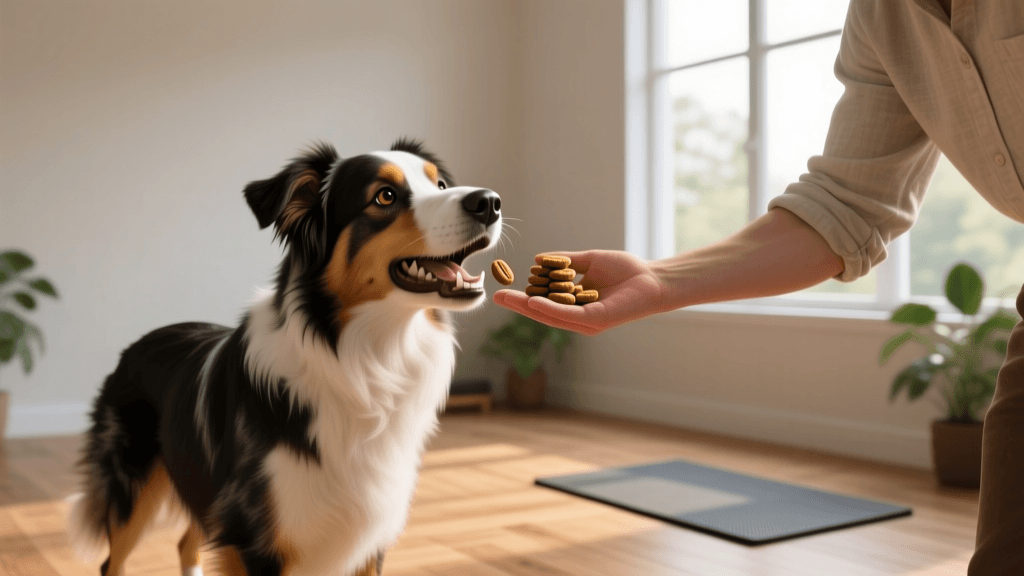
Training Your Dog for Stress-Free RV and Camper Travel
Discover step-by-step training techniques to help your dog stay calm, settle down, and enjoy stress-free RV and camper road trips.

The Dream vs. The Reality of RV Dog Travel
The internet is filled with idyllic photos of dogs gazing out of RV windows and hiking through majestic national parks. However, the reality of traveling in a 200-square-foot camper with an untrained, anxious, or overly energetic dog can quickly turn a dream vacation into a stressful ordeal. Small spaces amplify behavioral issues; a dog that barks at every passing squirrel at home will bark at every passing camper in an RV park, and a dog with poor impulse control can easily dart out the RV door into an unfamiliar, potentially dangerous environment.
Successful dog-friendly travel requires intentional preparation. By implementing targeted obedience training, desensitization protocols, and management strategies at least four to six weeks before your trip, you can transform your dog into the ultimate adventure co-pilot. This guide covers the essential training phases required to ensure your dog remains calm, safe, and happy on the road.
Phase 1: Desensitizing Your Dog to the Camper Environment
Before you ever turn on the engine, your dog needs to view the RV or camper as a safe, positive environment rather than a strange, confined metal box. Start this process while the vehicle is parked in your driveway.
Begin by leaving the RV door open and allowing your dog to explore at their own pace. Scatter high-value treats, such as Zuke's Mini Naturals (which cost around $8 for a 6oz bag and are perfect for quick rewards), across the floor and on the furniture where they are permitted. Once they are comfortable entering and exiting, begin feeding them their regular meals inside the camper. This builds a strong positive association with the space.
Next, introduce the sounds and vibrations of the RV. Turn on the generator or the engine while sitting inside with your dog. If they show signs of stress, such as panting, pacing, or whining, immediately lower the volume or turn off the engine, and toss a handful of treats on the floor to redirect their focus. Gradually increase the duration of these sessions from 5 minutes to 30 minutes over the course of two weeks. The goal is to teach your dog that the rumble of the engine predicts good things, not anxiety.
Phase 2: Mastering the 'Place' Command for Small Spaces
In a cramped camper, having a designated 'Place' command is non-negotiable. This command instructs your dog to go to a specific mat or bed and remain there until released. It prevents them from weaving underfoot while you are cooking, blocks them from rushing the door when you open it, and gives them a predictable 'safe zone' when the environment becomes overwhelming.
Invest in a durable, elevated bed that can withstand travel. The Kuranda Chew-Proof Bed (approximately $130 for a 35x22.5-inch medium size) is a favorite among RVers because it is easy to clean, allows for airflow, and packs down relatively flat. To train the 'Place' command, follow these steps:
- Step 1: Lure and Mark. Stand near the bed with your dog on a leash. Toss a treat onto the mat. The moment all four paws touch the mat, use a marker word like 'Yes!' or a clicker, and reward them.
- Step 2: Add the Cue. Once your dog reliably steps onto the mat for the treat, add the verbal cue 'Place' right before you toss the treat.
- Step 3: Build Duration. Stop tossing the treat. Instead, ask for 'Place,' and when they lie down on the mat, reward them continuously every 3 to 5 seconds for staying in a down position.
- Step 4: Add Distance and Distraction. Gradually increase the distance between you and the mat. Practice this while you are doing chores in the RV, such as washing dishes or making the bed, to proof the behavior against real-life distractions.
Phase 3: Crate Training and Transit Safety
Allowing a dog to roam freely in a moving RV or camper is incredibly dangerous. In the event of a sudden stop or collision, an unrestrained 50-pound dog becomes a projectile weighing over 1,500 pounds of force. According to the ASPCA guidelines on traveling with pets, securing your dog in a well-ventilated, crash-tested crate or a certified safety harness is critical for their survival and the safety of the human passengers.
If your dog is not already crate-trained, you must prioritize this immediately. The American Kennel Club recommends making the crate a positive space by feeding meals inside it and providing interactive toys like a KONG stuffed with frozen peanut butter. For RV travel, proper crate sizing is vital. Measure your dog from the tip of their nose to the base of their tail, and add 4 inches for the length. Measure from the floor to the top of their head (or ears, if erect), and add 4 inches for the height. A crate that is too large allows the dog to be thrown around during transit, while one that is too small causes physical discomfort and anxiety.
For maximum safety, consider investing in a crash-tested kennel, such as the Gunner G1 or an Impact Dog Crate. While these are a significant investment (ranging from $500 to $800+), they are secured with heavy-duty tie-down straps and offer unparalleled protection on the highway.
Phase 4: Noise Desensitization and Barking Management
Campgrounds are noisy. You will hear slamming car doors, idling diesel engines, barking neighbor dogs, and children playing. If your dog is reactive to these sounds, your peaceful retreat will become a stressful echo chamber. To combat this, you must proactively desensitize your dog to campground noises.
Search YouTube for 'campground ambient noise' or 'RV generator sounds.' Play these audio tracks at home while your dog is relaxing on their 'Place' mat. Start at a very low volume—around 10% to 20%. If your dog remains calm, reward them with a long-lasting chew, like a bully stick or a yak cheese chew. Over the course of several weeks, incrementally increase the volume by 10% every few days. If your dog barks at the sound, do not yell at them, as this only adds to the chaos. Instead, calmly interrupt the barking by asking for an incompatible behavior, such as 'sit' or 'touch' (hand target), and reward them heavily for complying.
Essential RV Dog Training Gear and Costs
Having the right equipment can drastically reduce the time it takes to train your dog for travel. Below is a comparison chart of essential gear that bridges the gap between obedience training and practical RV living.
| Gear Item | Primary Purpose | Average Cost | Training Application |
|---|---|---|---|
| Kuranda Chew-Proof Bed | Designated 'Place' Mat | $130 - $160 | Provides a durable, easily sanitized target for the 'Place' command in high-traffic RV areas. |
| Crash-Tested Travel Crate | Transit Safety & Den | $500 - $800 | Creates a secure, predictable safe zone; essential for preventing anxiety during long drives. |
| 30ft Biothane Long Line | Recall & Boundaries | $40 - $55 | Allows for safe off-leash simulation and recall practice in open campsites without the risk of escape. |
| Snuffle Mat or Lick Mat | Mental Enrichment | $15 - $30 | Burns mental energy during stationary travel days or bad weather when physical hikes are canceled. |
| Portable Dog Potty Grass | Emergency Relief | $50 - $80 | Trained with a specific 'go potty' cue for use during highway rest stops or boondocking without grass. |
Phase 5: Campground Etiquette, Boundaries, and Recall
Once you arrive at your destination, the training continues. The Humane Society of the United States advises keeping pets on a leash and under control at all times in public spaces to protect local wildlife and respect fellow campers. However, keeping a dog on a standard 6-foot leash 24/7 can lead to pent-up frustration.
To give your dog freedom while maintaining control, utilize a 30-foot Biothane long line. Biothane is waterproof, dirt-proof, and doesn't tangle in brush like nylon does. Use this long line to practice your recall command ('Come!') in the highly distracting environment of a campground. Start by calling your dog when they are only 5 feet away and mildly distracted. Reward them with a high-value treat like freeze-dried liver when they return. Gradually increase the distance and the level of distraction.
Additionally, establish an 'invisible boundary' around your campsite. Walk the perimeter of your site with your dog on a leash. Drop treats along the boundary line and praise them for staying within it. If they cross the line, calmly guide them back without scolding. Over time, pair this with a visual marker, like a small ring of camping flags, so your dog learns the visual limits of their designated play area.
Potty Training on the Road
Finally, do not overlook potty training. Dogs are creatures of habit, and changing their environment can cause them to 'hold it' for dangerous lengths of time. Train a specific potty cue, such as 'Go Potty,' by saying the phrase right as your dog begins to eliminate at home, followed immediately by a treat. When traveling, use this exact cue at rest stops. If you frequently boondock (camp without hookups) or travel through arid regions where grass is scarce, train your dog to use a portable patch of artificial or real grass placed in the bed of your truck or a designated RV corner. Consistency in your cue and your reward will ensure your dog is comfortable relieving themselves anywhere your travels take you.
Final Thoughts on Adventure Training
Training a dog for RV and camper travel is not a one-time event; it is an ongoing lifestyle of communication and boundary setting. By investing the time into desensitization, mastering the 'Place' command, prioritizing transit safety, and proofing your recall in distracting environments, you are giving your dog the tools they need to thrive on the road. Remember to pack patience alongside your camping gear, keep your training sessions short and positive, and always prioritize your dog's physical and mental well-being. With the right foundation, your four-legged friend will be just as eager to hit the open road as you are.
aaron-whyte
All our authors care for dogs every day — read more of their work on the authors page.