Top No Pull Dog Harnesses For Urban Walks In 2026 Reviewed
Discover the best no-pull dog harnesses for 2026. Compare front-clip vs. back-clip designs, learn proper fitting, and master urban leash training.
Navigating the 2026 Urban Landscape with Your Dog
As urban environments continue to densify in 2026, sharing your life with a dog in a city or busy suburb requires more coordination, patience, and specialized gear than ever before. Electric scooters, automated delivery robots, and crowded multi-use trails mean that leash manners are no longer just a polite suggestion—they are a critical safety requirement. For dogs that naturally pull, a standard flat collar or a traditional back-clip harness can turn a relaxing evening stroll into a shoulder-straining tug-of-war. This is where the modern no-pull dog harness becomes an indispensable tool for daily life.
However, simply slapping a no-pull harness on your dog will not magically cure their pulling habits. To truly transform your daily routine, you need to understand the biomechanics of why dogs pull, how different harness clip configurations affect their movement, and which specific models are dominating the market this year. In this comprehensive guide, we break down the science of leash pulling, review the top-rated no-pull harnesses of 2026, and provide a step-by-step training protocol to help you and your canine companion enjoy stress-free walks.
The Biomechanics of Pulling and the Opposition Reflex
To address pulling, we first need to understand it. Dogs do not pull on the leash to spite you; they pull because they are motivated to reach a scent, another dog, or simply because their natural walking pace is faster than yours. More importantly, dogs are subject to the 'opposition reflex.' This is an instinctive physical reaction where a dog pushes against pressure. If a dog feels pressure on their throat from a collar or on their back from a standard harness, their instinct is to lean forward and pull harder against that pressure.
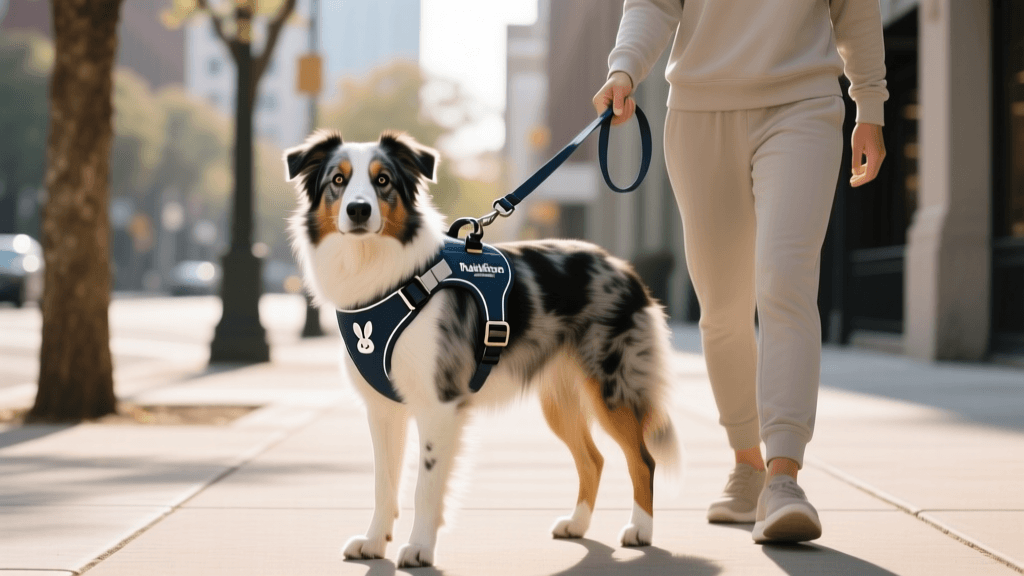
According to the American Kennel Club (AKC), utilizing equipment that redirects this forward momentum rather than choking the dog is the most humane and effective way to manage pulling. A front-clip no-pull harness achieves this by placing the leash attachment point on the dog's chest. When the dog pulls forward, the leash tension gently pivots their shoulders toward the handler, effectively neutralizing the opposition reflex and breaking their forward momentum without causing pain or tracheal damage.
Front-Clip vs. Back-Clip vs. Dual-Clip: Which Configuration Works Best?
When shopping for a harness in 2026, you will encounter three primary leash attachment configurations. Understanding the difference is crucial for selecting the right tool for your specific walking environment.
| Clip Configuration | Best Used For | Mechanism of Action | Potential Drawbacks |
|---|---|---|---|
| Front-Clip (Chest) | Heavy pullers, urban walking, active training | Pivots the dog's chest toward the handler when tension is applied, stopping forward momentum. | Leash can get tangled between front legs; requires training to prevent chafing on the shoulders. |
| Back-Clip (Shoulders) | Calm dogs, brachycephalic breeds, hiking, running | Distributes pressure evenly across the chest and back; prevents neck strain. | Can actually encourage pulling due to the opposition reflex (like a sled dog). |
| Dual-Clip (Front & Back) | Transitioning dogs, versatile handlers, varied environments | Allows the handler to switch between training mode (front) and relaxed walking mode (back). | Generally more expensive and slightly heavier due to extra hardware. |
For dogs that consistently pull, a front-clip or dual-clip harness is absolutely mandatory. Back-clip harnesses should be reserved for dogs that have already mastered loose-leash walking or for specific activities like canicross or hiking where pulling is expected and desired.
Top 3 No-Pull Dog Harnesses Dominating 2026
Based on durability, ergonomic design, and effectiveness in redirecting pulling behavior, here are the top three no-pull harnesses we recommend for this year.
1. Ruffwear Front Range Harness (2026 Edition)
The Ruffwear Front Range remains the gold standard for everyday urban and trail walking. The latest 2026 iteration features updated, highly durable recycled ocean plastics in its webbing, aligning with modern sustainability goals without sacrificing tensile strength. It features a dual-clip design with a reinforced V-ring on the chest for steering pullers and an aluminum back-clip for relaxed walks. The padded chest and belly panels distribute weight evenly, preventing chafing even during long walks. Best for: Active owners who need a rugged, versatile harness that transitions seamlessly from city sidewalks to weekend hiking trails.
2. Rabbitgoo No-Pull Dog Harness
If you are looking for exceptional value without compromising on safety, the Rabbitgoo No-Pull Harness is the undisputed budget king. It features a dual-clip setup and four adjustable straps that allow for a highly customized fit, which is crucial for hard-to-fit breeds like Greyhounds or Bulldogs. The breathable air mesh is particularly beneficial for the increasingly hot summers we are experiencing in 2026, keeping your dog cool while the reflective strips ensure high visibility during early morning or late-night walks. Best for: Budget-conscious owners, growing puppies (due to high adjustability), and short-nosed breeds that need a breathable, choke-free design.
3. Kurgo Tru-Fit Smart Harness
The Kurgo Tru-Fit is uniquely engineered with a nested steel buckle system that mimics climbing harnesses, making it incredibly secure for dogs that are escape artists. Furthermore, it is crash-tested and includes a 10-inch seatbelt tether, making it a dual-purpose tool for both daily walking and safe car travel. The front D-ring is mounted on a reinforced chest plate that effectively turns the dog when they pull. Best for: Multi-pet households that do a lot of driving, escape-prone dogs, and owners who want one harness for both the car and the pavement.
The Perfect Fit: Measuring Your Dog in 2026
A no-pull harness can only work if it fits correctly. A poorly fitted harness can cause shoulder chafing, restrict gait, or allow the dog to back out of it entirely. The ASPCA emphasizes that proper equipment fit is a foundational element of safe dog walking. Follow these steps to ensure a perfect fit:
- Measure the Girth: Use a soft measuring tape to measure the widest part of your dog's ribcage, usually just behind the front legs. This is the most critical measurement.
- Measure the Neck: Measure the base of the neck where the collar normally sits. Not all harnesses require this, but overhead styles do.
- The Two-Finger Rule: Once the harness is on, you should be able to comfortably slide exactly two fingers under any strap. If you can fit your whole hand, it is too loose and poses an escape risk. If you cannot fit two fingers, it is too tight and will restrict breathing or blood flow.
- Check the Shoulder Blades: Ensure the straps do not sit directly on the dog's shoulder joints or restrict the full extension of their front legs while walking.
A 14-Day Training Protocol for the Front-Clip Harness
Remember, a harness is a tool, not a cure. To permanently alter your dog's pulling behavior, you must pair the front-clip harness with positive reinforcement training. Here is a practical 14-day protocol to implement on your daily walks.
Days 1-5: The 'Red Light, Green Light' Method
Attach the leash to the front chest ring. Begin walking in a low-distraction environment (like your hallway or a quiet driveway). The moment your dog pulls and the leash goes taut, stop immediately (Red Light). Do not yank the leash; simply become a tree. Wait for your dog to look back at you or take a step backward, which releases the tension on the leash. The second the leash is slack, mark the behavior with a 'Yes!' and continue walking (Green Light). This teaches the dog that pulling makes the world stop, while a loose leash makes the world move forward.
Days 6-10: Directional Changes
Once your dog understands that tension stops the walk, introduce unpredictable directional changes. When your dog surges ahead, use the front clip to gently guide them in a 180-degree turn and walk the opposite way. When they catch up to you and are walking by your side, reward them with a high-value treat at your knee level. This builds the habit of checking in with you rather than forging ahead blindly.
Days 11-14: Adding Environmental Distractions
Move your training to busier environments. Carry high-value rewards (like freeze-dried liver or chicken). If you see a distraction approaching (another dog, a squirrel), proactively ask your dog for a 'watch me' or 'heel' before they have the chance to pull. Reward heavily for maintaining a loose leash in the presence of triggers.
Harness Maintenance and Safety Checks
Urban walking exposes your gear to dirt, road salt, and moisture. To ensure your no-pull harness remains safe and effective throughout 2026, perform a quick safety check every Sunday. Inspect the V-ring and back D-ring for signs of metal fatigue or rust. Check the nylon webbing for fraying, especially near the buckles where friction occurs. Most modern harnesses, including the Ruffwear and Rabbitgoo models, are machine washable. Place the harness in a mesh laundry bag, wash on a gentle cycle with pet-safe detergent, and air dry to preserve the integrity of the reflective stitching and padding.
Conclusion
Upgrading to a high-quality no-pull dog harness is one of the most impactful investments you can make for your daily routine with your dog. By understanding the biomechanics of the opposition reflex, selecting a properly fitted front-clip or dual-clip model like the Ruffwear Front Range or Rabbitgoo, and committing to a consistent positive-reinforcement training protocol, you can transform your chaotic urban walks into peaceful, bonding experiences. Embrace the right tools and techniques this year, and enjoy the vibrant, shared life you and your dog deserve.
hannah-wickes
All our authors care for dogs every day — read more of their work on the authors page.