Managing Hip Dysplasia: Daily Routines for Large Breed Dogs
Learn how to adapt your daily routine, home environment, and exercise plan to support a large breed dog genetically predisposed to hip dysplasia.
Understanding the Genetic Reality of Hip Dysplasia
Sharing your life with a large breed dog like a German Shepherd, Labrador Retriever, or Golden Retriever brings immense joy, but it also comes with specific genetic responsibilities. Canine Hip Dysplasia (CHD) is a multifactorial disease, meaning it is influenced by both genetics and environmental factors. While you cannot change your dog's DNA, you have absolute control over their environment, diet, and daily routines. By proactively adapting your lifestyle, you can significantly delay the onset of osteoarthritis and maintain your dog's quality of life for years to come.
According to the Orthopedic Foundation for Animals (OFA), hip dysplasia is a malformation of the hip joint where the ball and socket do not fit or develop properly. This genetic predisposition means that the daily wear-and-tear of a normal household can accelerate joint degradation if the environment is not properly managed. Understanding how to structure your dog's day-to-day life is the most powerful tool you have in managing this condition.
Adapting Your Home Environment for Joint Health
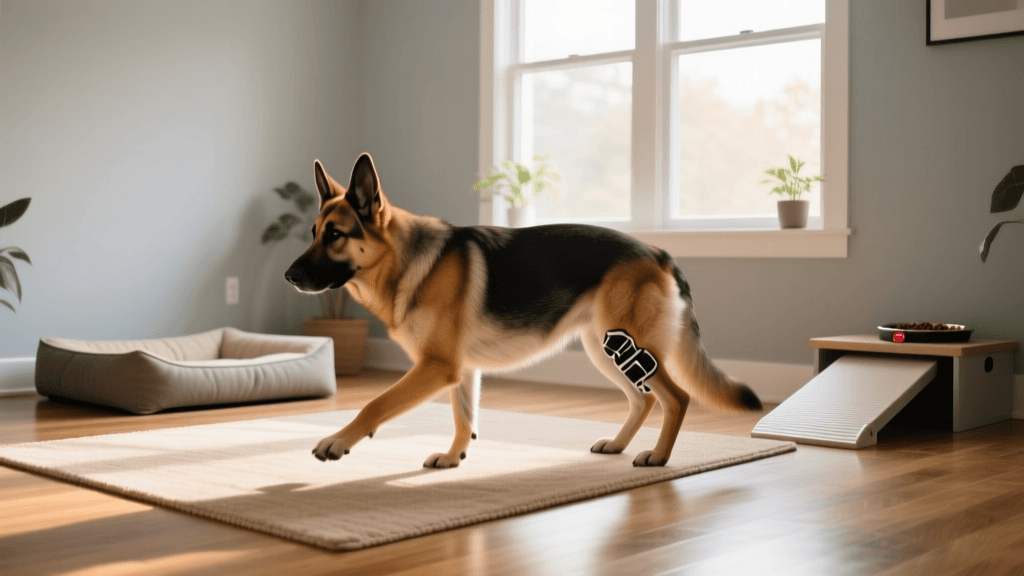
The modern home is full of hazards for a dog with compromised or genetically vulnerable hips. Hardwood, tile, and laminate floors offer zero traction, forcing dogs to splay their legs and put undue stress on their hip joints just to stand up or walk to the kitchen.
Flooring and Traction Modifications
- Area Rugs and Runners: Cover high-traffic areas and pathways with low-pile, non-slip area rugs. Washable rugs with built-in rubber backing (like Ruggable) are excellent for hygiene and grip.
- Paw Grip Solutions: If your dog struggles to stand on hard floors, consider applying paw wax like Musher's Secret for slight traction, or use veterinary-approved toe grips (such as Dr. Buzby's ToeGrips) which slide onto the toenails to provide mechanical grip on smooth surfaces.
Ramps, Stairs, and Furniture
Jumping on and off furniture or climbing into vehicles creates a massive concussive force on the hips. A 70-pound dog jumping off a 24-inch sofa exerts a force equivalent to several times their body weight upon landing.
- Pet Ramps: Invest in a sturdy, high-traction ramp for beds, sofas, and vehicles. Look for a ramp with an incline no steeper than 18 to 20 degrees. The PetSafe Happy Ride Folding Pet Ramp is a popular, reliable option that supports up to 150 pounds while providing a gentle slope.
- Dog Stairs: For smaller elevated surfaces, foam-based dog stairs with a 6-inch rise per step are gentler on the joints than steep wooden steps.
Orthopedic Sleeping Arrangements
A standard stuffed dog bed will flatten out under the weight of a large breed, offering no joint support. You need a bed constructed from high-density orthopedic memory foam. Aim for a bed with a minimum thickness of 4 to 7 inches, featuring a supportive base layer and a comfort top layer. Brands like Big Barker specialize in 7-inch orthopedic beds specifically engineered for large and giant breeds, ensuring the dog's hips never 'bottom out' against the hard floor.
Modifying Daily Exercise and Play Routines
Exercise is critical for maintaining the muscle mass that supports the hip joint, but the type of exercise matters just as much as the duration. The goal is to build lean muscle without causing micro-trauma to the joint capsule. The American Kennel Club (AKC) emphasizes that controlled, low-impact exercise is the gold standard for dogs with or predisposed to hip dysplasia.
Safe vs. Unsafe Exercises
| Exercise Type | Impact Level | Suitability for Dysplastic Hips | Notes & Modifications |
|---|---|---|---|
| Leash Walking | Low | Highly Recommended | Keep to flat, even terrain. Avoid steep hills. 20-30 mins twice daily is ideal. |
| Swimming | Zero | Highly Recommended | Builds muscle without joint loading. Use a canine life vest for safety and buoyancy. |
| Fetch / Frisbee | High | Strictly Avoid | Sudden stops, sharp turns, and jumping to catch cause severe joint torque. |
| Agility / Flyball | Extreme | Strictly Avoid | Weaving and jumping over hurdles will rapidly accelerate osteoarthritis. |
| Scent Work | Low | Highly Recommended | Provides excellent mental enrichment and light physical movement without impact. |
Pro Tip: Implement the 'Two-Walk Rule.' Instead of one exhausting hour-long hike on the weekend, which can cause weekend-warrior soreness and inflammation, commit to two 25-minute controlled leash walks every single day. Consistency prevents joint stiffness and maintains muscle tone.
Navigating Multi-Pet Households
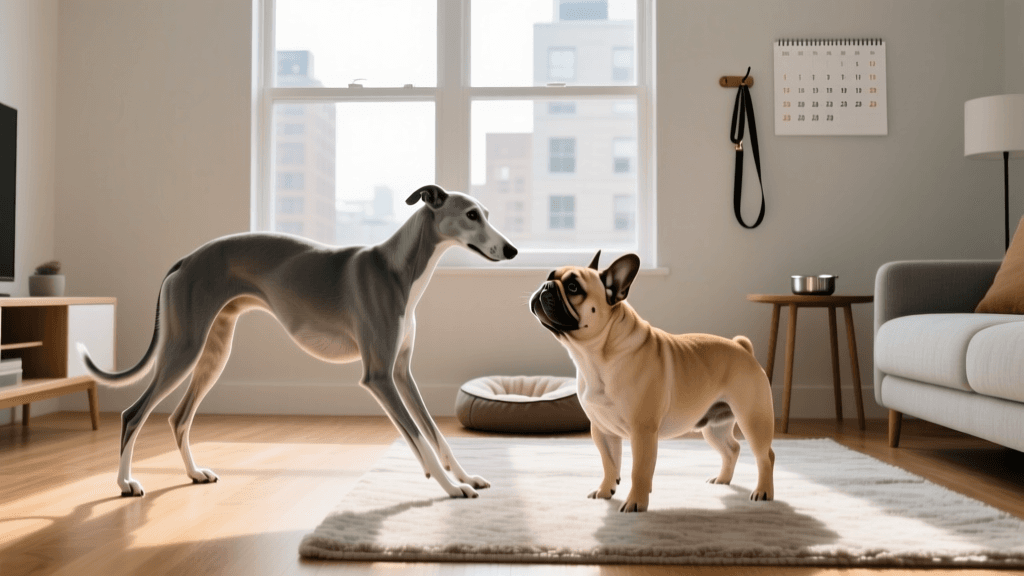
Living with multiple dogs adds a layer of complexity, especially if your large breed is genetically predisposed to hip issues while your other pet is a high-energy working breed (like a Border Collie or Australian Shepherd). Roughhousing, wrestling, and being bowled over by a smaller, faster dog can easily trigger a hip subluxation or strain.
Managing Play and Decompression
- Supervised Play Only: Never leave a dysplastic dog unsupervised with a high-energy 'bully' breed or herding dog that tends to nip at heels or body-slam during play.
- Decompression Zones: Use tall, hardware-mounted baby gates to create separate zones in your home. This allows your large breed to rest undisturbed on their orthopedic bed while the higher-energy dog plays in another room.
- Separate Enrichment: Fulfill the high-energy dog's needs through alternative outlets that do not involve the large dog. Use flirt poles in the backyard, engage in separate agility training sessions, or provide puzzle feeders and frozen Kongs to tire out the active dog mentally without requiring physical wrestling with their housemate.
Weight Management: The Most Critical Factor
If there is one takeaway for living with a genetically predisposed large breed, it is this: keep your dog lean. Excess body fat acts as a physical burden on compromised joints and produces inflammatory cytokines that worsen arthritis pain. Research from the Cornell University College of Veterinary Medicine highlights that maintaining an ideal body weight is one of the most effective, non-surgical ways to manage the progression and pain associated with hip dysplasia.
Targeting the Ideal Body Condition Score (BCS)
Do not rely solely on the feeding guidelines on the back of the dog food bag, as these are often calibrated for intact, highly active dogs. Instead, use the 9-point Body Condition Score (BCS) system.
- Target Score: Aim for a BCS of 4 out of 9. You should be able to easily feel your dog's ribs without pressing hard, and they should have a visible abdominal tuck when viewed from the side.
- Caloric Adjustments: If your dog is primarily doing low-impact leash walks and swimming, they likely require 10% to 20% fewer calories than a dog of the same weight that runs alongside a bicycle.
- Treat Accounting: Treats should make up no more than 10% of your dog's daily caloric intake. Swap high-calorie biscuits for low-calorie alternatives like baby carrots, green beans, or small pieces of boiled chicken breast.
Joint Supplements and Preventative Care
While not a replacement for environmental management and weight control, joint supplements can provide foundational support for cartilage health and reduce systemic inflammation. Begin a joint supplement regimen early, ideally before clinical signs of lameness appear, especially if your dog's breed profile carries a high genetic risk.
- Glucosamine HCl and Chondroitin Sulfate: These are the building blocks for cartilage repair and synovial fluid health. Look for veterinary-formulated chews or liquids that guarantee active ingredient levels.
- Omega-3 Fatty Acids (EPA/DHA): Derived from wild-caught fish oil or green-lipped mussel powder, high doses of EPA and DHA are clinically proven to reduce joint inflammation. Ensure the supplement specifies the exact amounts of EPA and DHA, not just 'total fish oil.'
- Green Lipped Mussel (GLM): A natural source of glycosaminoglycans (GAGs) and omega-3s, GLM has shown excellent efficacy in supporting joint mobility in large breed dogs.
Final Thoughts on Daily Life
Managing a dog with a genetic predisposition to hip dysplasia does not mean your dog cannot live a full, adventurous, and happy life. It simply means that your definition of adventure must shift. Swap the rugged mountain hikes for scenic, flat beach walks. Trade the game of frisbee for a stimulating scent-work session in the woods. By thoughtfully curating your home environment, strictly managing their weight, and adapting your daily routines, you empower your large breed dog to thrive comfortably, proving that the best medicine is often found in the details of everyday life.
marcus-aldridge
All our authors care for dogs every day — read more of their work on the authors page.