Best Cooling Vests for Service Dogs in 2026: Heat Stress Guide
Discover top cooling vests and heat stress protocols for service dogs in 2026. Keep your working canine partner safe during intense field operations.
The Rising Threat of Heat Stress in Working Dogs
Working dogs, including mobility assistance dogs, detection canines, and search and rescue (SAR) teams, possess an extraordinary drive to perform their duties. However, this intense focus often causes them to ignore their own physiological limits. As global temperature averages continue to climb in 2026, managing heat stress has become one of the most critical components of working dog health and wellbeing. Handlers and owners must proactively utilize advanced cooling gear and strict operational protocols to prevent life-threatening heatstroke.
Unlike humans, dogs do not have widespread eccrine sweat glands. They rely primarily on panting and vasodilation to shed heat. When a working dog is engaged in high-intensity tasks, their internal heat production can easily outpace their ability to cool down, especially in high-humidity environments where evaporative cooling through panting becomes inefficient. According to the American Kennel Club, a dog's normal body temperature ranges from 101 to 102.5 degrees Fahrenheit; once it exceeds 106 degrees, cellular damage and organ failure can occur rapidly.
Recognizing Heat Exhaustion in Service and Detection Dogs
Because service and working dogs are trained to push through discomfort, handlers must be vigilant in spotting the early, subtle signs of heat exhaustion before they escalate. Do not wait for the dog to collapse. Watch for the following indicators during field operations:
- Excessive, noisy panting: Panting that sounds labored or lacks the typical rhythmic cadence.
- Bright red or pale gums: Indicating abnormal blood flow or oxygen deprivation.
- Delayed capillary refill time: Press the gums; if the white spot takes longer than two seconds to return to pink, the dog is in distress.
- Sticky or dry mucous membranes: A clear sign of severe dehydration.
- Loss of coordination: Stumbling, reluctance to follow commands, or a glassy-eyed stare.
Top Cooling Vests for Working Dogs in 2026
The market for canine cooling gear has evolved significantly. In 2026, the most effective vests utilize advanced evaporative cooling fabrics, phase-change materials, and UPF sun protection. Here are the top performers for working and service dogs this year.
1. Ruffwear Swamp Cooler Evo
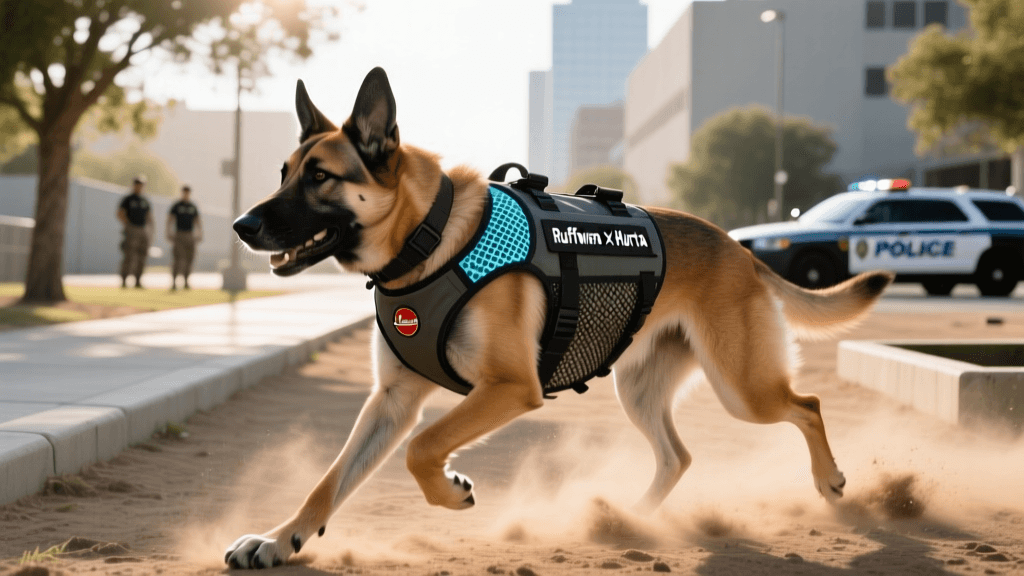
The Ruffwear Swamp Cooler Evo remains the gold standard for field work. It features a sophisticated three-layer construction: a wicking outer layer that reflects solar radiation, a highly absorbent middle layer that stores water for evaporative cooling, and a dry, comfortable inner lining that prevents chafing during long shifts. The integrated harness compatibility makes it ideal for mobility and detection dogs who need to wear gear over their cooling vests. The UPF 50+ rating is essential for dogs working in open, unshaded environments.
2. Hurtta Cooling Vest
Hurtta's approach focuses on maximizing the cooling effect on the dog's core and major blood vessels. The 2026 iteration of the Hurtta Cooling Vest utilizes Coldback technology, which reflects sunlight while the inner moisture-retaining fabric provides prolonged evaporative cooling. Its ergonomic cut ensures zero restriction of shoulder movement, which is vital for SAR dogs navigating rough terrain. It also features a dedicated leash opening and high-visibility accents for low-light operations.
3. Non-stop Dogwear Cooling Coat
Designed originally for canine athletes, the Non-stop Dogwear Cooling Coat is exceptionally lightweight. It is the preferred choice for high-speed detection dogs where adding bulk or weight could impair performance. While it holds slightly less water than the Ruffwear model, its ultra-breathable mesh allows for rapid air circulation, making it highly effective in dry, hot climates where evaporation rates are high.
Comparison Chart: 2026 Premium Cooling Vests
| Brand & Model | Cooling Technology | Weight/Bulk | Best Use Case | 2026 Est. Price |
|---|---|---|---|---|
| Ruffwear Swamp Cooler Evo | 3-Layer Evaporative + UPF 50+ | Medium | Long shifts, mobility work, high UV | $95.00 |
| Hurtta Cooling Vest | Coldback Reflective + Moisture Core | Medium-Light | SAR, rugged terrain, core cooling | $89.00 |
| Non-stop Dogwear Cooling Coat | Rapid-Evap Breathable Mesh | Ultra-Light | High-speed detection, dry climates | $75.00 |
Hydration and Electrolyte Protocols for Field Work
Water alone is insufficient for a working dog sweating out essential minerals through their paw pads and losing electrolytes via heavy panting. In 2026, veterinary sports medicine specialists strongly recommend supplementing with canine-specific electrolyte powders, such as K9 Power Go Dog or Bullyade. These formulations are balanced for canine physiology, providing necessary sodium, potassium, and chloride without the dangerous sugar loads or artificial sweeteners (like xylitol) found in human sports drinks.
Field Hydration Schedule: Offer 4 to 8 ounces of electrolyte-enhanced water every 20 minutes during active work. Always carry a collapsible silicone bowl and a dedicated insulated hydration flask to keep the water cool, as dogs are more likely to drink water that is below ambient temperature.
Acclimatization and Work/Rest Cycles
Conditioning a working dog for heat takes time. Research and guidelines from institutions like the Penn Vet Working Dog Center emphasize that heat acclimatization requires a minimum of 14 to 21 days of gradually increasing exposure and workload. You cannot rush this physiological adaptation.
Once acclimatized, strict work/rest cycles must be enforced. The standard protocol for detection and patrol dogs in high-heat environments is 20 minutes of active work followed by 15 minutes of mandatory rest in a shaded, well-ventilated area or an air-conditioned vehicle. During the rest period, the dog should be offered water and have their cooling vest re-wetted if using an evaporative model.
Paw Pad Protection on Hot Surfaces
Urban service dogs and detection dogs working on asphalt or concrete face severe risks of thermal burns on their paw pads. In 2026, pavement temperatures in direct sunlight can easily exceed 140 degrees Fahrenheit when the ambient air temperature is only 85 degrees. Before deploying a dog onto paved surfaces, handlers must perform the 'seven-second test': place the back of your hand on the surface. If you cannot hold it there comfortably for seven seconds, it is too hot for your dog.
For unavoidable hot surfaces, equip your dog with protective footwear such as Rex Specs Dog Booties or apply a thick layer of Musher's Secret paw wax. While wax provides a barrier against rough terrain and mild heat, it will not prevent burns on scorching asphalt; physical booties are mandatory for extreme surface temperatures.
Post-Shift Recovery and Emergency Cooling
If a working dog shows signs of heat exhaustion, immediate action is required. Move the dog to a shaded or air-conditioned area immediately. Apply tepid (not cold) water to their paw pads, belly, and groin area. Never use ice water or ice packs. Ice causes rapid vasoconstriction in the peripheral blood vessels, which traps heat in the dog's core and accelerates organ damage. Use a fan to increase air circulation over the wet fur to maximize evaporative cooling.
Once the dog's rectal temperature drops to 103 degrees Fahrenheit, stop the active cooling process to prevent hypothermia, and transport them to the nearest emergency veterinary clinic for intravenous fluid therapy and neurological monitoring. By combining the best 2026 cooling gear with rigorous, science-based handling protocols, you can ensure your working dog remains safe, healthy, and effective in the field.
tom-renshaw
All our authors care for dogs every day — read more of their work on the authors page.