The Best No-Pull Dog Harnesses for 2026: A Fitting Guide
Discover the best front-clip no-pull dog harnesses for 2026. Learn how to measure, fit, and train your new dog for stress-free walks from day one.
Why a No-Pull Harness is Essential for Your New Dog
Bringing a new dog home is one of the most rewarding experiences in life, but the transition period can be stressful for both you and your new furry companion. One of the first and most critical challenges new owners face in 2026 is mastering the daily walk. Puppies and newly adopted adult dogs often lack leash manners, leading to frustrating and sometimes dangerous pulling. Using a standard flat collar or a traditional back-clip harness can exacerbate this issue, putting immense strain on your dog's delicate trachea and cervical spine. According to the ASPCA, utilizing the proper walking equipment is fundamental to ensuring your dog's physical safety and promoting positive behavioral development from day one.
A high-quality no-pull dog harness is not just a piece of walking gear; it is a vital training tool. By redistributing pressure across the dog's chest and shoulders rather than their neck, you protect their airway while simultaneously gaining better mechanical control. In this comprehensive guide, we will explore the biomechanics of front-clip harnesses, review the top models available this year, and provide a step-by-step masterclass on how to measure, fit, and train your dog using the industry-leading Ruffwear Front Range harness.
The Biomechanics: Front-Clip vs. Back-Clip Harnesses
To understand why a no-pull harness works, you must first understand the canine 'opposition reflex.' When a dog feels pressure against its back or neck—such as when pulling against a flat collar or a back-clip harness—its natural, instinctual response is to push forward against that pressure. This is the exact biomechanical principle used to train sled dogs to pull heavy loads. If you attach a leash to the back of your dog's harness, you are inadvertently encouraging them to lean into their weight and pull harder.
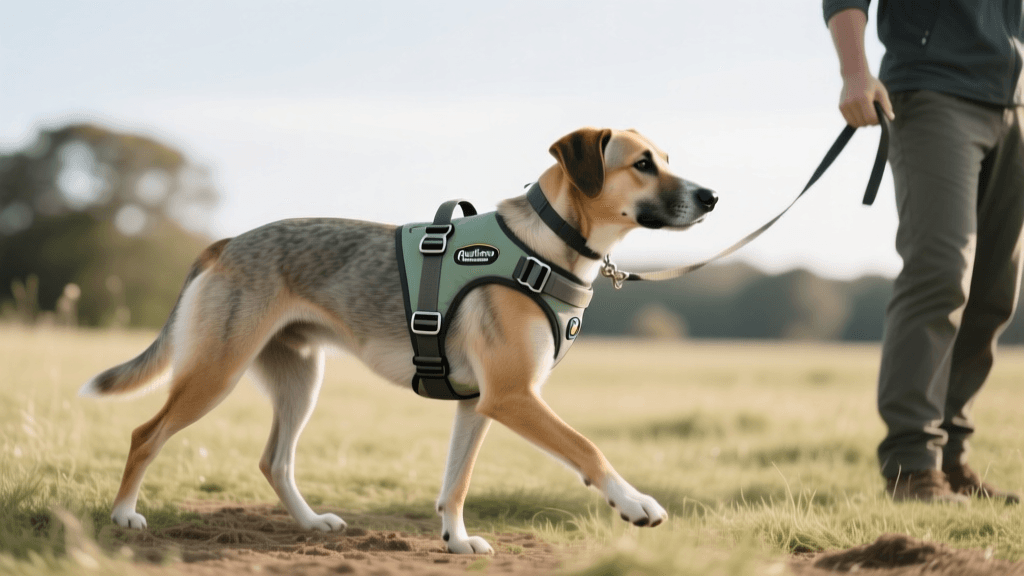
A front-clip no-pull harness completely changes this dynamic. By placing the leash attachment point on a reinforced ring located on the dog's sternum (the center of the chest), the physics of the walk shift in your favor. When the dog surges forward and the leash goes taut, the front attachment point gently pivots the dog's chest and shoulders back toward the handler. This redirection neutralizes their forward momentum without causing pain, choking, or injury. It essentially turns the dog around to face you, breaking their focus on whatever triggered the pulling and resetting their attention on the handler.
Top 3 No-Pull Harnesses to Consider in 2026
The pet gear market has seen significant innovations in sustainable materials and ergonomic designs over the past few years. Below is a comparison chart of the top three dual-clip no-pull harnesses dominating the market in 2026, offering both front and back attachment points for versatile training.
| Harness Model | Best For | Clip Locations | Estimated 2026 Price |
|---|---|---|---|
| Ruffwear Front Range | Everyday walking & hiking | Front (Aluminum V-Ring) & Back | $45.00 - $50.00 |
| Kurgo Tru-Fit Smart Harness | Car travel & strong pullers | Front (Nesting Buckle) & Back | $40.00 - $45.00 |
| Rabbitgoo No-Pull Harness | Budget-friendly & fast-growing puppies | Front (Metal O-Ring) & Back | $20.00 - $25.00 |
The Ruffwear Front Range remains the gold standard for active households due to its plush belly padding and incredibly durable, rust-proof aluminum front V-ring. The Kurgo Tru-Fit is heavily recommended for owners who frequently travel by car, as its unique steel nesting buckles double as a crash-tested seatbelt tether. Finally, the Rabbitgoo offers an excellent entry-level option for those adopting rapidly growing puppies who will need to be resized every few months.
How to Measure Your New Dog for a Perfect Fit
Ordering a harness without properly measuring your dog is the most common mistake new owners make. A poorly fitted harness can cause chafing, restrict shoulder movement, or allow the dog to slip out and escape. To get the perfect fit, you will need a soft tailor's measuring tape and a few high-value treats to keep your dog still.
Step 1: Measure the Chest Girth
This is the most critical measurement. Wrap the soft tape measure around the widest part of your dog's ribcage. This is usually located about one to two inches behind their front legs, right behind the elbows. Ensure the tape is snug but not tight. Write down this number.
Step 2: Measure the Neck Girth
Wrap the tape measure around the thickest part of your dog's neck, right where a traditional collar would naturally sit (near the base of the neck, not up by the ears). Again, keep it snug. Most modern harnesses like the Ruffwear Front Range rely primarily on chest girth, but neck girth is crucial for overhead-style harnesses.
Step 3: Consult the Sizing Chart
Compare your measurements to the manufacturer's specific sizing chart. If your dog falls between two sizes, always size up. A harness that is slightly too large can be tightened using the adjustment straps, but a harness that is too small will restrict breathing and movement.
Step-by-Step Fitting Guide: The Ruffwear Front Range
Once your harness arrives, proper fitting is essential for comfort and safety. Here is how to correctly fit the Ruffwear Front Range harness on your new dog:
- Loosen All Straps: Before putting the harness on, loosen the four adjustment points (two on the neck, two on the belly) so the harness is at its maximum size.
- Slip Over the Head: Gently slip the padded chest plate over your dog's head. Ensure the front metal V-ring is resting squarely in the center of their sternum.
- Secure the Belly Straps: Bring the two belly straps around the dog's ribcage and click the dual buckles into place. You should hear a firm, audible click.
- The Two-Finger Rule: This is the golden rule of harness fitting. You should be able to slide exactly two fingers flat between the harness straps and your dog's body at any point. If you can fit more, it is too loose and risks chafing or escape. If you cannot fit two fingers, it is too tight and will restrict blood flow.
- Check Shoulder Mobility: Have your dog sit, stand, and take a few steps. Watch their front legs. The chest plate should not rub against their armpits or restrict their natural stride.
First-Week Training Protocol for Leash Walking
Having the best no-pull harness in 2026 will not magically teach your dog to walk politely; it simply gives you the mechanical advantage needed to train them effectively. The American Kennel Club (AKC) strongly advocates for positive reinforcement and patience when leash training a new dog. Here is a highly effective protocol to implement during your first week of walks.
The 'Red Light, Green Light' Method
Clip your leash to the front chest ring of the harness. Begin walking in a low-distraction environment, such as your backyard or a quiet hallway. The moment your dog surges ahead and the leash becomes taut, immediately stop walking and stand completely still (Red Light). Do not yank the leash or pull the dog back. Simply become a tree. Wait for your dog to turn their head to look at you or take a step backward to release the tension on the leash. The exact second the leash goes slack, praise them warmly and resume walking (Green Light). This teaches the dog a fundamental rule: tension on the leash means the walk stops; a loose leash means the walk continues.
Treat Placement and the 'Seam of Your Pants'
Where you deliver treats is just as important as the treats themselves. When rewarding your dog for walking politely by your side, always deliver the treat down by the seam of your pants, right next to your leg. If you deliver treats at chest height or in front of your body, you will inadvertently train your dog to jump up or forge ahead to anticipate the reward. Delivering the treat at your knee level reinforces the exact physical position you want them to maintain during the walk.
Final Thoughts on Starting Your Journey
Equipping your new dog with a properly fitted, front-clip no-pull harness is one of the best investments you can make in your shared future. It prioritizes their physical health, accelerates their training, and transforms the daily walk from a stressful chore into an enriching bonding experience. Take the time to measure accurately, fit the harness using the two-finger rule, and remain consistent with your positive reinforcement training. With the right gear and a patient mindset, you and your new companion will be mastering the neighborhood sidewalks in no time.
hannah-wickes
All our authors care for dogs every day — read more of their work on the authors page.