Resource Guarding in Dogs: A Behaviorist's Guide to Home Management
Discover expert behavior analysis techniques to manage and modify resource guarding in dogs. Learn practical home routines, trading games, and safety tips.
Understanding Resource Guarding Through a Behavioral Lens
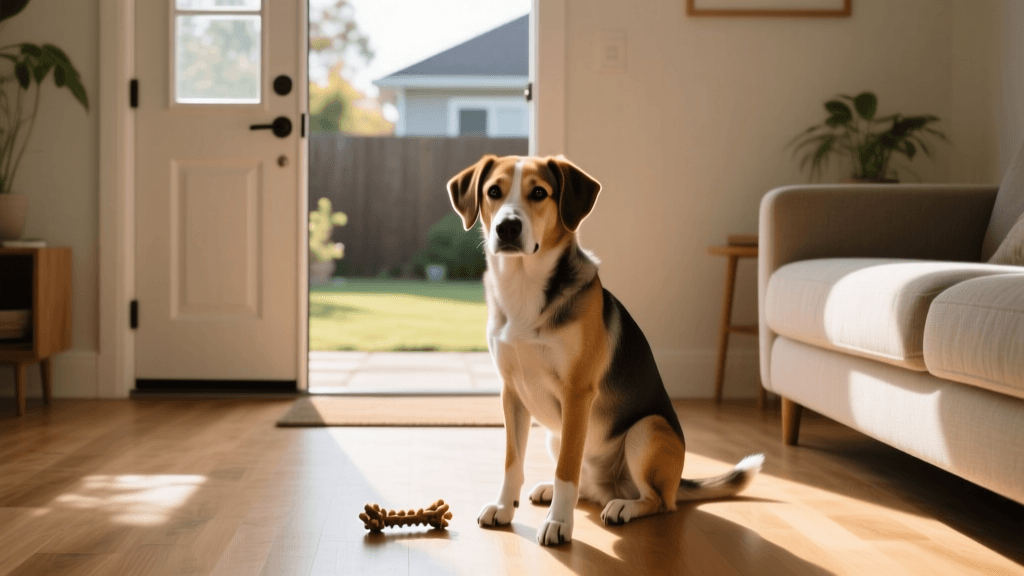
Resource guarding is one of the most common, yet misunderstood, behavioral challenges in multi-pet and single-dog households. From a behavior analysis perspective, guarding is not a display of 'dominance' or 'stubbornness.' Rather, it is a natural, adaptive survival behavior exacerbated by environmental stressors and learning history. When a dog guards a high-value item—such as a food bowl, a favorite chew, or even a specific resting spot—they are attempting to control their environment to prevent the loss of a valued resource.
According to the Humane Society of the United States, resource guarding manifests along a continuum of distance-increasing behaviors. These range from subtle body language (stiffening, whale eye, lip licking) to overt warnings (growling, snapping) and, in severe cases, biting. As an expert behaviorist, the goal is never to suppress the warning signs through punishment, which only creates a more dangerous dog that bites without warning. Instead, we utilize Applied Behavior Analysis (ABA) to change the dog's underlying emotional response and modify the environmental antecedents that trigger the behavior.
The Behavioral Mechanics: Operant and Classical Conditioning
To effectively modify resource guarding, we must understand the behavioral contingencies maintaining it. When a dog growls at an approaching human and the human backs away, the growling behavior is negatively reinforced. The dog learns that growling successfully removes the perceived threat. Conversely, if a human punishes the growl (e.g., via alpha rolls or scolding), the dog may learn to skip the growl and proceed directly to biting the next time a threat approaches.
Our intervention strategy relies on two primary behavioral principles:
- Antecedent Arrangement (Management): Modifying the environment to prevent the dog from rehearsing the guarding behavior while we implement a training plan.
- Desensitization and Counter-Conditioning (DS/CC): Changing the dog's classical conditioning to the approach of a human, pairing the trigger with a high-value outcome that exceeds the value of the guarded item.
Environmental Management: Setting Up for Success
Management is the cornerstone of any behavior modification plan. Every time a dog successfully guards an item and keeps a person or another pet away, the neural pathway for that behavior is strengthened. You must prevent rehearsal of the unwanted behavior.
Practical Management Tools and Costs
- Physical Barriers: Invest in hardware-mounted baby gates for high-risk areas. The Regalo Easy Step Walk Thru Gate (approx. $45) is excellent for blocking off kitchens or dining rooms during meal times.
- Safe Zones: Feed your dog in a closed room or a secure crate. If you have a multi-dog household, dogs must be fed in completely separate, visually blocked areas to eliminate spatial competition.
- Pick-Up Protocol: Do not leave high-value chews (like bully pucks or raw bones) lying around. Only dispense them when the dog is in their designated safe zone, and pick them up only when the dog has voluntarily walked away.
The 'Trade-Up' Protocol: Step-by-Step DS/CC
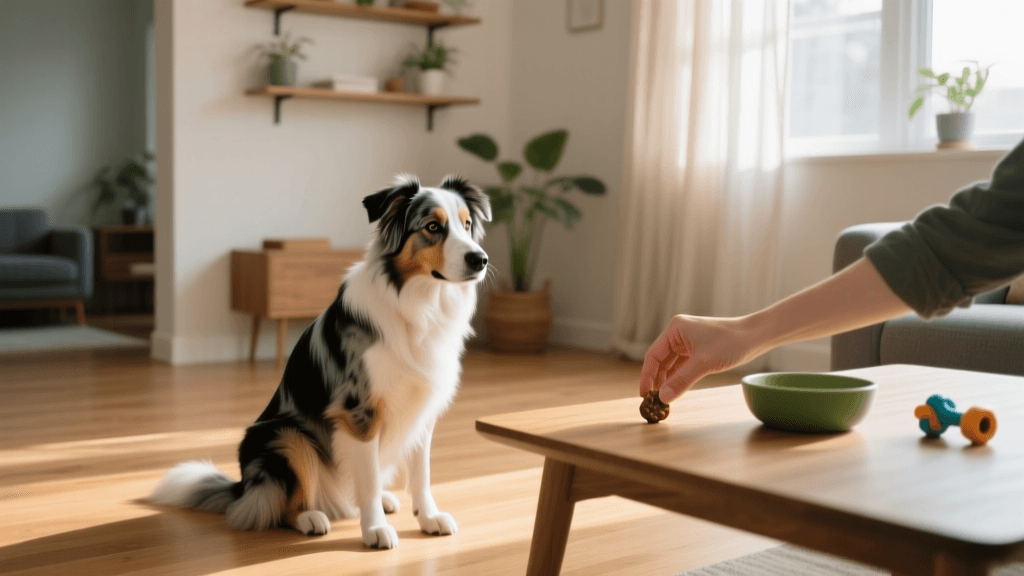
Once management is in place, we begin active behavior modification. The 'Trade-Up' game teaches the dog that a human approaching means something better is coming, not that a resource is being stolen. The American Kennel Club emphasizes that this process must be done at the dog's pace, always working below their reactivity threshold.
Execution and Timing
- Identify the Threshold: Determine the distance at which your dog notices you but does not stiffen or guard. For some dogs, this is 10 feet; for others, it is 2 feet.
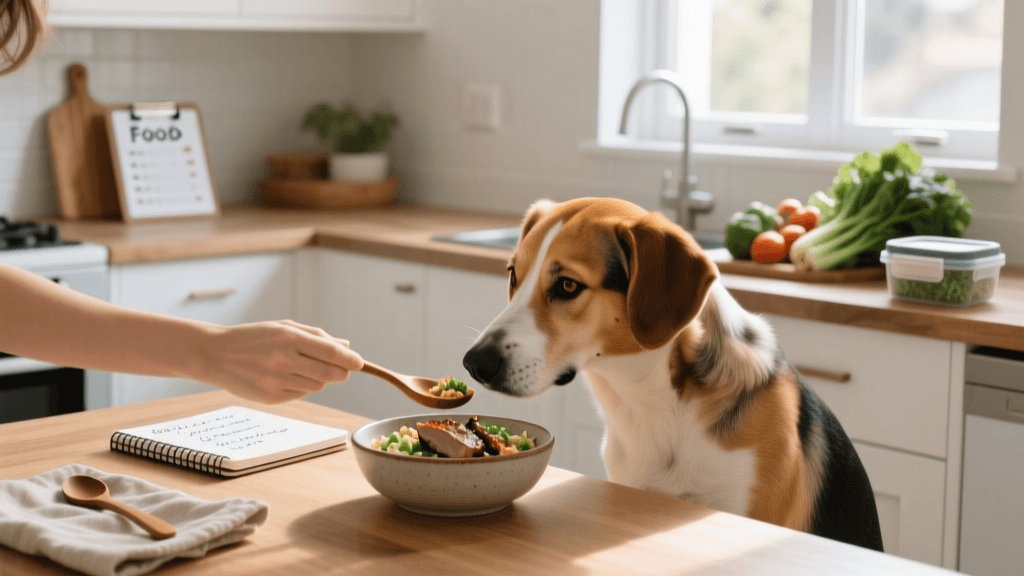
- Prepare High-Value Reinforcers: Use treats that are statistically more valuable than the guarded item. Freeze-dried beef liver (e.g., Stella & Chewy's, approx. $32 per bag) or boiled chicken breast are ideal.
- The Approach and Marker: Toss a high-value treat toward the dog from outside their threshold distance. The moment the dog looks at you or releases the item, use a marker word like 'Yes!' within 300 to 500 milliseconds.
- The 3-Second Rule: Deliver the treat within 3 seconds of the marker. If the dog leaves the item to get the treat, calmly pick up the original item, place it behind your back, and then immediately give the item back. This teaches the dog that giving up the item results in a reward and the return of the item.
- Decrease Distance Incrementally: Only move one foot closer per successful session. If the dog shows stiffness, you have crossed the threshold; immediately increase the distance and proceed more slowly.
Functional Assessment Matrix for Resource Guarding
Behaviorists use functional assessments to identify the specific antecedents (triggers) and consequences maintaining a behavior. Below is a structured matrix to help you analyze your dog's guarding episodes and apply the correct management strategy.
| Antecedent (Trigger) | Distance / Threshold | Dog's Behavior | Functional Consequence | Management Strategy |
|---|---|---|---|---|
| Human approaches food bowl | 5 feet | Stiffening, whale eye, eating faster | Human stops approaching or leaves room | Feed in a closed room; implement DS/CC approach protocol |
| Human reaches for dropped toy | 2 feet | Low growl, hovering over item | Human withdraws hand to avoid bite | Stop reaching; use 'Drop It' trade protocol with high-value treats |
| Other dog enters room with chew | 10 feet | Lunging, snapping, vocalization | Other dog retreats, securing the resource | Use baby gates; separate dogs entirely during high-value chew times |
| Human moves dog off furniture | 0 feet (direct contact) | Snapping, biting, blocking | Human backs away, dog keeps the bed | Block furniture access; teach an 'Off' cue using treat luring from a distance |
Daily Routines and Enrichment to Reduce Anxiety
Dogs that exhibit resource guarding often suffer from underlying chronic stress or a lack of appropriate outlets for their foraging and chewing instincts. Incorporating structured enrichment into your daily routine can lower baseline anxiety and reduce the intensity of guarding behaviors.
- Sniffaris and Decompression Walks: Allow your dog 30 minutes daily to sniff on a 15-foot biothane long line. Sniffing lowers a dog's heart rate and provides immense mental fatigue, reducing overall household tension.
- Foraging Toys: Replace standard food bowls with enrichment tools. The Kong Classic ($18) stuffed with frozen plain pumpkin and kibble, or the Lickimat Soother ($12) smeared with plain Greek yogurt, forces the dog to engage in calming, repetitive licking and chewing behaviors that release endorphins.
- Scatter Feeding: For dogs that guard bowls, scatter feeding kibble in the grass or on a snuffle mat eliminates the 'bowl' as a defensible resource entirely, mimicking natural foraging behaviors.
When to Call a Professional Behaviorist
While mild guarding (e.g., stiffening when approached) can often be managed with the protocols above, severe guarding requires professional intervention. You should immediately seek the help of a certified professional if your dog has broken skin, if the guarding is directed at children, or if the dog guards unpredictable items (like a stray sock or a spot on the carpet).
Look for professionals with verifiable credentials, such as a Certified Applied Animal Behaviorist (CAAB) or a Diplomate of the American College of Veterinary Behaviorists (DACVB). The American Veterinary Society of Animal Behavior (AVSAB) strongly advocates for humane, evidence-based behavior modification and warns against the use of aversive tools (like prong collars or shock collars) for guarding, as these suppress warning signs and increase defensive aggression. Expect to invest between $150 and $350 per hour for a comprehensive behavioral consultation and customized treatment plan.
Conclusion
Living with a resource-guarding dog requires patience, strict environmental management, and a commitment to changing the dog's emotional response rather than just suppressing their symptoms. By utilizing antecedent arrangement, implementing precise DS/CC protocols, and providing robust daily enrichment, you can transform your home from a battleground of competition into a safe, predictable environment where your dog feels secure enough to share their world with you.
tom-renshaw
All our authors care for dogs every day — read more of their work on the authors page.