Adopting a Senior Dog With OA: 2026 Prep & Care Guide
Learn how to prepare your home and manage care when adopting a rescue dog with osteoarthritis. Discover 2026 treatments, mobility aids, and prep tips.
Embracing the Golden Years: Adopting a Dog With Osteoarthritis
Adopting a senior dog or a rescue with special needs is one of the most rewarding experiences a pet parent can have. However, bringing home a dog diagnosed with canine osteoarthritis (OA) requires careful preparation, environmental modifications, and a proactive approach to veterinary care. Osteoarthritis is a degenerative joint disease that affects the cartilage, leading to pain, stiffness, and reduced mobility. According to the American Kennel Club (AKC), OA is the most common chronic disease in dogs, affecting up to 25% of the canine population. As veterinary medicine advances, the standard of care for OA in 2026 offers incredible options for pain management and mobility preservation. If you are in the "Getting a Dog" phase and considering a rescue with joint issues, this comprehensive guide will help you prepare your home, select the right gear, and establish a modern treatment plan.
Evaluating the Rescue: Signs of OA During the Meet-and-Greet
When visiting a shelter or foster home, dogs may mask their pain due to adrenaline or the stress of the environment. To accurately assess a dog's joint health, observe them in a quiet, enclosed outdoor space. Look for the following clinical signs of OA:
- The "Bunny Hop" Gait: Instead of moving their hind legs alternately, the dog uses both hind legs simultaneously when trotting or running.
- Stiffness After Rest: Noticeable difficulty or hesitation when rising from a lying position, often accompanied by a visible "warm-up" period where their gait improves after a few minutes of walking.
- Reluctance to Navigate Elevation: Hesitation or refusal to jump into a car, climb stairs, or hop onto a bed.
- Muscle Atrophy: A noticeable thinning of the thigh muscles (quadriceps and hamstrings) in the hindquarters, indicating decreased use of the affected limbs.
As noted by experts at the Washington State University College of Veterinary Medicine, early detection and environmental management are just as critical as pharmaceutical interventions. Recognizing these signs before finalizing your adoption ensures you are fully prepared for the financial and physical commitments of OA management.
2026 Home Modification Checklist for Arthritic Dogs
Before bringing your new dog home, you must audit your living space to minimize joint strain. Slippery floors and steep inclines are the enemies of arthritic joints. Implement the following modifications:
1. Traction and Flooring
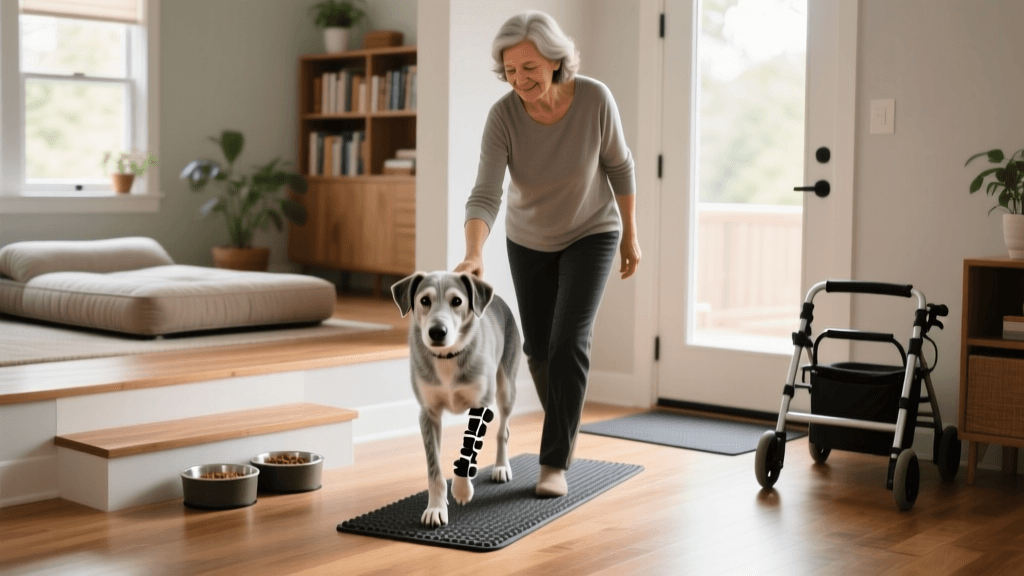
Hardwood, tile, and laminate floors can cause micro-slips that exacerbate joint inflammation. Cover high-traffic areas and the spaces around the dog's bed and food bowls with non-slip rug runners or interlocking EVA foam puzzle mats. In 2026, many pet owners opt for washable, low-pile yoga mats designed specifically for pet rehabilitation, which provide excellent grip and slight cushioning.
2. Ramps and Stairs
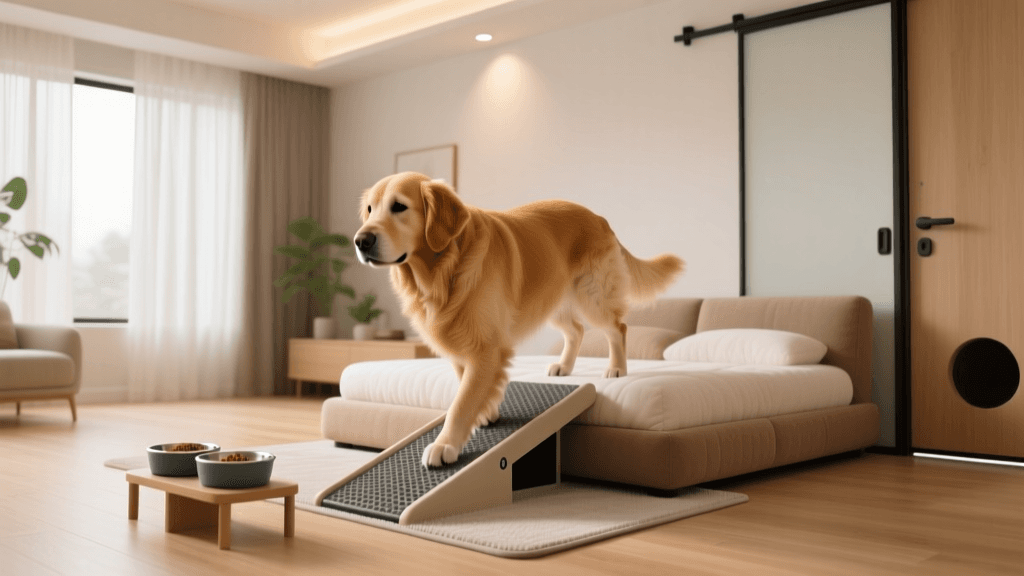
Never force an arthritic dog to jump into an SUV or onto a high bed. Invest in a telescoping pet ramp with a high-traction surface. The ideal ramp should have an incline of no more than 18 to 20 degrees. For indoor furniture, consider foam pet stairs with a gradient slope rather than steep, individual steps.
3. Raised Feeding Stations
Bending down to the floor puts unnecessary strain on the neck, shoulders, and front carpal joints. Use an elevated feeding station that positions the bowls at your dog's elbow height when standing.
First-Day Essentials: Beds, Supplements, and Wearables
Your shopping list for a dog with OA should prioritize comfort and data tracking. Here is what you need ready for their first day home:
Orthopedic Memory Foam Beds
Standard poly-fill dog beds will bottom out under the weight of an arthritic dog, offering zero joint relief. You need a bed made from high-density, human-grade orthopedic memory foam. Look for beds that are at least 4 to 7 inches thick, featuring a supportive base layer and a comfort top layer. Brands like Big Barker or K9 Ballistics offer specialized orthopedic designs in 2026 that come with 10-year "won't flatten" guarantees, typically ranging from $250 to $350.
Smart Mobility Trackers
Modern canine wearables have evolved far beyond simple GPS. Smart collars equipped with veterinary-grade accelerometers can now track a dog's "rest vs. active" ratios, scratch frequency, and sleep quality. Monitoring these metrics allows you to detect pain flare-ups days before they manifest as visible lameness, enabling you to adjust their exercise or consult your vet proactively.
Veterinary Interventions: The 2026 Standard of Care
Within the first week of adoption, schedule a comprehensive veterinary exam to establish a multimodal pain management plan. The veterinary approach to canine OA has shifted dramatically, moving away from relying solely on daily oral medications toward long-acting, targeted biologics and joint support.
Monoclonal Antibodies (Anti-NGF)
The most significant advancement in canine OA treatment over the last few years is the widespread adoption of anti-Nerve Growth Factor (NGF) monoclonal antibodies. Monthly injections, such as bedinvetmab (Librela), target the specific proteins that transmit pain signals from the joints to the brain. Unlike traditional NSAIDs, these biologics do not process through the liver or kidneys, making them incredibly safe for senior dogs with underlying metabolic issues.
NSAIDs and Adjunctive Therapies
Non-Steroidal Anti-Inflammatory Drugs (NSAIDs) like carprofen or meloxicam are still used for acute flare-ups, but veterinarians in 2026 prefer to use them at the lowest effective dose, supplementing with daily joint chews containing Omega-3 fatty acids (EPA/DHA), glucosamine hydrochloride, and undenatured type II collagen (UC-II).
Comparison of 2026 OA Management Tools
| Intervention Type | Specific Product / Treatment | Primary Benefit | Estimated 2026 Cost |
|---|---|---|---|
| Biologic Injection | Bedinvetmab (Librela) | Blocks NGF pain signals; liver/kidney safe | $75 - $130 / month |
| Orthopedic Bedding | 7-Inch High-Density Memory Foam | Prevents pressure sores; supports joint alignment | $250 - $350 (One-time) |
| Nutraceutical | UC-II Collagen & High-EPA Fish Oil | Reduces joint inflammation; slows cartilage degradation | $40 - $60 / month |
| Home Modification | Telescoping Aluminum Ramp (18° incline) | Eliminates impact trauma from jumping | $120 - $180 (One-time) |
| Rehabilitation | Underwater Treadmill Therapy | Builds muscle mass without joint weight-bearing | $80 - $120 / session |
Diet and Weight Management: The Foundation of OA Care
No amount of medication or expensive orthopedic beds can compensate for the physical toll of excess body weight. Every extra pound your dog carries multiplies the force exerted on their joints during movement. Upon adoption, work with your veterinarian to determine your dog's ideal Body Condition Score (BCS). For most arthritic dogs, a BCS of 4 out of 9 (where the ribs are easily felt but not seen, and there is a distinct abdominal tuck) is ideal.
In 2026, many veterinary nutritionists recommend prescription joint diets that are clinically formulated with high levels of eicosapentaenoic acid (EPA), an Omega-3 fatty acid proven to down-regulate the enzymes that destroy joint cartilage. If you prefer to cook for your dog or use commercial fresh food, ensure the recipe is balanced with a veterinary nutritionist and strictly portion-controlled to maintain a lean physique.
Conclusion: Setting Up for a Pain-Free Life
Adopting a dog with osteoarthritis is a commitment to ongoing observation, environmental adaptation, and proactive veterinary care. By preparing your home with proper traction and ramps, investing in high-quality orthopedic support, and utilizing the advanced biologic treatments available in 2026, you can drastically alter the trajectory of your dog's disease. The goal is not just to extend their life, but to ensure that every day they spend with you is comfortable, active, and filled with joy. When you bring that senior rescue through your door, you aren't just giving them a home; you are giving them a second chance at a vibrant, pain-managed life.
aaron-whyte
All our authors care for dogs every day — read more of their work on the authors page.