2026 Guide: Best Puzzle Toys for New Rescue Dogs
Discover the best mental enrichment puzzle toys for new rescue dogs in 2026. Learn how to ease decompression with Kongs, snuffle mats, and more.
The Decompression Period: Why Brain Games Beat Physical Exercise
Bringing a new rescue dog or puppy home is one of the most exciting milestones in your life, but for the dog, it is a period of massive environmental and emotional transition. In the dog training and behavioral community, the first few weeks are widely known as the "decompression period." During this time, your new dog is processing new scents, new rules, and a completely unfamiliar environment. While many well-meaning new owners try to tire their dogs out with long walks or trips to the dog park, veterinary behaviorists in 2026 overwhelmingly recommend mental enrichment and puzzle games over intense physical exercise for newly adopted dogs.
According to the Humane Society, providing a safe, quiet space and low-stress activities is critical for a newly adopted dog to decompress and build confidence. Physical overexertion can actually spike cortisol levels in a stressed dog, whereas mental enrichment—like foraging and licking—triggers the parasympathetic nervous system, promoting calmness and rest. By utilizing the right puzzle toys, you can fulfill your dog's natural instincts, build a bond based on trust, and prevent the destructive behaviors that often arise from boredom and anxiety.
Top 5 Mental Enrichment Toys for the First 30 Days
When selecting puzzle toys for a new dog, the goal is to build confidence, not frustration. Here are the top five enrichment tools recommended for the first month of dog ownership in 2026, ranked by their suitability for the decompression phase.
1. West Paw Toppl (The Soothing Lick Mat Alternative)
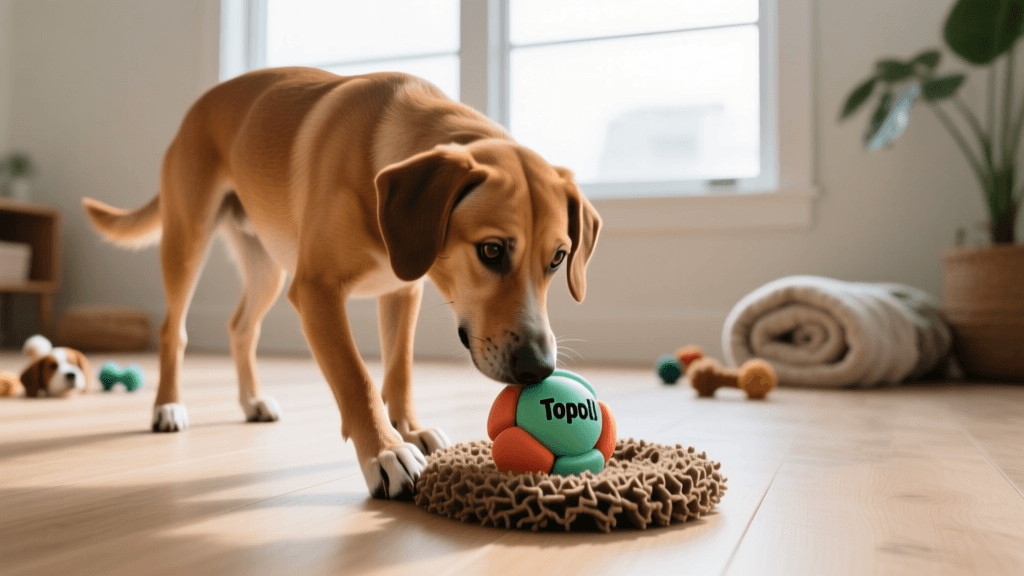
The West Paw Toppl has become a staple in modern canine enrichment. Unlike traditional bowl-shaped stuffable toys, the Toppl features an open, cup-like design with interior prongs that hold treats and kibble. Its interlocking capability allows you to create a complex puzzle, but for a new rescue dog, using a single, open Toppl is ideal. The act of licking is inherently soothing for dogs, releasing endorphins that help them self-soothe after a stressful day of adjustment. Priced around $21.95 in 2026, it is made from Zogoflex, a durable, non-toxic, and dishwasher-safe material.
2. The Kong Classic (The Reliable Staple)
You cannot discuss canine enrichment without mentioning the Kong Classic. Its unpredictable bounce and durable red rubber make it perfect for stuffing with high-value treats. For a newly adopted dog, the Kong is best used frozen. By mixing your dog's regular kibble with a dog-safe binder like plain canned pumpkin or unsweetened yogurt and freezing it overnight, you create a long-lasting activity that keeps them occupied in their crate or safe zone while you work or cook dinner. Expect to pay between $15 and $25 depending on the size required for your dog's breed.
3. Snuffle Mats (Tapping Into Foraging Instincts)
A dog's sense of smell is up to 100,000 times more sensitive than a human's. Snuffle mats—fabric mats with deep felt strips designed to hide dry kibble—allow your dog to engage in natural foraging behaviors. This is an exceptionally low-stress activity that requires no chewing or intense problem-solving, making it perfect for the very first week home. Simply scatter their daily ration of kibble into the mat and let them sniff it out. High-quality, machine-washable snuffle mats typically range from $25 to $40 in 2026.
4. Lickimat Soother (Anxiety Reduction)
The Lickimat Soother is a flat, textured silicone mat designed specifically for spreading soft foods. The raised nubs on the "Soother" model are engineered to slow down eating and encourage prolonged licking. This is a fantastic tool for dogs who exhibit mild separation anxiety or struggle to settle down in the evenings. Smearing a thin layer of peanut butter (xylitol-free) or mashed bananas on the mat and serving it on their bed teaches them to associate their resting place with positive, calming experiences.
5. Nina Ottosson Dog Brick (For Week Three and Beyond)
While the first two weeks should focus on soothing activities like licking and sniffing, week three is an excellent time to introduce light cognitive challenges. The Nina Ottosson Dog Brick is an intermediate-level puzzle that requires the dog to slide blocks and lift flaps to reveal hidden treats. According to the American Kennel Club, interactive puzzle toys that require dogs to figure out a sequence of movements are excellent for building problem-solving skills and deepening the bond between dog and owner. Priced around $30, this toy should only be introduced once your dog has fully settled into their new home routine.
2026 Puzzle Toy Comparison Chart
| Toy Name | Best Used For | Difficulty Level | 2026 Est. Price | Cleaning Method |
|---|---|---|---|---|
| West Paw Toppl | Soothing, Crate Training | Beginner | $21.95 | Dishwasher Safe |
| Kong Classic | Long-lasting Distraction | Beginner | $15.00 - $25.00 | Warm Soapy Water |
| Snuffle Mat | Foraging, Scent Work | Beginner | $25.00 - $40.00 | Machine Washable |
| Lickimat Soother | Anxiety Reduction, Bath Time | Beginner | $12.99 | Dishwasher Safe |
| Nina Ottosson Dog Brick | Cognitive Problem Solving | Intermediate | $29.99 | Hand Wash Only |
How to Introduce Puzzle Toys Without Causing Frustration
A common mistake new dog owners make is setting the puzzle up to be too difficult, which leads to the dog giving up or attempting to destroy the toy out of frustration. To ensure your new dog builds confidence, follow these actionable steps:
- Make it Ridiculously Easy: When introducing a Kong or Toppl, do not pack it tightly or freeze it right away. Simply drop a few high-value, smelly treats (like freeze-dried liver or small pieces of boiled chicken) into the bottom so the dog can easily tip it over and get an immediate reward.
- Use the "Kibble Plus" Method: Mix 80% of your dog's regular, boring kibble with 20% high-value wet food or peanut butter. This ensures they are motivated to work for the food without consuming excessive calories.
- Supervise and Assist: Sit with your dog during their first few puzzle sessions. If they struggle to slide a block on the Dog Brick, gently guide their paw or nose to show them the mechanism. Praise them heavily when they succeed.
- Keep Sessions Short: Mental fatigue sets in much faster than physical fatigue. Ten to fifteen minutes of intense sniffing or puzzle-solving is equivalent to a mile-long walk in terms of energy expenditure. End the session while they are still having fun.
DIY Enrichment: Budget-Friendly Alternatives
You do not need to spend hundreds of dollars on commercial puzzle toys to provide excellent mental enrichment. Many household items can be repurposed into engaging games for your new dog, provided they are supervised to prevent ingestion of non-food items.
- The Towel Roll-Up: Lay a clean bath towel flat, scatter kibble and treats across it, and roll it up tightly. Let your dog use their nose and paws to unroll the towel to find the food.
- Cardboard Box Foraging: Save your delivery boxes. Place a few treats inside, fold the flaps loosely, and let your dog tear into the cardboard to find the prize. (Note: Only do this if your dog is not prone to eating cardboard).
- Muffin Tin Puzzle: Place treats in the cups of a standard muffin tin, then cover each cup with a tennis ball or a balled-up pair of socks. Your dog must figure out how to remove the obstacles to get the treats.
Safety First: Supervision and Sizing
While mental enrichment is incredibly beneficial, safety must always be the priority. Never leave a new dog unattended with a puzzle toy, especially during the first month when you are still learning their chewing habits and destruction thresholds. A dog that gently licks a Kong might suddenly decide to chew off the rubber tip if left alone in a state of anxiety. Always select toys that are appropriately sized for your dog's breed and jaw strength; a toy meant for a Chihuahua poses a severe choking hazard to a Labrador Retriever. Inspect all toys regularly for signs of wear, tears, or missing pieces, and discard them immediately if they become damaged.
Conclusion
The first month with a new rescue dog is a critical window for building trust, establishing routines, and helping them decompress from their past experiences. By prioritizing mental enrichment and puzzle games over exhausting physical exercise, you are setting your new companion up for long-term behavioral success. Whether you are utilizing a frozen West Paw Toppl to soothe crate anxiety or a simple snuffle mat to engage their natural foraging instincts, these tools will help your new dog feel safe, confident, and truly at home in 2026 and beyond.
beth-carrasco
All our authors care for dogs every day — read more of their work on the authors page.