Best Puppy Breeds for Remote Workers: 2026 WFH Care Guide
Discover the best puppy breeds for remote workers in 2026. Learn WFH potty training, socialization, and care tips for Cavaliers, Bassets, and Whippets.
The Rise of the WFH Puppy in 2026
As hybrid and fully remote work models solidify their place in the professional landscape of 2026, more professionals are leveraging their home-based flexibility to finally welcome a puppy into their lives. However, working from home with a new puppy presents a unique set of challenges. You need a companion that can respect the boundaries of a home office, remain relatively quiet during video conferences, and adapt to a schedule dictated by virtual meetings rather than long, uninterrupted outdoor adventures.
Choosing the right breed is only the first step. Raising a puppy while managing a full-time remote career requires strategic potty training protocols, proactive teething management, and deliberate socialization efforts to prevent separation anxiety. In this comprehensive 2026 guide, we explore the best puppy breeds for remote workers and provide actionable, day-to-day care strategies to ensure both your career and your puppy thrive.
Top 3 Low-Stress Puppy Breeds for Remote Workers
Not all puppies are suited for the home office environment. High-drive herding breeds or vocal hounds can easily disrupt your productivity. The following three breeds are highly recommended for remote workers due to their adaptable temperaments, lower barking tendencies, and moderate exercise requirements.
1. Cavalier King Charles Spaniel
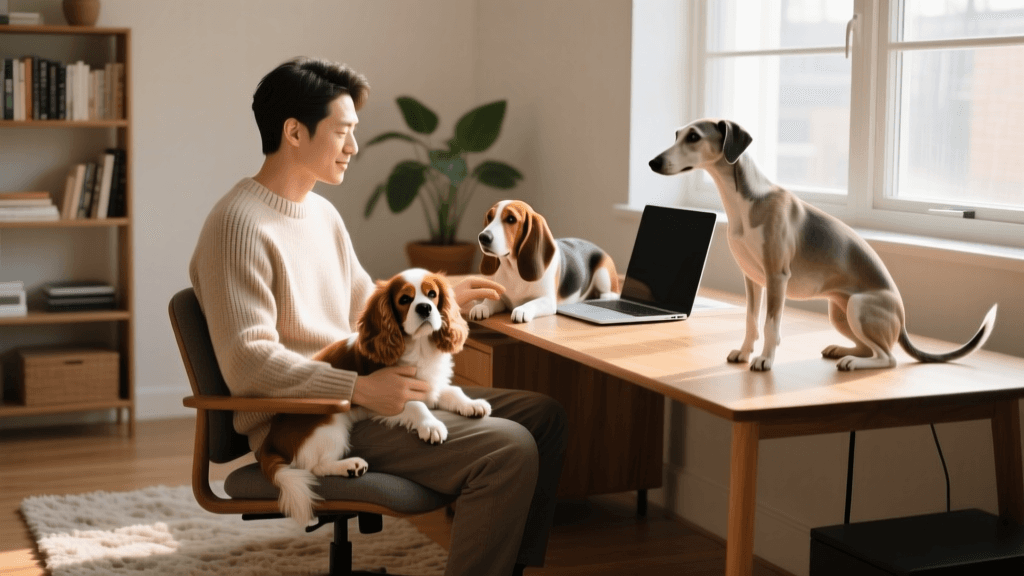
The Cavalier King Charles Spaniel is widely considered the ultimate lap dog and an exceptional WFH companion. They are highly attuned to their owner's emotions and are generally content to sleep on a plush bed beneath your desk while you type away. Cavaliers are notably quiet, rarely barking without a serious reason, making them ideal for professionals who frequently host Zoom calls. Their primary puppy care challenge lies in their deep attachment to their owners, which requires early independence training to prevent severe separation anxiety when you eventually need to leave the house.
2. Basset Hound
If your workday involves long stretches of deep focus, the Basset Hound is a fantastic, low-energy match. Known for their laid-back demeanor and stubborn independence, Basset puppies are perfectly happy to lounge nearby. They do not demand constant entertainment or high-intensity exercise. However, remote workers must be prepared for their stubborn streak during potty training. Bassets require immense patience and high-value treat reinforcement to establish reliable outdoor bathroom habits.
3. Whippet
Often described as 'couch potatoes' with a need for speed, Whippets are incredibly quiet, clean, and gentle puppies. They require a brief, high-intensity sprint in a fenced yard or park, after which they will happily sleep for the remainder of your workday. Whippets are highly sensitive to cold, so your 2026 home office setup should include a heated orthopedic puppy bed or a cozy snuggle sack near your workspace to keep them comfortable during long winter work sessions.
The Remote Worker's Puppy Potty Training Protocol
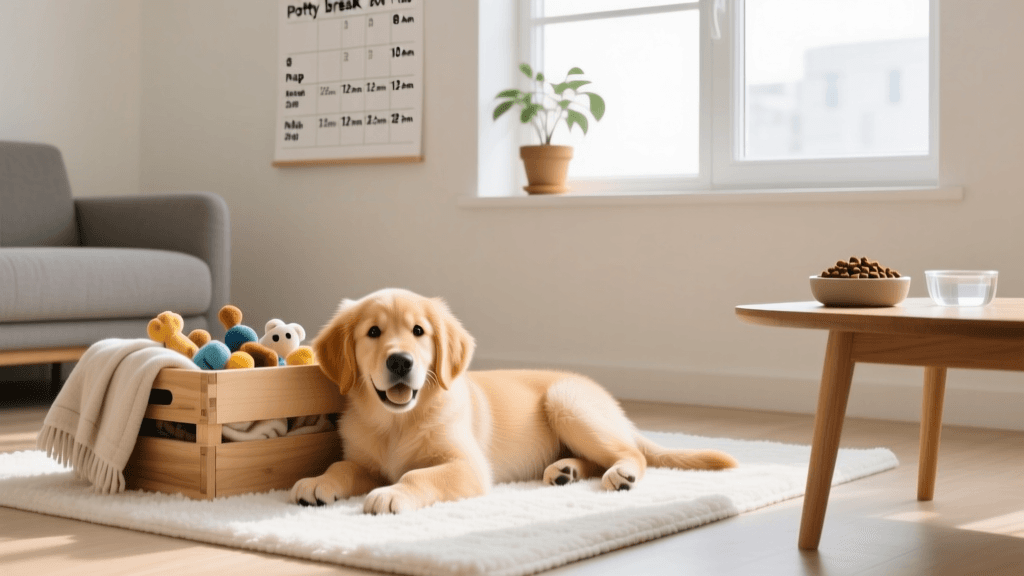
When you are working from home, it is easy to lose track of time and miss your puppy's subtle potty cues. To maintain productivity and a clean home, remote workers should adopt the Pomodoro Potty Method. This technique aligns your work sprints with your puppy's biological needs.
- Work Sprint (50 Minutes): Your puppy is in their crate or a secure playpen near your desk, equipped with a safe chew toy.
- Potty & Play Break (10 Minutes): Take the puppy outside on a leash to their designated bathroom spot. Use a consistent cue word like 'Go Potty.' Once they eliminate, reward them with a high-value treat and 5 minutes of active play or training to burn off energy.
- Reset: Return to your desk and begin the next 50-minute work sprint.
For days when you have back-to-back virtual meetings and cannot step outside, investing in an indoor real-grass subscription service or a smart indoor potty system can serve as an emergency backup. However, the ASPCA's Puppy Care Guidelines emphasize that consistent outdoor reinforcement remains the gold standard for long-term housetraining success.
Managing Teething and 'Zoom-Quiet' Time
Between the ages of 3 and 6 months, your puppy will go through an intense teething phase. A teething puppy will chew on baseboards, chair legs, and even your computer cables if left unmanaged. To keep your puppy quiet and occupied during critical video presentations, you must utilize 'Zoom-Quiet' enrichment tools.
Prepare a rotation of frozen enrichment toys the night before your workday. Stuff a classic rubber Kong with a mixture of plain Greek yogurt, mashed bananas, and a spoonful of dog-safe peanut butter, then freeze it solid. The act of licking and chewing on frozen items soothes inflamed puppy gums and releases endorphins, keeping your puppy happily occupied for up to 45 minutes. Additionally, silicone lick mats suction-cupped to the floor or the side of their playpen provide excellent mental stimulation without generating the noise that squeaky toys do.
WFH Puppy Breed Comparison Chart
Use the table below to compare how these top breeds align with the demands of a remote work lifestyle in 2026.
| Breed | Energy Level | Barking Tendency | Potty Training Difficulty | WFH Suitability Score |
|---|---|---|---|---|
| Cavalier King Charles Spaniel | Low-Medium | Low | Moderate | 9.5/10 |
| Basset Hound | Low | Medium (Howling) | Difficult | 8.5/10 |
| Whippet | Medium (Bursts) | Very Low | Easy | 9.0/10 |
Early Socialization for the Home-Bound Puppy
The biggest risk for a work-from-home puppy is accidental isolation. Because you do not need to leave for a physical office, your puppy may assume that being home with you 24/7 is the baseline of reality. This can lead to severe distress when you eventually need to run errands or attend an in-person meeting.
According to the AKC's Guide to Puppy Socialization, the critical socialization window closes around 16 weeks of age. During this time, you must actively integrate your puppy into the outside world. Take your laptop to dog-friendly coffee shops or co-working spaces once a week. Let your puppy observe the sounds of espresso machines, the sight of strangers walking by, and the feeling of different floor textures. If your puppy has not yet completed their parvovirus vaccination series, carry them in a well-ventilated pet stroller or sling to safely expose them to urban environments without risking infection.
Preventing WFH Separation Anxiety
To prevent your puppy from developing separation anxiety, you must practice 'Departure Desensitization' daily. Even if you are working from home, put your puppy in their crate or a separate room with a baby gate for 30 to 60 minutes a day while you are still in the house. Put on your shoes, grab your keys, and step out the front door for 5 minutes while they are secured, then return calmly without making a fuss. This teaches your puppy that your departure is temporary and that being alone is a safe, normal part of their daily routine.
Setting Up Your 2026 Home Office for a Puppy
A successful WFH experience requires optimizing your physical workspace. Position your puppy's crate or playpen just outside your direct line of sight but within earshot. If they are constantly watching your every move, they will remain in a state of mild arousal, waiting for you to engage with them. By using a subtle visual barrier, they are more likely to settle into a deep sleep.
Furthermore, utilize a smart pet camera with treat-tossing capabilities and two-way audio. These devices allow you to monitor your puppy's stress levels from your smartphone while you are in a closed-door virtual meeting, rewarding them with a treat if you see them settling down calmly on their mat. By combining the right breed selection with structured routines and modern pet technology, you can enjoy the profound companionship of a puppy without sacrificing your professional productivity in 2026.
jonas-cole
All our authors care for dogs every day — read more of their work on the authors page.