Best Puppy Breeds For Remote Workers In 2026: Top Picks & Care
Discover the best puppy breeds for remote workers in 2026. Learn WFH potty training, separation anxiety prevention, and top quiet breeds for home offices.
The shift to remote and hybrid work models has solidified in 2026, meaning more professionals than ever are spending their days in home offices. For many, this presents the perfect opportunity to finally welcome a puppy into their lives. However, balancing a demanding remote job with the rigorous demands of puppy care—especially during the critical first year—requires strategic planning. You need a breed that thrives in an indoor environment, possesses a relatively low bark drive to protect your Zoom calls, and adapts well to a structured but sedentary lifestyle. In this comprehensive guide, we explore the best puppy breeds for remote workers in 2026 and provide a first-year care blueprint tailored specifically to the work-from-home lifestyle.
Top Puppy Breeds for the Home Office
When selecting a puppy for a home office environment, you must consider their adult size, energy levels, and vocal tendencies. High-drive working breeds like Border Collies or Siberian Huskies are generally poor fits for remote workers unless you have hours to dedicate to midday runs and mental stimulation. Instead, look for companion breeds that are content to nap at your feet.
1. Cavalier King Charles Spaniel
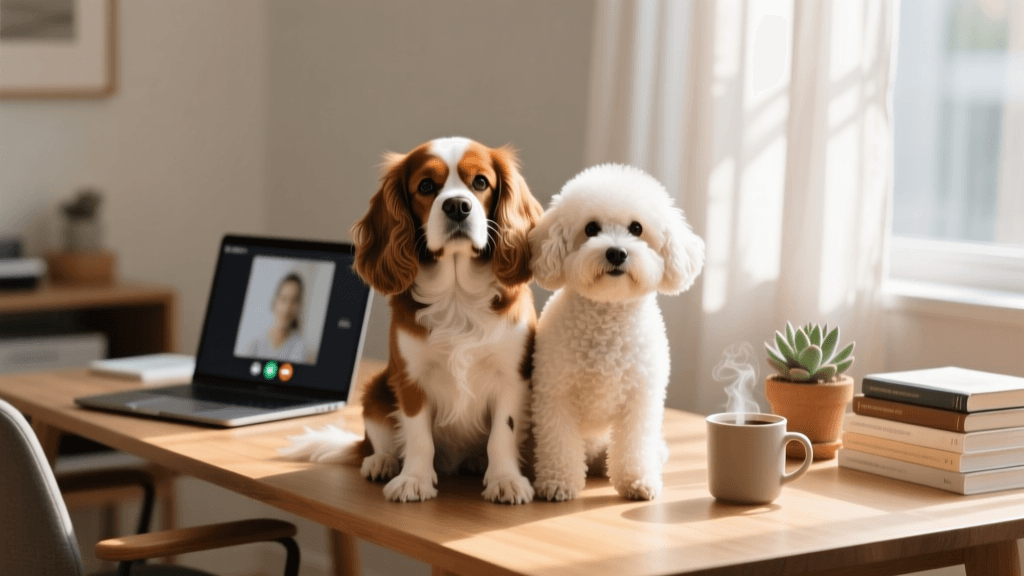
The Cavalier King Charles Spaniel remains a top-tier choice for remote workers. Known for their deeply affectionate nature and moderate energy levels, these puppies are highly adaptable. According to the American Kennel Club, Cavaliers are eager to please and respond beautifully to positive reinforcement training. During the first year, their primary need is companionship, making them perfect desk-side nappers. However, they are prone to separation anxiety, which requires specific training protocols to ensure they don't panic when you step away for a grocery run.
2. Bichon Frise
If you work in a smaller apartment or share walls with neighbors, the Bichon Frise is an exceptional 2026 pick. They are famously low-shedding, which keeps your home office clean, and they possess a cheerful but manageable energy level. Bichon puppies require early socialization to prevent excessive alert barking. Their first-year grooming costs should be factored into your budget, as professional grooming every six weeks will cost roughly $85 to $130 per session in 2026.
3. Japanese Chin
Often overlooked, the Japanese Chin is a historic companion breed that excels in quiet, indoor environments. They are feline-like in their independence and cleanliness, making potty training slightly easier than with more stubborn breeds. They are not prone to nuisance barking, ensuring your virtual meetings remain uninterrupted.
Breed Comparison for the Home Office
| Breed | Bark Level | Energy | Grooming Need | WFH Suitability |
|---|---|---|---|---|
| Cavalier King Charles | Low/Medium | Moderate | Moderate | Excellent |
| Bichon Frise | Medium | Moderate | High | Very Good |
| Japanese Chin | Low | Low | Moderate | Excellent |
First-Year Potty Training on a WFH Schedule
One of the greatest advantages of working from home during a puppy's first year is the ability to maintain a strict potty training schedule. Puppies generally need to eliminate every hour for every month of their age. A two-month-old puppy needs a bathroom break every two hours.
To manage this without disrupting your workflow, establish a dedicated "potty zone" in or near your home office. In 2026, many remote workers utilize real grass delivery services like DoggieLawn or synthetic smart-potty systems with odor-neutralizing UV lights. These cost between $35 and $55 per month but save your flooring and reduce the number of times you must break focus to go outside.
When taking the puppy to their designated spot, use a specific verbal cue like "Go potty." Reward immediately with a high-value treat, such as freeze-dried chicken liver. Consistency is paramount. If you are on a long conference call, utilize a 4x4-foot exercise pen attached to their crate so they have a safe, confined space to rest and use their indoor potty pad if absolutely necessary.
Preventing "Velcro Dog" Syndrome and Separation Anxiety
The most significant risk for remote worker puppies is "Velcro Dog" syndrome. Because you are home 40+ hours a week, the puppy assumes your constant presence is the baseline of reality. When you eventually return to an office, or simply leave for a weekend trip, the puppy may develop severe separation anxiety. The ASPCA notes that separation anxiety can manifest in destructive behavior, inappropriate elimination, and excessive vocalization.
To prevent this during the first year, you must practice "mock departures" and enforced independence.
- The Gate Method: Use baby gates to separate yourself from the puppy for 30-minute increments while you are still home. Work in a room where the puppy cannot see you.
- Desensitization to Triggers: Pick up your keys, put on your shoes, and then sit back down at your desk. This breaks the associative panic that triggers when a puppy hears the jingle of keys.
- Enrichment Toys: When you leave the house, provide a puzzle feeder stuffed with frozen peanut butter and kibble. This creates a positive association with your absence.
Investing in a 2026 model smart pet camera, such as the Furbo 360, allows you to monitor your puppy's stress levels and toss treats remotely, ensuring they remain calm during your solo errands.
Managing Teething and Quiet Time During Meetings
Between 12 and 24 weeks of age, your puppy will go through a painful teething phase. A teething puppy will chew on anything available, including expensive laptop chargers and desk legs. Furthermore, the discomfort can lead to whining, which is disastrous during important virtual meetings.
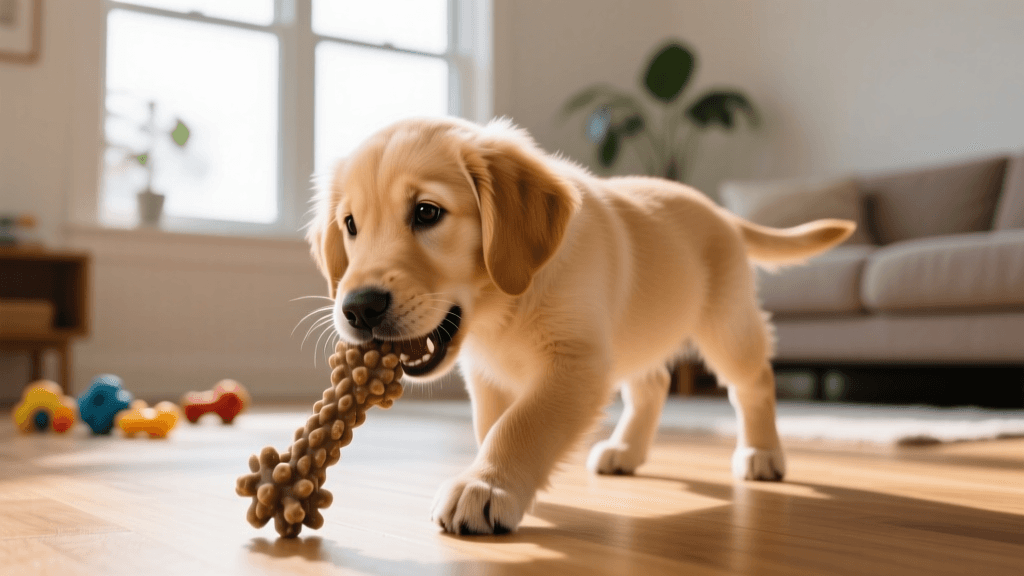
Puppy-proof your home office by using cable management sleeves and elevating all power strips at least three feet off the ground. Provide appropriate outlets for their chewing urges. The KONG Classic, stuffed with a mixture of plain Greek yogurt and mashed blueberries and then frozen overnight, is a 2026 staple for keeping puppies occupied and quiet for up to 45 minutes.
Additionally, teach the "Place" command early. Train your puppy to go to a specific orthopedic mat under your desk. Reward them heavily for staying on the mat while you type. This creates a physical boundary that keeps them safe from rolling desk chairs and out of the camera's frame.
Optimizing Your Home Office for a First-Year Puppy
Your workspace must be adapted to accommodate a growing, curious puppy. In 2026, ergonomic and pet-friendly home office designs are standard, but you must take specific safety and comfort measures.
- Playpen Dimensions: For small to medium breeds like the Cavalier or Bichon, a 4x4-foot or 4x6-foot wire playpen is ideal. This provides enough room for a bed, water bowl, and a potty pad, while preventing them from wandering into hazardous areas.
- Orthopedic Bedding: Puppies sleep up to 18 hours a day. Invest in a chew-resistant, orthopedic dog bed. Brands like Big Barker offer puppy-specific beds that support developing joints, costing around $160 to $220.
- White Noise Machines: To mask the sound of your keyboard typing or virtual meetings, use a white noise machine near the puppy's bed. This helps them sleep through sudden noises that might otherwise trigger alert barking.
- Cable Management: Puppies explore the world with their mouths. Use split loom tubing or hard plastic cable concealers to protect ethernet cables and power cords. A replacement laptop charger can cost upwards of $80, not to mention the severe electrocution risk to your puppy.
Socializing Your Puppy in a Hybrid World
Early socialization between 8 and 16 weeks is critical for behavioral development. The AKC emphasizes that puppies need exposure to diverse sights, sounds, and surfaces to become well-adjusted adults. As a remote worker, you must intentionally schedule socialization outings, as they won't happen organically during your workday.
Dedicate your lunch breaks to "socialization safaris." Carry your unvaccinated puppy in a structured sling or backpack through busy areas, outdoor cafes, and hardware stores. Once their vaccination series is complete at 16 weeks, enroll them in a local puppy kindergarten class. In 2026, many urban centers offer "puppy and pint" socialization hours at local breweries or dog-friendly co-working spaces, allowing you to socialize your puppy while enjoying a change of scenery from your home office.
Conclusion
Raising a puppy while working remotely is a deeply rewarding experience that requires boundaries, routine, and the right breed selection. By choosing a companion-oriented breed, strictly managing their potty and alone-time training, and puppy-proofing your workspace, you can successfully raise a well-adjusted dog who will be your best co-worker for years to come.
aaron-whyte
All our authors care for dogs every day — read more of their work on the authors page.