From Landshark to Gentle Pup: A Puppy Biting Transformation Guide
Discover how to transform your biting puppy into a gentle companion. Learn actionable teething timelines, chew toy reviews, and training techniques.

Bringing a new puppy home is often romanticized as a whirlwind of cuddles and playful zoomies. However, the reality for many new dog owners quickly shifts into a painful, frustrating survival mode. If you are currently sporting bruised ankles, shredded shoelaces, and a deep sense of exhaustion, you are not alone. You are in the 'Before' phase of the puppy teething and biting transformation. The good news? This phase is temporary. With the right timeline, tools, and training techniques, you can guide your puppy through their developmental milestones and emerge on the other side with a gentle, well-mannered companion.
The 'Before' Snapshot: Surviving the Puppy Landshark
Before the transformation, your puppy is essentially a landshark. Puppies explore the world primarily through their mouths, much like human toddlers use their hands. Combined with the intense discomfort of teething, this natural curiosity turns into relentless nipping, mouthing, and chewing. During this chaotic period, owners often feel like they are failing because their puppy seems immune to the word 'No.' The emotional toll is high; you may find yourself avoiding playtime or feeling resentful of the very pet you wanted to love. Understanding that this behavior is a biological imperative, not a sign of future aggression, is the first step toward initiating the transformation.
The Teething Timeline: Mapping the Transformation
To transform your puppy's behavior, you must first understand what is happening inside their mouth. The teething process dictates their pain levels and their urge to chew. According to the ASPCA, monitoring this timeline helps you anticipate behavioral shifts and provide the correct relief tools at the exact right moment.
| Age Range | Dental Milestone | Behavioral Symptoms | Action Required |
|---|---|---|---|
| 2-4 Weeks | Deciduous (baby) teeth erupt | Nursing discomfort, early mouthing of littermates | Monitor nursing; prepare for weaning |
| 6-8 Weeks | All 28 baby teeth are in | Needle-like bites, intense chewing on objects | Introduce soft rubber toys; begin bite inhibition |
| 12-16 Weeks | Baby teeth fall out, adult teeth push through | Bleeding gums, drooling, increased irritability | Provide frozen chew toys; avoid hard nylon |
| 6-7 Months | All 42 adult teeth fully erupted | Decreased destructive chewing, settled mouthing | Transition to adult dental chews; reinforce gentle play |
Actionable Steps to Trigger the Transformation
The transition from a biting menace to a polite dog requires consistency, timing, and the right environmental management. Here are the specific, actionable steps to force the transformation.
1. Bite Inhibition and the 3-Second Rule
Bite inhibition is the process of teaching your puppy to control the force of their jaw. The American Kennel Club emphasizes that puppies must learn that human skin is entirely off-limits. When your puppy's teeth touch your skin, immediately let out a high-pitched 'Ouch!' or yelp. This mimics the sound a littermate would make. Following the yelp, implement the 3-Second Rule: stand up, cross your arms, and completely ignore the puppy for exactly three seconds. If they sit or back away, reward them with a toy. If they continue to bite, leave the room for 10 seconds. This teaches the puppy that biting results in the immediate cessation of fun.
2. The Two-Toy Redirection System
Never interact with your puppy using only your hands. Always have two appropriate chew toys on your person or within arm's reach. When the puppy approaches to play, offer Toy A. If they drop it and go for your hand, immediately present Toy B. This constant redirection rewires their brain to associate human hands with the delivery of toys, rather than viewing hands as chew toys themselves.
3. Soothing the Gums: The Frozen KONG Recipe
During the 12-16 week peak teething window, cold therapy is essential. A standard AKC recommended tool is the classic rubber KONG. Here is a specific, cost-effective recipe to soothe inflamed gums and provide 45 minutes of quiet time:
- Base Layer: Fill the bottom third with your puppy's measured daily kibble (Cost: included in daily food budget).
- Middle Layer: Add a layer of plain, unsweetened pumpkin puree (Cost: approx. $3.00 per can, lasts multiple freezes).
- Top Layer: Seal the top with plain, xylitol-free Greek yogurt (Cost: approx. $4.00 per tub).
- Preparation: Freeze upright for a minimum of 4 hours. The freezing process turns the treat into a soothing, long-lasting ice block that numbs the gums and satisfies the urge to chew.
Chew Toy Comparison Chart: Investing in the 'After'
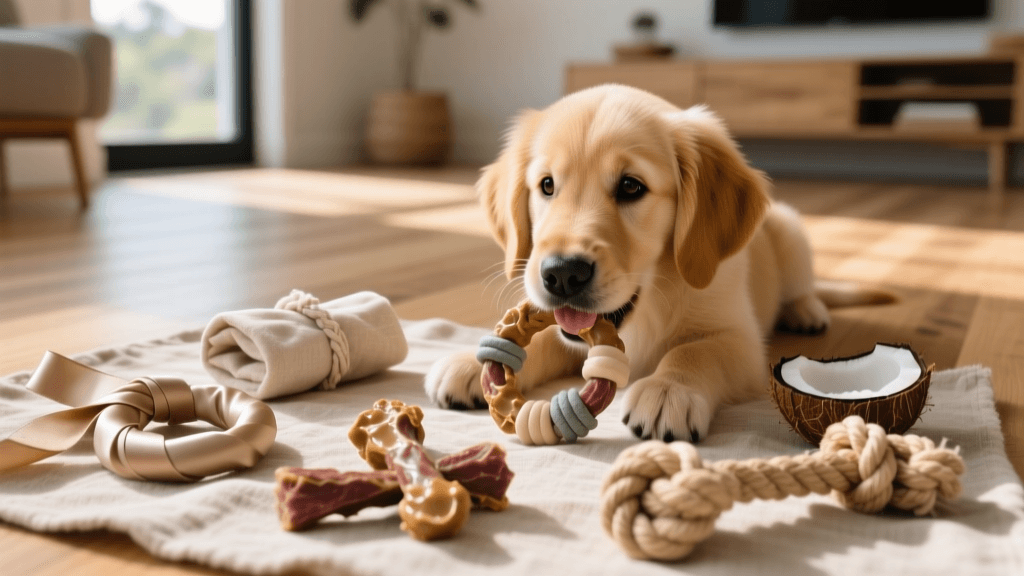
Not all chew toys are created equal. Selecting the wrong toy can lead to broken teeth or intestinal blockages, setting your training back significantly. Below is a comparison of common chew items to help you curate the right toolkit for your puppy's transformation.
| Product Type | Best For Stage | Durability | Est. Cost | Safety & Verdict |
|---|---|---|---|---|
| Classic Red Rubber KONG | 12-24 Weeks (Peak Teething) | High | $15 - $18 | Excellent. Can be frozen, stuffable, and indestructible for most pups. |
| Soft Puppy Nylon Bones | 8-16 Weeks | Medium | $8 - $12 | Good. Specifically designed for baby teeth; discard when sharp edges form. |
| Natural Bully Sticks | 16+ Weeks | Low (Consumable) | $4 - $6 each | Great for dental health, but requires strict supervision to prevent choking. |
| Old Socks or Shoes | NEVER | Low | Free | Dangerous. Puppies cannot tell the difference between old and new items. |
The 'After' Snapshot: Enjoying Your Gentle Companion
What does the 'After' phase actually look like? By the time your puppy reaches six to eight months of age, the transformation will be evident. When you sit on the floor, your dog will approach with a soft, open mouth or present a toy to you instead of launching at your ankles. If they do accidentally graze your skin during an excited greeting, they will immediately pull back, exhibiting the bite inhibition you worked so hard to instill. The chaotic energy of the landshark phase is replaced by a focused, eager-to-please adolescent who understands the boundaries of your home.
When to Seek Professional Help
While nipping is normal, true aggression is not. If your puppy exhibits stiff body language, deep growling, or snapping that breaks the skin with malicious intent rather than playful overstimulation, the transformation requires professional intervention. Consult a certified veterinary behaviorist or a professional positive-reinforcement trainer immediately. However, for 95% of puppy owners, the biting is simply a developmental hurdle. By sticking to your redirection protocols, utilizing frozen enrichment tools, and maintaining patience through the teething timeline, you will successfully navigate the storm and unlock the deeply rewarding bond of living with a well-mannered adult dog.
robin-maitland
All our authors care for dogs every day — read more of their work on the authors page.