Best WFH Puppy Breeds 2026: Mental Health & Care Guide
Discover the best puppy breeds for remote workers in 2026. Learn how to manage canine mental health, prevent separation anxiety, and balance WFH life.
The 2026 Remote Work Reality and Canine Mental Health
As fully remote and hybrid work models have permanently solidified in 2026, the dynamic between home-office professionals and their pets has evolved. While having a puppy in your home office provides immense mental health benefits, stress reduction, and built-in screen-break reminders, it also presents unique behavioral challenges. The most pressing of these is separation anxiety. When a puppy is raised in an environment where their owner is present 24/7, the inevitable moments when you must leave the house can trigger severe psychological distress for the dog.
Choosing the right breed is the first critical step in ensuring a harmonious WFH lifestyle. Not all puppies are suited for the quiet, confined environment of a home office, nor do all breeds handle the transition from "always-on" companionship to solo time gracefully. In this comprehensive 2026 guide, we explore the best puppy breeds for remote workers, focusing on temperament, adaptability, and mental wellness, while providing actionable strategies to foster a balanced, anxiety-free life for your new companion.
Top 5 Low-Stress Puppy Breeds for Home Office Environments
When selecting a puppy for a remote-work household, veterinary behaviorists recommend looking for breeds with moderate energy levels, high adaptability, and a natural inclination toward calm companionship. Here are the top five breeds thriving in 2026 home offices.
1. Cavalier King Charles Spaniel
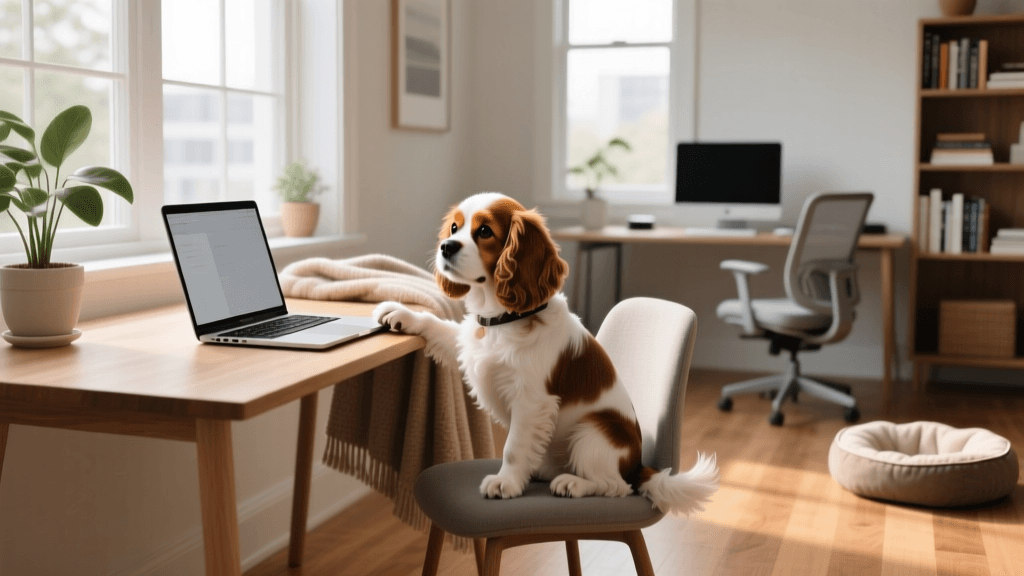
The Cavalier King Charles Spaniel remains a premier choice for remote workers. Known for their deeply affectionate and gentle disposition, Cavaliers are content to spend hours resting on a dog bed beneath your standing desk while you tackle deep-work sessions. They are highly attuned to their owner's emotions, making them excellent emotional support companions during high-stress virtual meetings. However, their deep attachment means you must proactively train them to be comfortable alone. Their moderate exercise needs are easily met with a brisk 30-minute morning walk and a short evening stroll, fitting perfectly into a busy professional's schedule.
2. Bichon Frise
If your home office is a shared space or you frequently host in-person client meetings, the Bichon Frise is an exceptional choice. Their hypoallergenic, low-shedding coats keep your workspace clean and allergen-free. Bichons are remarkably cheerful, adaptable, and possess a playful but not overly demanding energy level. They thrive on positive reinforcement training and enjoy learning "quiet" commands, which is essential when you are on Zoom calls. Because they are highly social, integrating a midday puzzle toy or a smart treat-dispensing camera can keep their minds engaged while you step away for lunch.
3. Havanese
The Havanese is Cuba's national dog and a rising star in the 2026 remote-work community. They are incredibly intelligent, sturdy despite their small size, and possess a velcro-like devotion to their owners. Unlike some toy breeds that can be yappy, the Havanese tends to be more reserved and observant, making them excellent quiet office mates. Their long coat requires a dedicated grooming routine, which can serve as a mindful, stress-relieving break for the owner. They are highly trainable and respond beautifully to crate training, a vital component of preventing WFH-induced separation anxiety.
4. Basset Hound
For those who prefer a medium-to-large breed but lack the time for intense physical exertion between meetings, the Basset Hound is a phenomenal, albeit stubborn, companion. Bassets are famously low-energy indoors. They are perfectly happy to snore softly on a nearby rug while you code or write reports. Their independent streak means they generally suffer less from acute separation anxiety than hyper-attached toy breeds. The trade-off is their vocalization; a bored Basset will bay loudly. Ensuring they receive adequate mental stimulation through scent-work games during your lunch break will keep them quiet and fulfilled.
5. Miniature Schnauzer
The Miniature Schnauzer is ideal for the active remote worker who uses their lunch breaks for outdoor fitness. They are highly alert, intelligent, and eager to please. While they have a higher energy level than the Cavalier or Basset, their exercise needs can be met with interactive indoor play and structured outdoor walks. They are excellent watchdogs and will alert you to deliveries or visitors, though early training is required to ensure they do not bark at every notification sound from your smartphone. Their wiry coat sheds minimally, keeping your ergonomic workspace pristine.
Comparative Data: WFH Breed Suitability Chart
To help you make an informed decision, refer to the table below comparing these breeds across critical metrics for remote workers.
| Breed | Office Noise Level | Alone-Time Tolerance | Daily Exercise Need | Shedding / Allergies |
|---|---|---|---|---|
| Cavalier King Charles | Very Low | Low (Needs training) | 30-45 Minutes | Moderate Shedding |
| Bichon Frise | Low to Moderate | Moderate | 30-40 Minutes | Hypoallergenic |
| Havanese | Low | Low (Needs training) | 30-45 Minutes | Hypoallergenic |
| Basset Hound | Moderate (Baying) | High | 20-30 Minutes | Heavy Shedding |
| Miniature Schnauzer | Moderate (Alerting) | Moderate | 45-60 Minutes | Hypoallergenic |
Preventing Separation Anxiety in the WFH Era
The most significant behavioral health crisis among WFH puppies is separation anxiety. According to the ASPCA, dogs with separation anxiety exhibit extreme distress when left alone, leading to destructive behavior, inappropriate elimination, and excessive vocalization. Because remote workers rarely leave the house for 8-hour stretches, puppies are never naturally desensitized to solitude.
To protect your puppy's mental health, you must artificially create absence. Start during the puppy's first week home. Utilize a crate or a designated "safe zone" pen in a different room. Leave the puppy in this space for 10 minutes while you work in another room, gradually increasing the duration to two hours over several weeks. Furthermore, practice "dummy departures." Put on your shoes, grab your keys, walk out the front door, and immediately return. This breaks the associative trigger that keys and shoes mean a prolonged, stressful absence.
The American Kennel Club emphasizes the importance of not making a big deal out of departures or arrivals. Keep your greetings low-key to normalize the comings and goings of your daily routine. If your puppy shows signs of severe distress, consult a certified veterinary behaviorist immediately; early intervention in 2026 utilizing modern behavioral modification techniques and, if necessary, short-term anti-anxiety supplements, yields the highest success rates.
Structuring a 2026 Home-Office Routine for Your Puppy
Dogs thrive on predictability. A structured daily routine not only aids in house training but also stabilizes your puppy's circadian rhythm and mental state. Here is an optimized schedule for the modern remote worker:
- 6:30 AM - 7:30 AM: Wake up, immediate potty break, and a 20-minute structured walk. This burns off morning energy and encourages the puppy to nap during your first morning meetings.
- 8:00 AM - 10:00 AM: Deep work block. Puppy is resting on a designated mat or bed near your desk. Use a chew toy or a frozen Kong to keep them quietly occupied.
- 10:15 AM: 10-minute training break. Practice basic obedience (sit, stay, place) using high-value treats. This provides crucial mental stimulation, which tires a puppy out faster than physical exercise.
- 12:30 PM - 1:30 PM: Lunch break and midday potty. Engage in 15 minutes of active play (fetch or tug) to reset both your posture and your puppy's energy levels.
- 2:00 PM - 4:00 PM: Afternoon focus block. Puppy is in their crate or safe zone for "alone time" practice, equipped with an interactive smart puzzle toy that dispenses kibble.
- 5:30 PM: End of workday transition. Close the laptop, take the puppy for a longer neighborhood walk, and transition into evening relaxation.
Health and Wellness Tech for the Remote Dog Owner
The pet-tech industry has introduced remarkable tools in 2026 to support the WFH dog owner. Smart indoor cameras with two-way audio and treat-tossing capabilities allow you to monitor your puppy's stress levels when they are in their alone-time zone. If you notice pacing or whining, you can intervene with a calming voice or a distraction before the anxiety escalates.
Additionally, GPS and biometric smart collars now track your puppy's sleep quality, active minutes, and caloric expenditure. Syncing this data with your smartphone ensures you are meeting their specific health requirements, adjusting their diet and exercise based on real-time metrics rather than guesswork. For comprehensive guidelines on integrating veterinary care with daily wellness routines, the American Veterinary Medical Association provides excellent resources on preventive care and behavioral health.
Conclusion
Bringing a puppy into a remote-work environment is a deeply rewarding experience that enhances your daily life, provided you choose a breed that aligns with your professional demands and lifestyle. By prioritizing breeds with adaptable temperaments and proactively training for independence, you safeguard your puppy's mental health and ensure your home office remains a productive, peaceful sanctuary. Remember, a well-adjusted WFH puppy is the result of intentional routine, structured alone time, and a deep understanding of their unique psychological needs.
beth-carrasco
All our authors care for dogs every day — read more of their work on the authors page.