Best Puppy Breeds for Remote Workers: 2026 Care Guide
Discover the best puppy breeds for remote workers in 2026. Learn first-year care routines, potty schedules, and quiet teething solutions for WFH pros.
The Ultimate Guide to Raising a Puppy While Working From Home in 2026
As remote and hybrid work models continue to dominate the professional landscape in 2026, more professionals than ever are using their flexible schedules to fulfill a lifelong dream: getting a puppy. However, sharing a home office with a young dog during their crucial first year of development requires strategic planning. Not all breeds are suited for the quiet demands of Zoom calls, deep work blocks, and virtual presentations. Furthermore, the constant presence of a work-from-home (WFH) owner can inadvertently trigger severe separation anxiety if the puppy's first-year milestones are not managed correctly.
This comprehensive guide explores the best puppy breeds for remote workers, detailing their first-year care routines, potty training schedules, and silent teething solutions designed specifically for the modern home office.
Top Puppy Breeds for the Home Office in 2026
When selecting a puppy to raise alongside your remote career, you must consider their energy levels, vocalization tendencies, and independence. High-energy herding breeds or vocal hounds can derail your productivity. Instead, look for breeds known for their 'off-switch' and adaptability.
1. Cavalier King Charles Spaniel
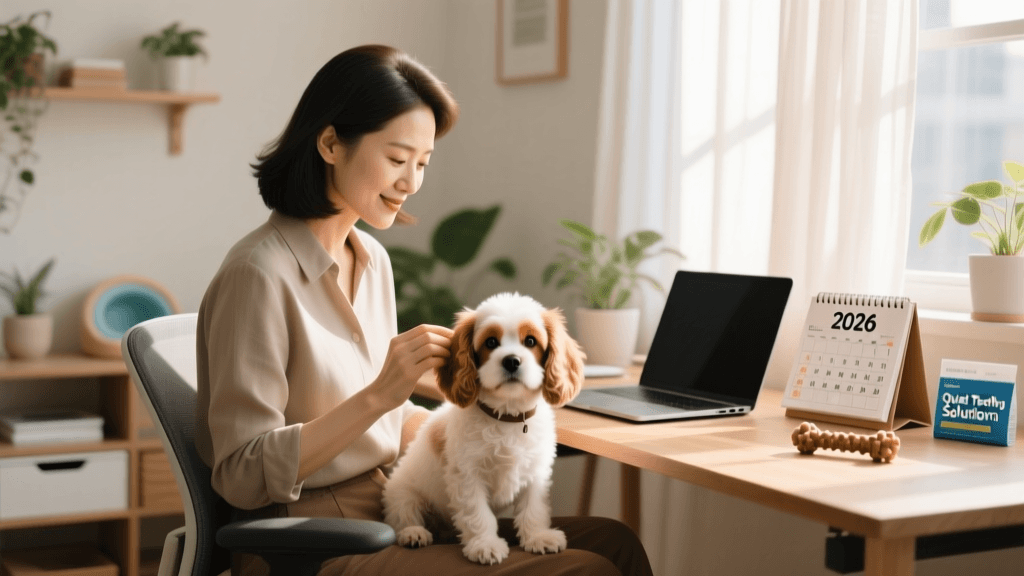
The Cavalier King Charles Spaniel remains a top choice for remote workers. According to the American Kennel Club (AKC), Cavaliers are affectionate, gentle, and highly adaptable. During their puppy stage, they require regular but moderate play sessions and are generally content to nap in a nearby bed while you work. Their low tendency to bark makes them ideal for open-mic meetings.
2. Basset Hound
Basset Hound puppies are famously laid-back. While they possess a strong sense of smell and can be stubborn during potty training, their low energy levels mean they are unlikely to demand constant attention during your workday. They are heavy sleepers, which aligns perfectly with a professional's need for uninterrupted focus time.
3. Greyhound
Though often associated with racing, Greyhound puppies (and young adults) are notorious 'couch potatoes.' They require a good morning sprint but spend the vast majority of the day sleeping. Their quiet nature and independent streak make them excellent companions for professionals who need a calm environment.
First-Year Puppy Care for the WFH Professional
Raising a puppy in a home office environment presents unique challenges. Here is how to manage the core developmental milestones without sacrificing your career.
Potty Training Around Deep Work Blocks
Puppies under six months need to eliminate frequently. To avoid interrupting critical deep work sessions, establish a rigid potty schedule that aligns with your natural breaks. A standard 2026 WFH potty schedule looks like this:
- 8:00 AM: Immediate outdoor trip upon waking.
- 10:30 AM: Mid-morning coffee break trip.
- 1:00 PM: Post-lunch trip.
- 3:30 PM: Afternoon stretch break trip.
- 6:00 PM: End of workday trip.
Pro Tip: Many remote workers in 2026 utilize subscription-based indoor hydroponic grass patches (like DoggieLawn or Fresh Patch) placed on a balcony or in a designated indoor corner. This allows for rapid potty breaks during 5-minute meeting transitions without the hassle of leashing up and going outside in harsh weather.
Teething Solutions That Preserve Audio Quality
Between 3 and 6 months of age, puppies will chew relentlessly to soothe teething pain. Squeaky toys are a WFH professional's worst nightmare, as they can easily trigger noise-cancellation algorithms or distract clients during calls. Instead, stock your home office with 'silent' teething solutions:
- Frozen Kong Classic: Stuff a rubber Kong with dog-safe plain yogurt and peanut butter, then freeze it overnight. The cold soothes inflamed gums, and the licking action is naturally calming and entirely silent.
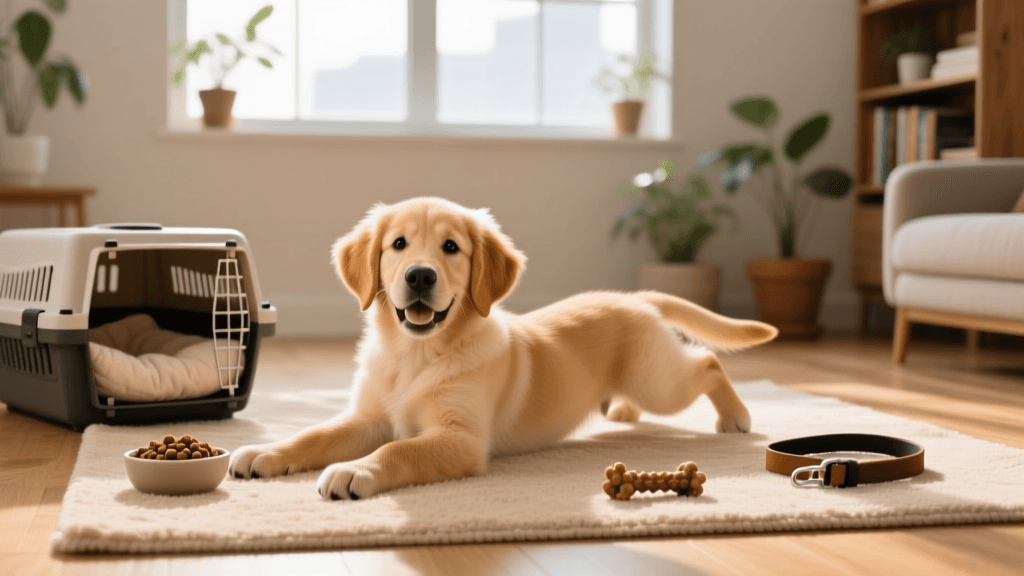
- Nylabone DuraChew: Hard nylon chews flavored with bacon or chicken provide a durable outlet for heavy chewers without any electronic or squeaking components.
- Chilled Carrots: A budget-friendly, healthy, and completely silent chewing option that also aids in digestion.
Puppy-Proofing the Home Office
Modern home offices are filled with hazards. Puppies explore the world with their mouths, making cable management a critical safety priority. Use split-loom tubing or rigid cord concealers to hide power strips and monitor cables. If you use a motorized standing desk, ensure the puppy is gated out of the room or safely crated before raising the desk to prevent tail or paw injuries.
The WFH Trap: Preventing Separation Anxiety
The most significant risk of raising a puppy as a remote worker is separation anxiety. Because you are home 24/7, the puppy learns that your presence is a constant baseline. When you eventually leave for an in-person meeting, a networking event, or a vacation, the sudden absence can cause severe psychological distress and destructive behavior.
According to the ASPCA, dogs with separation anxiety often exhibit pacing, drooling, destructive chewing, and vocalization when left alone. To prevent this, you must actively practice 'absence training' during the puppy's first year.
The 2026 Absence Training Protocol: Even if you work from home, you must leave the house (or at least confine the puppy to a different room) for 30 to 60 minutes every single day. Use a smart pet camera with treat-tossing capabilities to monitor their stress levels and reward calm behavior while you are out of sight.
Start by leaving the room for 5 minutes while the puppy is engaged with a frozen Kong. Gradually increase the time and eventually step outside the front door. This teaches the puppy that your departure is temporary and not a cause for panic.
Early Socialization for Home-Bound Puppies
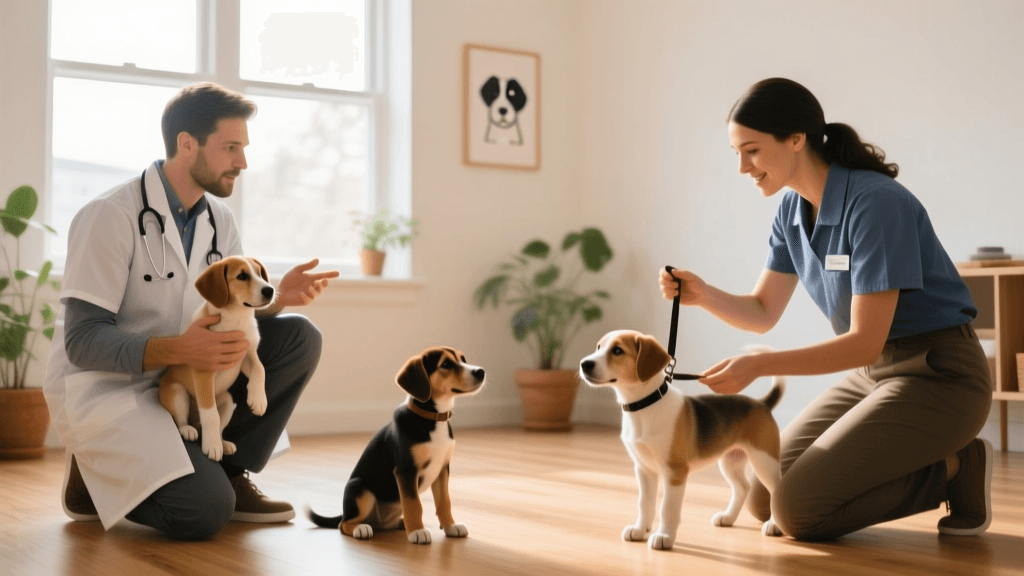
The American Kennel Club (AKC) emphasizes that the critical socialization window for puppies occurs between 3 and 14 weeks of age. Remote workers must be intentional about exposing their puppies to the outside world, as the home office lacks the natural stimuli of a busy household or a daily commute.
To properly socialize your WFH puppy:
- Co-Working Days: Take your puppy to dog-friendly cafes or co-working spaces once a week. The ambient noise of espresso machines, chatter, and diverse groups of people is excellent for desensitization.
- Virtual Desensitization: Play YouTube videos of city sounds, thunderstorms, and fireworks at a low volume while feeding your puppy to create positive associations with strange noises.
- Handling Exercises: Invite friends, delivery drivers, and neighbors to gently handle your puppy's paws, ears, and mouth to prepare them for veterinary visits and grooming.
Breed Comparison Chart: WFH Suitability
Use the table below to compare the first-year care requirements of the top breeds for remote workers.
| Breed | Energy Level | Potty Training Difficulty | Teething Intensity | WFH Suitability |
|---|---|---|---|---|
| Cavalier King Charles Spaniel | Low to Moderate | Easy | Moderate | Excellent |
| Basset Hound | Low | Difficult (Stubborn) | Moderate | Very Good |
| Greyhound | Low (Sprinters) | Moderate | Low | Excellent |
| Shih Tzu | Low | Moderate | High | Very Good |
Conclusion
Raising a puppy while working from home in 2026 is a highly rewarding experience that requires intentionality, structure, and the right breed match. By selecting a low-vocalization, adaptable breed, implementing a strict potty and absence-training schedule, and utilizing silent teething tools, you can successfully navigate your puppy's first year without compromising your professional responsibilities. Remember that the habits you build during these first 12 months will define your dog's behavior for the rest of their life, ensuring a harmonious balance between your career and your new best friend.
aaron-whyte
All our authors care for dogs every day — read more of their work on the authors page.