Top Remote Work Puppy Breeds & First-Year Care 2026
Discover the best puppy breeds for remote workers in 2026 and learn essential first-year care tips for potty training, teething, and WFH boundaries.
The Rise of the WFH Puppy in 2026
As remote and hybrid work models solidify in 2026, more professionals are transforming their home offices into dual-purpose spaces for productivity and puppy rearing. Working from home offers the incredible advantage of being present during your puppy’s crucial first year, allowing for consistent potty training, immediate socialization, and bonding. However, it also presents unique challenges: how do you take a Zoom call while your puppy is teething on your standing desk cables? How do you prevent separation anxiety when your puppy thinks your 24/7 presence is the permanent norm?
Choosing the right breed is the first step toward a harmonious home office. Not all puppies are suited for the quiet demands of a remote work environment. Below, we explore the best puppy breeds for remote workers and provide a comprehensive first-year care guide tailored specifically to the work-from-home (WFH) lifestyle.
Top 3 Puppy Breeds for Remote Workers
When selecting a puppy for a home office environment, you want a breed that is relatively quiet (to avoid interrupting virtual meetings), adaptable to indoor living, and content with lounging nearby while you focus on deep work. Here are the top three breeds dominating the WFH scene in 2026.
1. Cavalier King Charles Spaniel (The Lap Warmer)
The Cavalier King Charles Spaniel is the ultimate co-worker. Known for their gentle, affectionate, and remarkably quiet demeanor, Cavaliers are perfectly happy to sleep on a dog bed beneath your desk for hours. They do not possess the high prey drive or intense energy levels that require constant mid-day disruption. Their moderate exercise needs are easily met with a brisk morning walk and a quick afternoon fetch session in the hallway. For remote workers in apartments or smaller homes, their compact size and low barking tendency make them an ideal choice.
2. Bichon Frise (The Cheerful Co-Worker)
If your home office lacks natural light and you need a cheerful presence, the Bichon Frise is a fantastic option. Bichons are famously hypoallergenic and low-shedding, meaning your ergonomic mesh chair and dark keyboards will remain relatively fur-free. They are highly intelligent and eager to please, which makes early potty training and crate training much smoother. While they have playful bursts of energy (often called the "Bichon Blitz"), they are generally content to cuddle once they have burned off their morning zoomies.
3. Miniature Poodle (The Smart Observer)
Miniature Poodles are exceptionally smart, observant, and deeply attuned to their owner's routines. They thrive on mental stimulation, which can be easily provided with puzzle toys at your feet while you work. Because they are highly trainable, teaching a Miniature Poodle the "settle" or "place" command is usually highly successful, allowing them to stay on their designated mat during important video conferences. Their hypoallergenic coat requires regular grooming, but the trade-off is a pristine, dander-free home office.
WFH Breed Comparison Chart
| Breed | Energy Level | Barking Tendency | Shedding | WFH Suitability Score (2026) |
|---|---|---|---|---|
| Cavalier King Charles Spaniel | Low to Moderate | Low | Moderate | 9.5/10 |
| Bichon Frise | Moderate | Moderate | Minimal | 9.0/10 |
| Miniature Poodle | Moderate to High | Moderate | Minimal | 8.5/10 |
First-Year Puppy Care for the Home Office
Raising a puppy while working full-time from home requires strategic planning. The first year is filled with developmental milestones that can either disrupt your workflow or seamlessly integrate into it, depending on your preparation.
Potty Training Around Zoom Calls
The most frequent disruption for WFH puppy owners is potty training. Puppies under six months need to eliminate every one to two hours. To avoid rushing out of a client call, establish a rigid schedule that aligns with your meeting blocks. Take your puppy out 15 minutes before a scheduled meeting, and immediately after it concludes.
For days packed with back-to-back virtual sessions, consider investing in a 2026 premium indoor grass subscription box, such as Fresh Patch or DoggieLawn. These real-grass delivery services provide a natural indoor elimination area that neutralizes odors and prevents the confusion of training a puppy to use plastic pads, which can sometimes be mistaken for office rugs.
Teething and Protecting Your Tech
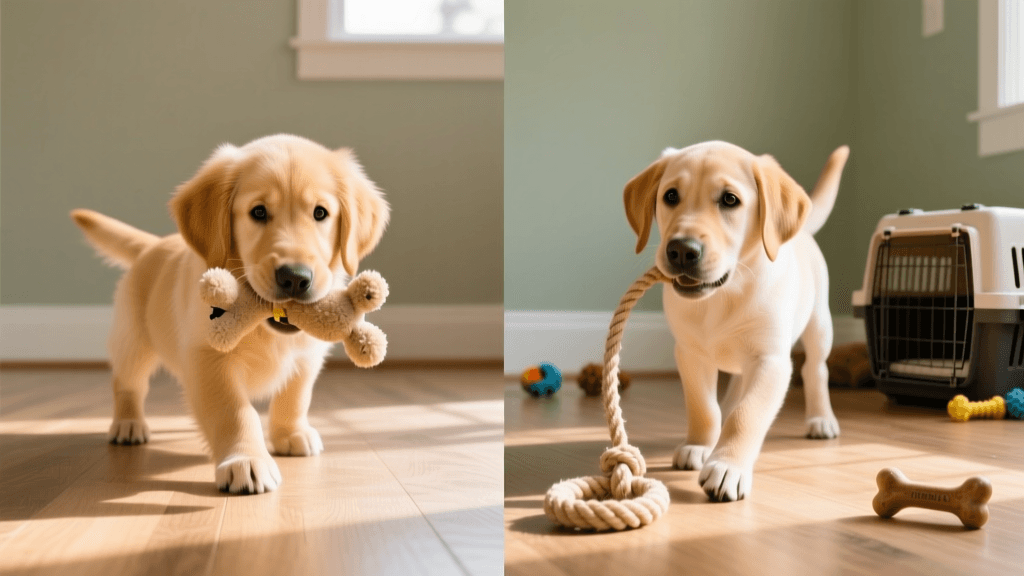
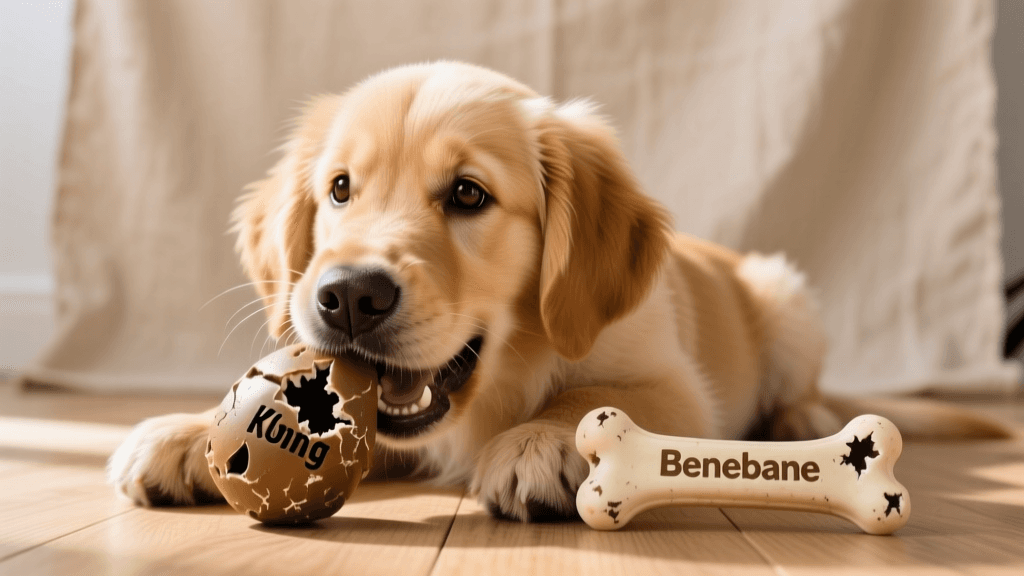
Between 3 and 6 months of age, your puppy will lose their baby teeth and seek relief by chewing. In a home office, this poses a severe risk to expensive technology. Fiber optic cables, standing desk motor wires, and laptop chargers are prime targets.
- Cable Management: Use rigid PVC cable concealers or braided zip-sleeves to protect cords. Never leave loose wires dangling near the puppy’s playpen.
- Appropriate Chew Alternatives: Keep a rotation of texture-specific teething toys within arm's reach of your desk. The KONG Puppy (filled with frozen low-sodium chicken broth) and the Nylabone Puppy Chew are excellent for soothing inflamed gums while keeping them occupied during your deep-work sprints.
- Bitter Apple Spray: Apply a pet-safe deterrent spray to the legs of your desk and chair to discourage exploratory chewing.
Preventing WFH Separation Anxiety
One of the most critical, yet overlooked, aspects of raising a WFH puppy is teaching them how to be alone. If your puppy spends the first six months of their life with you in the same room 24/7, they will likely develop severe separation anxiety the moment you return to a corporate office, travel for business, or simply go out for dinner. According to the American Kennel Club, separation anxiety is one of the most common behavioral issues in dogs, often triggered by sudden changes in routine.
To prevent this, practice "Alone Time Training" from week one. Use a crate or a gated-off safe zone in a different room. Start by leaving the puppy alone for just 5 minutes while you step outside or take a shower. Gradually increase this duration. Your puppy must learn that your absence is temporary and that being alone is a safe, normal part of the daily routine, even if you are physically in the house.
Early Socialization in a Remote World
Because remote workers spend more time indoors, WFH puppies are at a higher risk of under-socialization. The critical socialization window closes around 14 to 16 weeks of age. The AKC emphasizes that proper puppy socialization is vital for preventing fear-based behaviors later in life.
You must proactively schedule socialization outings into your work calendar. Block out 30 minutes every day at lunchtime to take your puppy to a hardware store, a busy park, or a dog-friendly cafe. Expose them to the sounds of traffic, the sight of people wearing hats, and the feeling of different floor textures. Do not assume that because you are home, the puppy is getting enough environmental enrichment.
The Ultimate WFH Puppy Daily Schedule (8 to 16 Weeks)
Structure is the key to surviving the first year with a puppy while maintaining your professional responsibilities. Here is a proven daily schedule for remote workers:
- 6:30 AM - 7:30 AM: Wake up, immediate potty break, followed by a 20-minute structured walk or play session to burn off morning energy.
- 7:30 AM - 8:30 AM: Breakfast, followed by a potty break and a short training session (5-10 minutes of basic commands like "sit" and "place").
- 8:30 AM - 10:30 AM: Deep work block. Puppy is in an exercise pen or crate near your desk with a frozen KONG or safe chew toy.
- 10:30 AM - 11:00 AM: Mid-morning potty break and a quick game of fetch in the yard or hallway.
- 11:00 AM - 12:30 PM: Meetings and calls. Puppy is napping in their crate or on their designated "place" mat.
- 12:30 PM - 1:30 PM: Lunch break. Take the puppy on a socialization walk around the neighborhood or to a local pet-friendly store.
- 1:30 PM - 3:30 PM: Afternoon work block. Puppy is resting or playing quietly with puzzle toys.
- 3:30 PM - 4:00 PM: Afternoon potty break and training reinforcement.
- 4:00 PM - 5:00 PM: Final work wrap-up. Puppy is given a long-lasting chew to keep them occupied while you send final emails.
- 5:00 PM Onwards: Workday ends. Transition to evening family time, dinner, and relaxation.
Pro Tip for 2026: Invest in a smart pet camera with two-way audio and treat-tossing capabilities (like the Furbo or Eufy Pet models). This allows you to monitor your puppy's crate behavior during meetings and reward them remotely for settling down quietly, reinforcing calm behavior without you having to break your professional focus.
Conclusion
Raising a puppy while working from home is a deeply rewarding experience that allows you to shape their behavior during their most formative months. By selecting a breed suited for indoor office life, puppy-proofing your technology, strictly enforcing alone-time, and adhering to a consistent daily schedule, you can raise a well-adjusted, confident dog who will be your perfect co-worker for years to come.
anouk-beaumont
All our authors care for dogs every day — read more of their work on the authors page.