Best Remote Work Dog Breeds: 2026 Training & Quiet Tips
Discover the best dog breeds for remote workers and learn 2026 training techniques for mat work, quiet commands, and Zoom-call desensitization.
The Evolution of the Home Office Dog in 2026
As we navigate the professional landscape of 2026, remote and hybrid work models have cemented themselves as the definitive standard for millions of knowledge workers globally. With home offices now featuring ergonomic standing desks, acoustic paneling, and dedicated fiber-optic lines, the integration of canine companions into our daily work routines has never been more common. However, the presence of a dog in a home office environment presents unique behavioral challenges. Untrained dogs can easily disrupt critical video conferences, bark at delivery drivers, or develop severe separation anxiety when their owners eventually need to leave the house.
Choosing the right breed is only the first step; implementing targeted, modern training protocols is what truly creates a harmonious workspace. In this comprehensive guide, we explore the best dog breeds for remote workers and detail the specific 2026 training methodologies required to cultivate a quiet, independent, and well-adjusted home office companion.
Top 3 Dog Breeds for Remote Workers
Not all dogs are suited for the sedentary, occasionally high-stress environment of a home office. The ideal remote work dog possesses a natural 'off-switch,' low vocalization tendencies, and an ability to entertain themselves quietly. Here are the top three breeds that excel in this environment, provided they receive the correct foundational training.
1. The Greyhound: The 45-MPH Couch Potato
Despite their reputation as elite racing athletes, retired Greyhounds are notoriously lazy indoors. They are sprinters, not endurance runners, meaning a brief morning walk is usually sufficient to keep them content for an eight-hour workday. Their primary training challenge is overcoming their strong prey drive and teaching them to settle on a designated mat rather than pacing the home office.
2. The Basset Hound: The Low-Energy Scent Specialist
Basset Hounds are famously relaxed and stubborn. They are far more interested in napping under your desk than they are in chasing squirrels or barking at the mail carrier. Their heavy bone structure and low energy make them perfect floor companions. However, their scent-hound lineage means they can become vocal if they catch an interesting smell, requiring specific desensitization training.
3. The Cavalier King Charles Spaniel: The Adaptable Lap Warmer
Cavaliers are the quintessential companion dogs. They are highly adaptable, deeply affectionate, and generally quiet. The main issue remote workers face with Cavaliers is their 'velcro' tendencies. They want to be touching you at all times, which can be distracting. Training a Cavalier for a home office revolves heavily around boundary setting and independence conditioning.
Core Training Protocols for the WFH Dog
To maintain productivity and sanity, your dog must understand the boundaries of the home office. According to the ASPCA's dog training guidelines, positive reinforcement and environmental management are the most effective ways to shape long-term behavioral habits. Below are the three essential training protocols every remote worker must implement.
Protocol 1: Advanced Mat Training and the 'Place' Command
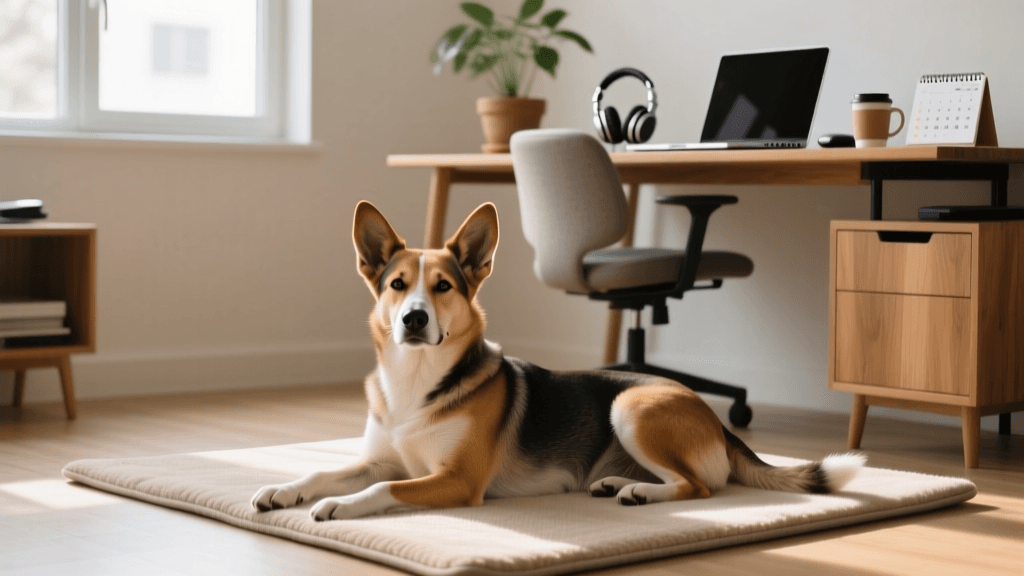
Mat training is the cornerstone of home office etiquette. The 'Place' command teaches your dog to go to a specific bed or cot and remain there until released. This is invaluable when you are hosting clients on camera or need to focus deeply without a dog nudging your arm.
- Step 1: Select the Right Gear. In 2026, elevated chew-proof cots like the Kuranda PVC frame or orthopedic memory foam beds are highly recommended. Elevated beds provide a clear physical boundary that dogs easily understand.
- Step 2: Lure and Mark. Use high-value treats, such as freeze-dried beef liver, to lure your dog onto the mat. The moment all four paws touch the mat, use a clicker or a verbal marker like 'Yes!' and reward.
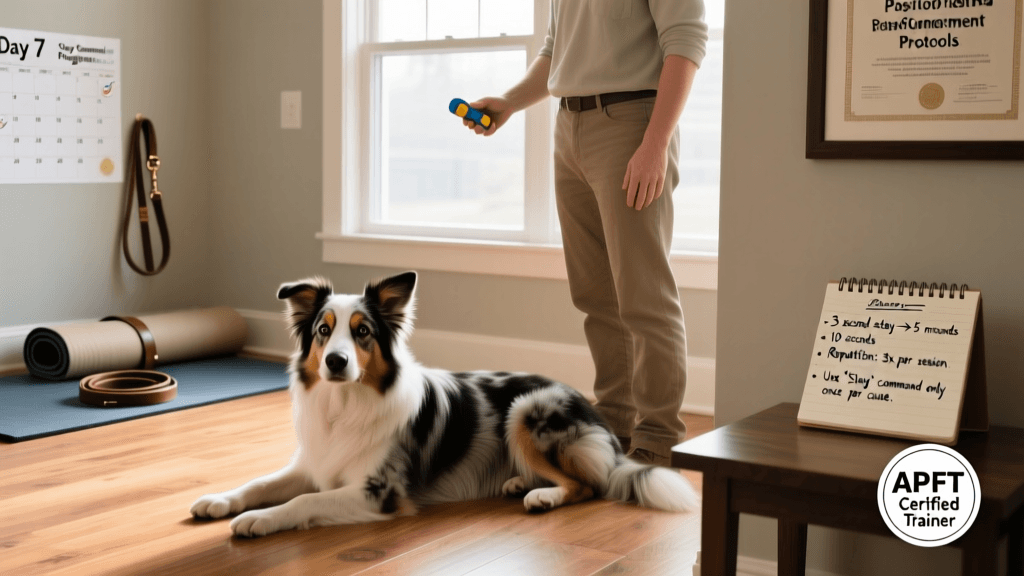
- Step 3: Build Duration. Gradually increase the time your dog must stay on the mat before receiving a reward. Start with three seconds and work your way up to 30 minutes while you sit at your desk.
- Step 4: Add the Release Cue. Teach a release word like 'Free' or 'Break' so the dog knows exactly when their shift on the mat is over.
Protocol 2: Digital Desensitization (Zoom, Slack, and Doorbells)
Nothing ruins a professional presentation faster than a dog barking at a Slack notification or a Zoom meeting chime. Digital desensitization is a modern necessity for the 2026 remote worker.
- Record the Triggers: Record the specific sounds of your video conferencing software, messaging apps, and smart doorbell.
- Low-Volume Exposure: Play the recorded sound at a volume so low that your dog notices it but does not react or bark. Immediately toss a high-value treat.
- Gradual Escalation: Over several weeks, slowly increase the volume. If the dog barks, you have increased the volume too quickly. Drop the volume back down and proceed more slowly.
- Counter-Conditioning: Eventually, the sound of a Zoom chime should become a predictor of treats, causing your dog to look at you expectantly rather than barking at the computer.
Protocol 3: Fostering Independence to Prevent Separation Anxiety
Remote workers are uniquely prone to accidentally fostering separation anxiety in their dogs because the dog is never truly alone. When you eventually need to return to a corporate office or simply leave for a weekend trip, the sudden absence can be psychologically devastating for the dog. The Humane Society's resources on separation anxiety emphasize the importance of gradual desensitization to departures.
To prevent this, practice 'fake departures' daily. Put on your shoes, grab your keys, walk out the front door, and return immediately without acknowledging the dog. Gradually extend the time you are gone from one minute to five minutes, then thirty minutes. Additionally, utilize smart treat-dispensing cameras to drop rewards when your dog is resting calmly in another room, reinforcing that being alone is a safe and rewarding experience.
2026 WFH Breed Comparison Chart
Use the table below to evaluate which breed aligns best with your specific home office environment and training capacity.
| Breed | Energy Level | WFH Suitability | Primary Training Focus |
|---|---|---|---|
| Greyhound | Low (Indoor) | Excellent | Place Command, Impulse Control |
| Basset Hound | Very Low | Great | Recall, Scent Desensitization |
| Cavalier King Charles | Moderate | Good | Independence, Boundary Training |
| Shiba Inu | Moderate | Fair | Vocalization Control, Socialization |
| Great Dane | Low | Excellent | Mat Training, Space Awareness |
Recommended 2026 Training Gear for Home Offices
Having the right tools can drastically reduce the time it takes to train your dog for a home office environment. Here are the top-rated items for 2026:
- Snugarooz Calming Mat: Features built-in thermal reflection to keep dogs warm and settled on hard home office floors.
- Petcube Bites 3 Lite: An essential smart camera that allows you to monitor your dog's mat training from your smartphone and toss treats remotely when they exhibit calm behavior.
- Zuke's Mini Naturals (2026 Recipe): Low-calorie, high-reward training treats that won't cause weight gain in low-energy breeds like Greyhounds and Basset Hounds during long training sessions.
- White Noise Smart Plug Integration: Using a smart plug connected to a white noise machine can help mask outdoor sounds like delivery trucks or neighborhood construction, preventing reactive barking during your afternoon meetings.
Conclusion
Integrating a dog into your remote work routine requires intentionality, patience, and a commitment to modern behavioral conditioning. By selecting a naturally low-energy breed like a Greyhound or Basset Hound, and rigorously applying mat training and digital desensitization protocols, you can create a peaceful, productive home office. Remember that a well-trained dog is not just a better coworker; they are a happier, more confident companion who understands exactly what is expected of them in the evolving landscape of 2026 remote work.
aaron-whyte
All our authors care for dogs every day — read more of their work on the authors page.