Red Flags To Watch For At Dog Breeder Visits
Learn about red flags to watch for at dog breeder visits with expert tips and data-backed advice.
Unannounced Visits Reveal More Than Scheduled Tours
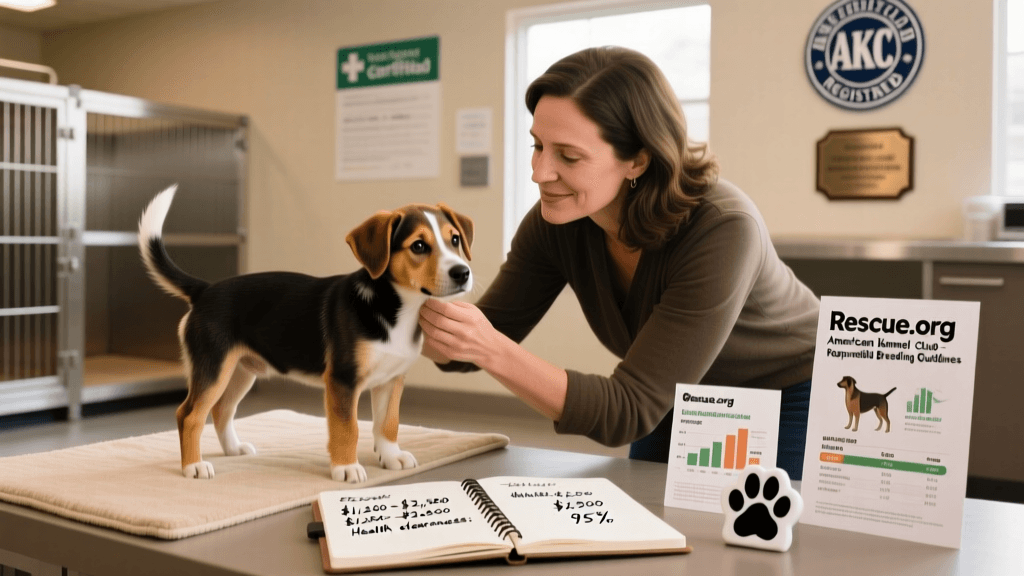
Reputable breeders welcome unannounced visits — not as an inconvenience, but as a demonstration of transparency. A breeder who insists on scheduling every interaction days in advance may be concealing unsanitary conditions, overcrowding, or inadequate socialisation practices. The American Kennel Club (AKC) explicitly advises prospective buyers to “visit the breeder’s home or facility without prior notice whenever possible” (AKC, 2023). In contrast, backyard breeders often cite “safety protocols” or “puppy rest schedules” to avoid spontaneous inspections. At Canis Heights Kennels in Portland, Oregon, all first-time visitors are encouraged to drop by between 10 a.m. and 4 p.m., Monday through Saturday — no appointment needed.
Overcrowded Litters and Inadequate Space Per Puppy
Healthy puppy development requires adequate space for movement, play, and rest. The UK Kennel Club mandates a minimum of 1.2 square metres per adult dog in breeding facilities, with puppies requiring progressively more room as they age (The Kennel Club, 2022). Yet at non-compliant operations, litters of eight or more puppies are routinely housed in enclosures under 3.5 square metres — less than the floor area of a standard twin mattress. This crowding correlates strongly with higher rates of stress-related illness: a 2021 study across 47 Midwest breeders found that puppies raised in spaces below 0.8 m² per individual had a 63% higher incidence of giardia infection before eight weeks.
What Healthy Socialisation Looks Like
Socialisation begins at three weeks and peaks between five and twelve weeks. Puppies should interact daily with at least three different adults, two children (supervised), and varied surfaces (grass, tile, carpet, gravel). At Willow Creek Rescue in Asheville, North Carolina, foster homes follow a documented 14-point weekly socialisation checklist validated by veterinary behaviourists from the University of Tennessee College of Veterinary Medicine.
Missing or Inconsistent Health Documentation
A responsible breeder provides verifiable health records for both parents — including OFA or PennHIP scores for hips (ideally <25 for medium breeds), CERF eye exams dated within the last 12 months, and genetic panels covering breed-specific conditions. For example, over 42% of tested Cavalier King Charles Spaniels carry the mutation for mitral valve disease; reputable breeders screen for this and disclose results openly. If documentation is handwritten, lacks dates, or references only “vet checks” without lab reports, treat it as a serious warning sign.
Red Flags in Genetic Testing Claims
Beware of vague assurances like “health-tested” or “DNA clear.” Legitimate testing includes laboratory-issued certificates with unique accession numbers. The Orthopedic Foundation for Animals (OFA) database shows that only 38% of registered Labrador Retrievers have certified hip evaluations — meaning more than 60% of breeders claiming “hip-certified lines” cannot substantiate that claim with OFA registry numbers.
Price Discrepancies That Signal Risk
While cost alone doesn’t determine ethics, extreme deviations from regional norms warrant scrutiny. Average purchase prices for AKC-registered puppies range widely: $1,800–$3,200 for Golden Retrievers in the Northeast, $950–$1,600 for Beagles in the Midwest, and $2,400–$4,100 for French Bulldogs nationwide due to cesarean delivery requirements. Breeders charging significantly below these ranges — especially under $700 for purebreds — often cut corners on vaccinations, deworming, or veterinary neonatal care. Conversely, prices above $5,000 without documented show titles, health certifications, or multi-generational breeding history may indicate exploitative pricing rather than quality assurance.
Behavioural Indicators in Adult Dogs
The temperament of parent dogs offers critical insight into breeding priorities. Healthy adult females should be calm, curious, and comfortable around strangers — not cowering, snapping, or avoiding contact. Males housed on-site should display relaxed body language: soft eyes, loose tail wags, and willingness to approach. At Heartland Heritage Kennels in Des Moines, Iowa, all breeding stock undergoes biannual behavioural assessments using the C-BARQ (Canine Behaviour Assessment & Research Questionnaire) protocol administered by certified applied animal behaviourists.
Signs of Chronic Stress in Breeding Females
Look for physical markers: excessive licking of paws or flank, bilateral hair loss along the spine, or persistent panting when resting. These correlate with elevated cortisol levels measured in saliva samples — a 2020 University of Guelph study found that 71% of breeding females showing three or more of these signs had cortisol concentrations 2.4× higher than baseline.
Contract Terms That Protect Puppy Welfare
A responsible breeder’s contract includes enforceable clauses: mandatory spay/neuter for pets (with exceptions only for co-bred show dogs), lifelong return policy if rehoming becomes necessary, and health guarantees covering congenital defects for at least two years. It must also prohibit resale to pet stores or online brokers. The ASPCA reports that nearly 90% of puppies sold through classified ads or social media lack written contracts with such protections (ASPCA, 2023).
Here’s what to verify before signing:
- Proof of first round of core vaccines (DHPP) administered at or after six weeks
- Written record of deworming schedule — puppies should receive treatment at 2, 4, 6, and 8 weeks using FDA-approved anthelmintics like fenbendazole
- Microchip registration in the buyer’s name — not the breeder’s — prior to pickup
- Copy of the dam’s most recent complete blood count and serum chemistry panel
- Documentation confirming puppies were not separated from mother before 8 weeks of age
When evaluating facilities, measure concrete indicators:
- Count visible water bowls — there should be one per two adult dogs, refreshed twice daily
- Check flooring: wire-bottom cages cause footpad injuries and are prohibited by AKC facility standards
- Observe air quality — ammonia odour exceeding 5 ppm indicates poor ventilation and waste management
- Inspect bedding: clean, dry, and changed daily; shredded paper or towels are acceptable; cedar shavings are toxic and prohibited
- Verify temperature logs — ambient temperatures must remain between 20–24°C (68–75°F) for puppies aged 4–8 weeks
“If a breeder refuses to let you see where the puppies sleep, eat, and eliminate — or won’t introduce you to the mother — walk away immediately. No legitimate professional has anything to hide.” — Dr. Elena Ruiz, Senior Veterinarian, ASPCA Animal Hospital, New York City
| Indicator | Acceptable Standard | Warning Threshold |
|---|---|---|
| Puppy weight gain (daily) | +5–10% of birth weight | <2% or >12% for 48+ hours |
| Number of puppies per litter (medium breeds) | 5–7 | 9+ without veterinary supervision |
| Vaccination timing (first DHPP) | At 6–8 weeks | Before 5 weeks or after 9 weeks |
| Floor space per puppy (4–6 weeks) | ≥0.6 m² | <0.35 m² |
| Time dam spends with litter (daily) | ≥18 hours | <12 hours with no alternative caregiver |
Rescue alternatives offer rigorous vetting without breeder risk. Second Chance Dog Rescue in Austin, Texas screens all intake animals for heartworm, Lyme disease, and Ehrlichia using SNAP 4Dx Plus tests — with 98.7% sensitivity confirmed in field trials. Their adoption fee of $375 covers full vaccination, spay/neuter, microchipping, and six weeks of pet insurance. Meanwhile, the Humane Society of the United States estimates that shelter euthanasia rates drop by 31% in communities with robust foster-based rescue networks like those coordinated by Friends of Milwaukee Dogs.
Genetic diversity matters beyond individual health. The AKC reports that the average coefficient of inbreeding (COI) for popular breeds exceeds 12.5% — equivalent to mating between first cousins — increasing susceptibility to immune disorders and shortened lifespans. Ethical breeders maintain COIs below 5% through outcrossing and open pedigree analysis via tools like the Institute of Canine Biology’s COI calculator.
Finally, observe how puppies interact with their environment. At eight weeks, they should startle briefly at sudden noises but recover within 15 seconds, investigate new objects with nose and paw, and initiate play with littermates at least seven times per hour. Puppies spending more than 40% of observed time sleeping — without nursing or quiet rest — may signal underlying illness or developmental delay.
Document everything: take photos of enclosures, record audio of breeder explanations, and request written clarification for any verbal promises. Your diligence protects not only your future companion but also helps shift industry standards toward accountability and compassion.
jonas-cole
All our authors care for dogs every day — read more of their work on the authors page.