Decoding Rescue Dog Stress Signals: A 2026 Owner Guide
Learn to decode your newly adopted dog's stress and calming signals. Our 2026 guide covers body language, smart tech, and first-week tips.
Bringing home a newly adopted dog is one of the most rewarding experiences a person can have, but the first few days are often fraught with misunderstandings. As shelter adoptions continue to evolve in 2026, behavioral science has given us unprecedented insight into how dogs process the massive environmental shift from a shelter kennel to a living room. While new owners are often eager to shower their new companion with affection, toys, and house tours, many miss the subtle, silent language their dog is using to communicate overwhelm, fear, and a desperate need for space.
Understanding canine communication is not just about preventing bites; it is about building a foundation of trust. When you can read your dog's stress signals, you can adjust your environment, prevent behavioral fallout, and help your new rescue decompress safely. In this comprehensive 2026 guide, we will break down the most common canine calming signals, explore the latest biometric tracking technology, and provide a structured first-week decompression plan to set your new dog up for lifelong success.
The Silent Language of Your Newly Adopted Dog
Dogs are masters of non-verbal communication. Long before a dog growls, snaps, or bites, they have likely offered dozens of subtle "calming signals." Originally popularized by Norwegian canine behaviorist Turid Rugaas, calming signals are innate behaviors dogs use to self-soothe, de-escalate tense situations, and communicate peaceful intentions to humans and other animals.
When a rescue dog enters a new home, their nervous system is often in overdrive. The sudden change in routine, new scents, unfamiliar noises, and well-meaning but overwhelming human attention can trigger a chronic stress response. According to the ASPCA's guide on common dog behavior issues, failure to recognize early stress indicators is the leading cause of returned adoptions within the first 30 days. By learning to "listen" with your eyes, you can intervene before your dog's stress cup overflows into reactive behavior.
Top 5 Canine Calming Signals to Watch For in 2026
During the critical first week, your dog will likely display several of the following signals. Recognizing them is the first step toward becoming a fluent handler of canine body language.
1. Lip Licking and Yawning
While a yawn in the morning means your dog is tired, a sudden yawn or rapid lip-licking when meeting new people, being hugged, or hearing loud noises is a classic displacement behavior. It is the canine equivalent of a nervous human laughing or fidgeting during a stressful presentation. If your newly adopted dog yawns while a child is petting them, they are not bored; they are asking for the interaction to end. Action: Immediately create distance between the dog and the stressor, and do not force physical affection.
2. The "Whale Eye"
"Whale eye" occurs when a dog turns their head away from a stimulus but keeps their eyes fixed on it, exposing the crescent-shaped whites of their eyes (the sclera). This is a high-level stress indicator that often precedes defensive aggression if the dog feels trapped. You will frequently see this when a dog is cornered on a dog bed or when someone leans over them to take a photograph. Action: Step back, avert your own gaze, and give the dog a clear, unblocked escape route.
3. Ground Sniffing and Scratching
Sniffing is a natural and enriching behavior, but sudden, intense ground sniffing or scratching out of context is a calming signal used to avoid direct confrontation. If you are calling your new dog to you and they suddenly become fascinated by a completely barren patch of concrete, they are using scent-work to avoid the pressure of the recall. Action: Lower your physical posture, speak in a softer tone, and toss a high-value treat near their nose to break the tension without demanding direct eye contact.
4. Turning the Head or Body Away
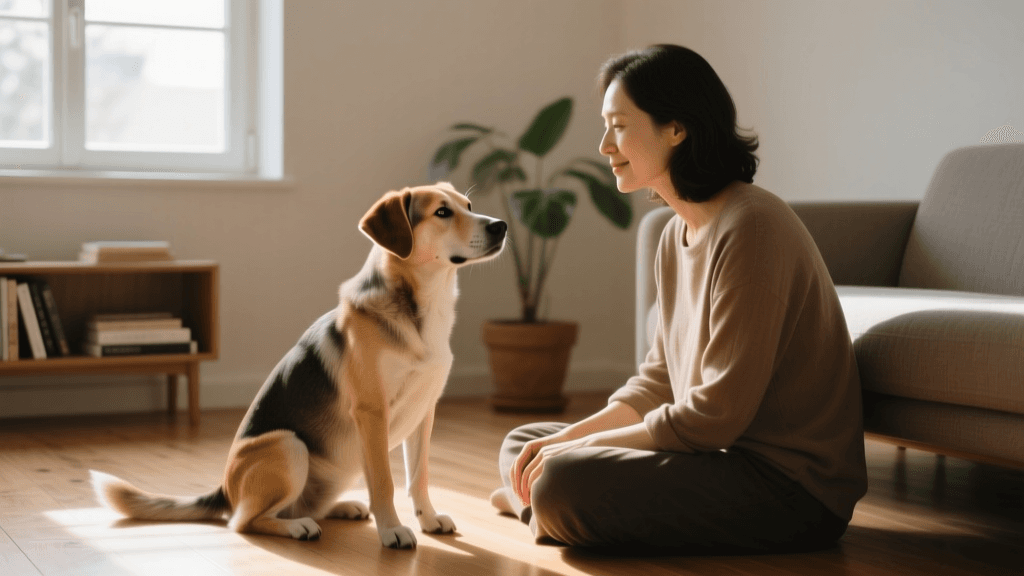
In dog culture, staring is considered rude and threatening. When you lean in to kiss your new rescue on the head, they may turn their head to the side or present their side/back to you. Humans often misinterpret this as the dog "ignoring" them or being aloof. In reality, this is incredibly polite dog etiquette. They are actively trying to de-escalate the intimacy of the interaction. Action: Respect the boundary. Pet them on the chest or shoulder rather than reaching over their head, and let them initiate the next contact.
5. The Shake-Off
Have you ever noticed your dog shaking their entire body vigorously from nose to tail after a stressful encounter, a veterinary exam, or a tight hug? This is not because they are wet or itchy. The "shake-off" is a physiological mechanism used to literally shake off excess adrenaline and reset the nervous system. Action: Allow the dog to complete the shake without interruption, and follow up with calm, quiet praise to reinforce the successful stress release.
2026 Tech and Tools for Monitoring Canine Stress
The pet technology landscape in 2026 has moved far beyond simple GPS tracking. Today's smart collars and environmental modifiers can help new owners objectively measure their dog's stress levels, removing the guesswork from the decompression phase. Below is a comparison of the top-rated stress-monitoring and calming tools available this year.
| Product (2026 Models) | Type | Key Communication Feature | Avg. Price |
|---|---|---|---|
| Fi Series 4 Smart Collar | Wearable Tech | HRV (Heart Rate Variability) stress tracking | $149 |
| Adaptil Optimum 2026 | Pheromone Diffuser | Enhanced 3-pheromone calming complex | $65 |
| PetPace 2.0 Health Collar | Biometric Monitor | Real-time cortisol proxy & temperature alerts | $199 |
| Calming Classic Thundershirt | Wearable Apparel | Gentle, constant tactile pressure | $45 |
Using a tool like the Fi Series 4 allows you to track your dog's Heart Rate Variability (HRV) via the companion app. A sudden drop in HRV during the night or while you are away can indicate separation anxiety or environmental stressors (like construction noise) that you might not have noticed. Pairing this biometric data with the Humane Society's tips for bringing your new dog home ensures you are building a data-backed, empathetic routine for your new pet.
Creating a Low-Stress Environment for the First 7 Days
Understanding signals is only half the battle; the other half is environmental management. The "3-3-3 Rule" of adoption suggests it takes 3 days to decompress, 3 weeks to learn a routine, and 3 months to feel at home. During those first 72 hours, your primary goal is to keep the dog's stress bucket as empty as possible.
- Implement "Sniffaris": Ditch the structured, heel-focused walks for the first week. Take your dog to a quiet, low-traffic grassy area on a 15-foot biothane long line and let them dictate the pace. Sniffing lowers a dog's heart rate and provides immense mental enrichment without the physical strain.
- Establish a Safe Zone: Set up a single, quiet room or a covered crate with a white noise machine. This is the dog's sanctuary. Establish a strict house rule that no one (especially children or guests) is allowed to disturb the dog when they are in this zone.
- Delay the Meet-and-Greets: It is incredibly tempting to invite friends and family over to meet the new addition. Resist this urge. Every new person is a new variable your dog must process. Wait at least 14 days before introducing extended social circles.
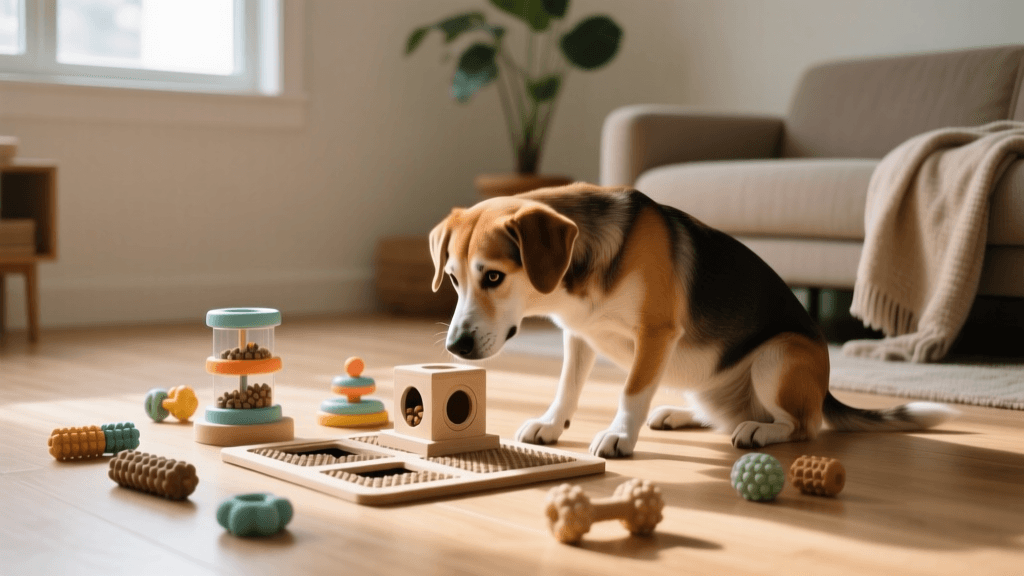
- Use Food Puzzles: Instead of feeding from a bowl, use snuffle mats, lick mats, or frozen Kongs. Licking and foraging are naturally soothing behaviors that stimulate the parasympathetic nervous system, promoting rest and digestion.
When to Call a Professional Behaviorist
While most dogs will naturally settle as they learn that their new environment is safe, some rescues come with deep-seated trauma or complex behavioral needs that require professional intervention. If your dog displays severe resource guarding, inability to sleep, chronic panting, or aggression that does not improve after two weeks of strict decompression, it is time to seek help.
Do not rely on outdated, dominance-based training methods, which have been thoroughly debunked by modern veterinary science. Instead, seek out a certified professional who utilizes fear-free, force-free methodologies. The American Veterinary Medical Association (AVMA) strongly recommends consulting with a board-certified veterinary behaviorist or a certified applied animal behaviorist for dogs exhibiting severe anxiety or aggression. These professionals can create tailored behavioral modification plans and, if necessary, discuss short-term pharmaceutical support to help your dog's brain become receptive to learning.
Conclusion
Getting a dog is a profound commitment that goes far beyond providing food and shelter. By tuning into the subtle frequencies of canine communication, you transition from being just a provider to being a true partner and advocate for your rescue. The first week sets the tone for your entire relationship. Respect their signals, give them the gift of time, and watch as your newly adopted dog blossoms into a confident, deeply bonded companion in your home.
anouk-beaumont
All our authors care for dogs every day — read more of their work on the authors page.