Best No-Pull Dog Harnesses for Urban Walks 2026: Top Picks & Tips
Discover the best front-clip no-pull dog harnesses for 2026 urban walks. Compare Rabbitgoo and Kurgo models, plus expert training tips to stop pulling.
Navigating the 2026 Urban Jungle with a Puller
Life with a dog in a bustling city in 2026 means navigating an obstacle course of modern distractions. Between silent e-bikes, autonomous delivery rovers, and densely packed sidewalks, maintaining control of your dog is not just a matter of obedience—it is a critical safety requirement. If you share your life with a strong, enthusiastic puller, the daily walk can quickly devolve into a frustrating game of tug-of-war. More importantly, it can pose severe health risks to your dog and physical strain on your shoulders and back.
Transitioning from a traditional neck collar to a front-clip no-pull harness is the single most effective equipment change you can make this year. But not all harnesses are created equal, and simply slapping one on your dog will not magically cure leash reactivity or pulling. In this comprehensive breakdown, we explore the biomechanics of front-clip harnesses, compare the top models dominating the market in 2026, and provide a step-by-step training protocol to transform your daily urban walks.
The Hidden Dangers of Collars in Urban Environments
Many dog owners default to flat buckled collars out of habit. However, when a dog hits the end of a leash at a full sprint, the sudden deceleration places immense, concentrated force directly on the trachea and cervical spine. According to Texas A&M veterinary experts, repetitive trauma to the neck from pulling on a collar is a leading environmental aggravator for tracheal collapse, a condition where the cartilage rings of the windpipe weaken and flatten, causing severe respiratory distress.
In high-stimulus urban environments, sudden lunges are inevitable. A front-clip harness eliminates this danger entirely by distributing the kinetic energy across the dog's broad chest and sternum, completely bypassing the fragile structures of the neck.
The Biomechanics of the Front-Clip Harness
Why does a front-clip work when back-clip harnesses fail? A back-clip harness actually encourages pulling by engaging a dog's natural "opposition reflex." When pressure is applied to the back and shoulders, a dog's instinct is to lean into it—much like a sled dog.
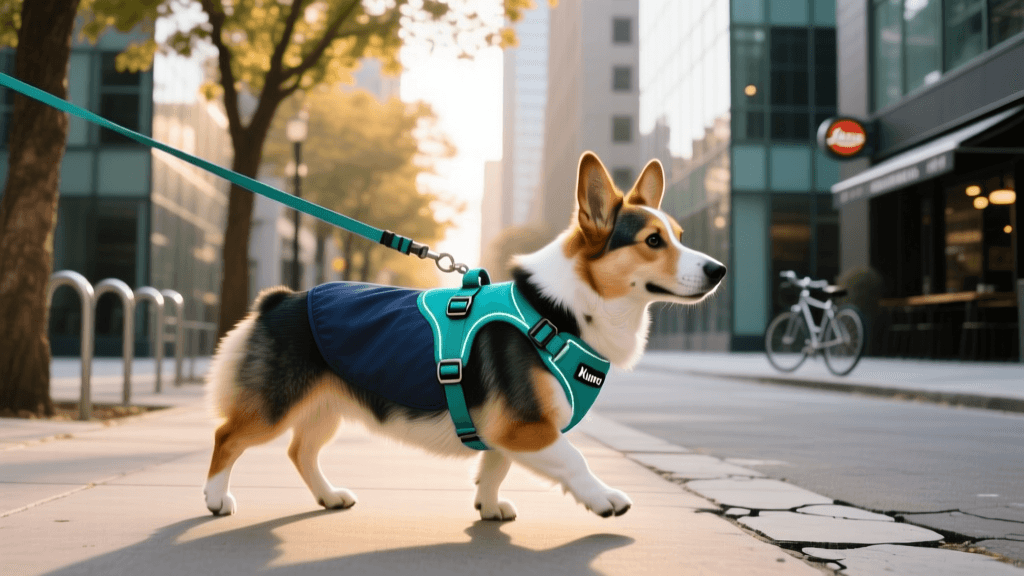
A front-clip harness, featuring a D-ring located on the chest strap, changes the physics of the walk. When the dog pulls forward and the leash becomes taut, the front attachment point gently pivots the dog's center of gravity. This redirects their momentum sideways, turning them back toward the handler and physically interrupting the forward-driving motion without causing pain or choking.
2026 Harness Showdown: Rabbitgoo vs. Kurgo Tru-Fit
When outfitting your dog for city life, durability, escape-resistance, and comfort are paramount. Below is a detailed comparison of the two most highly recommended front-clip harnesses for urban walking in 2026.
| Feature | Rabbitgoo No-Pull (2026 Breathable Edition) | Kurgo Tru-Fit Enhanced Strength |
|---|---|---|
| Attachment Points | Front Chest & Back | Front Chest (Nested V-Ring) & Back |
| Material | Recycled Ocean-Bound Plastic Mesh | Ballistic Nylon with Steel V-Ring |
| Weight Capacity | Up to 110 lbs | Up to 130 lbs (Crash-tested to 75 lbs) |
| Adjustability | 4 Points (Neck and Girth) | 5 Points (Neck, Girth, and Chest Slider) |
| Estimated 2026 Price | $38.99 | $44.99 |
| Best For | Medium pullers, hot climates, daily neighborhood walks | Power pullers, reactive dogs, hiking, and car travel |
Deep Dive: Rabbitgoo No-Pull
The Rabbitgoo remains a favorite for its lightweight, breathable profile. The 2026 update features an eco-friendly recycled mesh that prevents overheating during summer city walks. Its four adjustment points allow for a snug fit on barrel-chested breeds like French Bulldogs or Whippets. However, the aluminum front D-ring, while sturdy, can occasionally warp under the extreme, sustained torque of a 90-pound power puller.
Deep Dive: Kurgo Tru-Fit Enhanced
For the dedicated urban puller or reactive dog, the Kurgo Tru-Fit is the undisputed heavyweight champion. The nested steel V-ring on the chest is virtually indestructible. The five-point adjustment system includes a unique chest slider that prevents the harness from shifting sideways when the dog is redirected. Additionally, it doubles as a certified car safety harness, making it an excellent two-in-one investment for city dwellers who rely on rideshares or personal vehicles.
How to Properly Measure and Fit Your Harness
A no-pull harness is only effective if it fits correctly. A poorly fitted harness can cause chafing, restrict shoulder extension, or allow the dog to back out and escape into traffic.
- Step 1: Measure the Girth. Use a soft tailor's tape measure. Wrap it around the widest part of your dog's ribcage, usually just behind the front elbows. Add two inches to this measurement for comfort.
- Step 2: Measure the Neck. Measure the base of the neck where a collar would normally sit. Ensure the harness neck opening can slip over the head easily but sit below the trachea.
- Step 3: The Two-Finger Rule. Once buckled, you should be able to slide exactly two fingers flat between the straps and your dog's skin. Any looser, and they can slip a leg out; any tighter, and you risk restricting blood flow or causing friction burns.
- Step 4: Check the Shoulders. The Y-shaped chest plate must sit below the sternum. The straps should never cross over or press into the dog's front shoulder joints, as this alters their natural gait and can lead to long-term orthopedic issues.
The 4-Step Front-Clip Training Protocol
As noted by the American Kennel Club's training experts, a harness is a tool, not a cure. To permanently stop leash pulling, you must pair the front-clip harness with positive reinforcement training. Implement this protocol on every single walk starting today.
1. The Red Light (Stop)
The absolute millisecond you feel tension on the leash, stop walking entirely. Become a tree. Do not yank the leash back, and do not speak. The goal is to teach the dog that tension equals a cessation of forward movement.
2. The Pivot (Turn)
Wait for your dog to look back at you or take a single step backward, which releases the tension on the front clip. The moment the leash goes slack, the front D-ring will naturally pivot the dog's chest toward you. Praise them calmly.
3. The Reward (Engage)
With the dog now facing you and the leash slack, deliver a high-value treat (like freeze-dried liver or chicken) directly at the seam of your pants. This reinforces that the "sweet spot" for earning rewards is right beside your leg, not three feet ahead at the end of the leash.
4. The Release (Move)
Give your release cue (e.g., "Let's go") and resume walking. If the leash goes tight again, immediately repeat Step 1. In the first week, you may only walk one block in twenty minutes. This is normal. You are rewiring years of ingrained behavior.
Multi-Dog Household Dynamics: Walking Two Pullers
Life with multiple dogs in the city presents unique logistical challenges. If you are walking two dogs who both pull, using back-clip harnesses with a standard Y-coupler is a recipe for disaster; if one lunges, the other is dragged along, creating a tangled, dangerous mess.
In 2026, the best practice for multi-dog urban walking is utilizing a hands-free bungee waist leash equipped with two independent traffic handles, attaching each clip to the front D-ring of each dog's respective harness. The bungee section absorbs the shock of sudden lunges, protecting your lower back, while the dual front-clips ensure that if one dog spots a squirrel and lunges, they only pivot themselves, rather than pulling the second dog off balance. Always walk the more reactive dog on the side furthest from the street to create a physical buffer with your own body.
Maintenance and Care for Urban Gear
City life is tough on gear. Road salt, mud, and the friction of concrete can degrade harness materials over time. To maintain the integrity of your Rabbitgoo or Kurgo harness:
Pro Tip: Hand-wash your harness once a month in a basin of warm water with a mild, pet-safe enzymatic detergent. Never put a harness in the washing machine or dryer, as the heat can warp the plastic buckles and weaken the structural stitching. Air dry it completely in a well-ventilated area away from direct sunlight to prevent UV fading and nylon brittleness.
Before every walk, perform a quick "ABC" check: Aluminum/Steel rings for rust or warping, Buckles for hairline fractures, and Canvas/straps for fraying edges. Replacing a $40 harness every two years is a minor expense compared to the safety and comfort it provides your best friend.
Final Thoughts on Urban Walks
Upgrading to a front-clip no-pull harness like the Rabbitgoo or Kurgo Tru-Fit is an investment in your dog's physical health and your mutual enjoyment of the outdoors. By combining the right 2026 equipment with consistent, reward-based training, you can transform your daily urban walks from a stressful chore into the highlight of your shared routine. Remember, patience and consistency are your greatest tools. Happy walking!
priya-sutaria
All our authors care for dogs every day — read more of their work on the authors page.