Best Dog Breeds for Remote Workers in 2026: Top 5 Picks
Discover the best dog breeds for remote workers in 2026. Find quiet, WFH-friendly dogs, apartment setups, and daily routines for your home office.
The Work-From-Home Revolution of 2026
As we navigate the professional landscape of 2026, remote and hybrid work models have solidified into permanent fixtures for millions of households. With the home office now doubling as a living space, many professionals are seizing the opportunity to adopt a canine companion. However, not every dog is suited to accompany you during high-stakes virtual meetings or deep-focus coding sessions. Choosing the right breed is critical to maintaining both your productivity and your pet's well-being. In this comprehensive guide, we explore the best dog breeds for remote workers in 2026, complete with home office setups, budget considerations, and daily routines.
What Makes a Dog "Remote-Worker-Friendly"?
Before diving into specific breeds, it is essential to understand the traits that make a dog an ideal work-from-home (WFH) companion. First, low vocalization is paramount. A dog that barks at every passing delivery drone or neighborhood squirrel will quickly disrupt your virtual meetings. Second, moderate to low indoor energy levels are preferred. While all dogs require outdoor exercise, a WFH dog should be content lounging nearby while you type away. Finally, a degree of independence is valuable. Clingy breeds that demand constant physical attention can make it difficult to meet your daily professional obligations.
Top 5 Dog Breeds for Remote Workers in 2026
| Breed | Energy Level | Barking Level | Avg. 2026 Cost | Best For |
|---|---|---|---|---|
| Cavalier King Charles Spaniel | Moderate | Low | $2,500 - $3,500 | Lap lounging, quiet companionship |
| Greyhound | Low (Indoor) | Very Low | $300 - $500 (Rescue) | Apartment living, long naps |
| Basset Hound | Low | Low (Howls occasionally) | $1,500 - $2,500 | Relaxed households, ground-level beds |
| Shih Tzu | Low to Moderate | Moderate | $2,000 - $3,000 | Small home offices, low shedding |
| French Bulldog | Low | Low | $4,000 - $6,000 | Urban apartments, affectionate naps |
1. Cavalier King Charles Spaniel
Often described as the ultimate comfort dog, the Cavalier King Charles Spaniel thrives on proximity without being overly demanding. They are perfectly content to sleep under your desk while you work. In 2026, reputable breeders typically charge between $2,500 and $3,500, reflecting rigorous health testing for mitral valve disease. Cavaliers are highly trainable and respond well to positive reinforcement, making it easy to teach them a "settle" command for when you need uninterrupted focus.
2. Greyhound
It may seem counterintuitive to recommend a racing breed for/for a sedentary home office, but Greyhounds are famously known as 45-mph couch potatoes. Indoors, they are remarkably lazy and sleep up to 18 hours a day. They rarely bark, making them exceptional for shared walls or apartment living. Adopting a retired racing Greyhound through a rescue organization usually costs between $300 and $500 in 2026. You will need to invest in a high-quality orthopedic bed, as their lack of body fat makes hard floors uncomfortable for them.
3. Basset Hound
With their soulful eyes and low-slung bodies, Basset Hounds bring a calm, almost comedic presence to the home office. They are scent hounds, meaning they are easily entertained by a snuffle mat hidden with treats while you take a long conference call. They are generally quiet, though they possess a deep, resonant howl if left entirely neglected. Basset Hounds require regular ear cleaning and wrinkle maintenance, which can serve as a nice screen-free break during your workday.
4. Shih Tzu
Bred specifically for companionship, the Shih Tzu is a sturdy, affectionate lap dog. They are an excellent choice for remote workers with allergies, as their hair-like coat sheds minimally, though it requires professional grooming every six weeks (budget around $80 per session in 2026). Shih Tzus are alert but not notoriously yappy, and their moderate energy means a quick 20-minute neighborhood walk is usually sufficient to keep them happy.
5. French Bulldog
The French Bulldog remains a top choice for urban remote workers in 2026. Their compact size and low exercise requirements make them ideal for high-rise apartments. Frenchies are deeply affectionate and form strong bonds with their owners, often acting as excellent foot-warmers during cold winter workdays. However, prospective owners must be prepared for higher veterinary costs related to brachycephalic airway syndrome, and initial purchase prices from ethical breeders often exceed $5,000.
Designing Your 2026 Home Office for a Dog
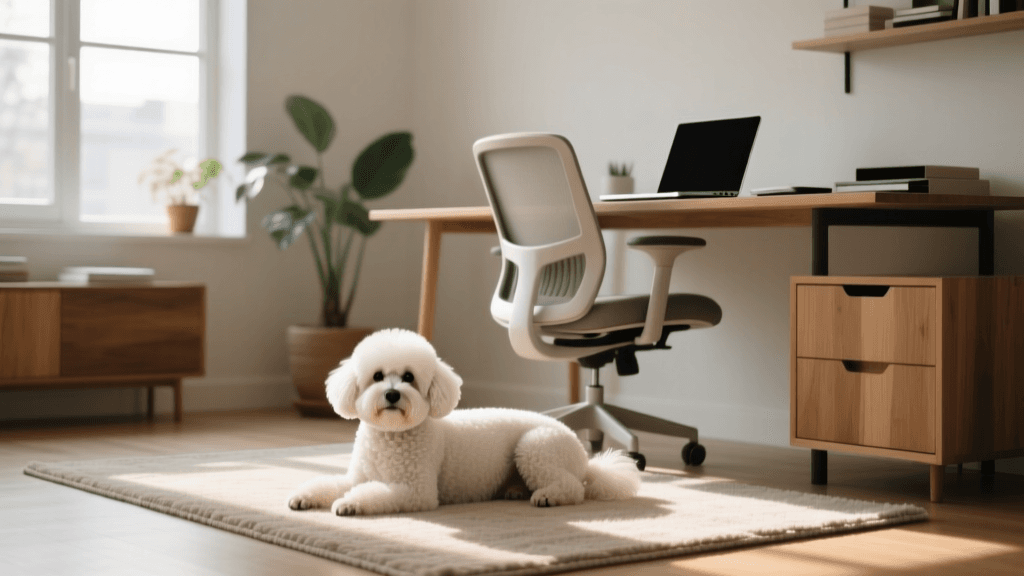
Creating a dedicated space for your dog within your office is crucial for establishing boundaries.
- The Bed: Place a Casper Dog Bed (approx. $125) just out of your immediate walkway but within your line of sight. Dogs feel secure when they can monitor their owners.
- The Gate: If your dog struggles with settling, use a Carlson Pet Products Design Studio Walk-Through Pet Gate ($55) to create a designated office zone where they can observe you without climbing onto your keyboard.
- Enrichment: Keep a KONG Classic ($18) stuffed with frozen dog-safe peanut butter in your desk drawer. Handing this to your dog right before a crucial 30-minute meeting guarantees quiet time.
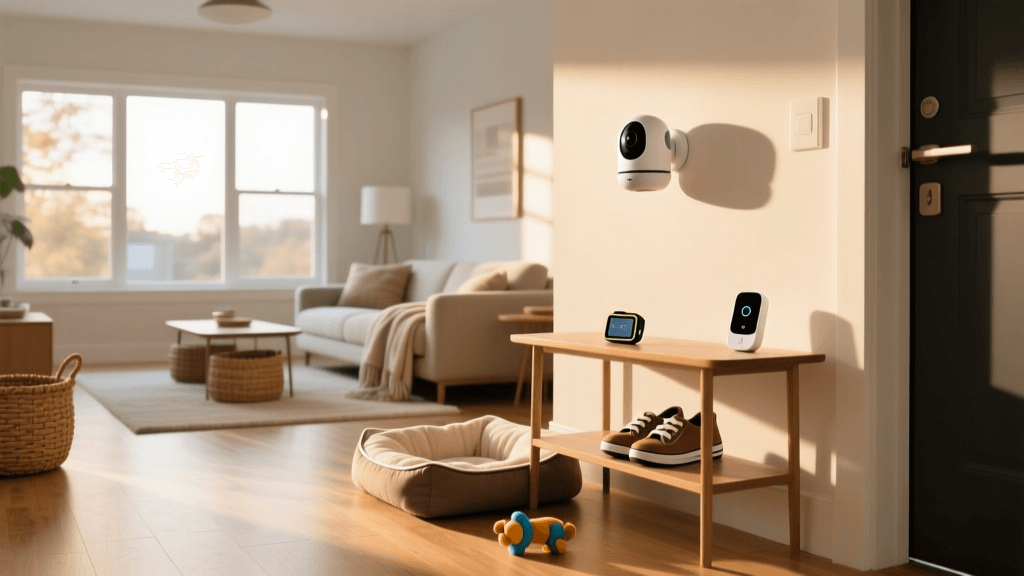
- Monitoring: For days when you must work from a coffee shop or co-working space, the Furbo 360 Dog Camera ($210) allows you to toss treats and speak to your dog via a smartphone app, easing their midday boredom.
Managing Separation Anxiety When You Leave
One of the greatest risks for WFH dog owners is that the dog becomes entirely dependent on your constant presence. According to the American Kennel Club, separation anxiety can develop rapidly in dogs that are never left alone. To prevent this, you must practice micro-departures. Leave your home office, step outside for 10 minutes, and return without making a fuss. Gradually increase this time. Furthermore, the ASPCA emphasizes the importance of physical and mental stimulation before you leave the house. A rigorous 45-minute morning walk or a session of interactive puzzle toys will ensure your dog sleeps peacefully during your afternoon errands.
Sample Daily Schedule for the WFH Dog Owner
Structure is the foundation of a successful human-canine working relationship.
- 6:30 AM: Wake up and immediate 30-minute outdoor walk for potty and sniffing.
- 7:30 AM: Breakfast and mental enrichment (e.g., a snuffle mat or lick mat).
- 8:30 AM: Work begins. Dog settles on their designated office bed.
- 10:30 AM: 10-minute screen break for both you and the dog. A quick game of indoor fetch or tug-of-war.
- 12:30 PM: Lunch break. Take the dog for a 20-minute brisk walk around the neighborhood to burn off midday energy.
- 3:00 PM: Deep work block. Provide a long-lasting chew or frozen KONG to keep the dog occupied.
- 5:30 PM: Workday ends. Transition to evening activities, training sessions, or a trip to the local dog park.
Conclusion
Bringing a dog into your remote-work lifestyle in 2026 is a deeply rewarding decision that requires thoughtful planning. By selecting a breed that aligns with your professional demands and living space, and by intentionally designing your home office and daily routine to support their needs, you can cultivate a harmonious environment. Whether you opt for a snoozing Greyhound or a devoted Cavalier, your new companion will make the workday feel a little less like work and a lot more like home.
aaron-whyte
All our authors care for dogs every day — read more of their work on the authors page.