The 5 Best Puppy Breeds for Remote Workers in 2026
Discover the top 5 best puppy breeds for remote workers in 2026. Find quiet, adaptable dogs perfect for home offices, Zoom calls, and WFH lifestyles.
The Work-From-Home Boom and the 2026 Puppy Trend
As we navigate the professional landscape of 2026, remote and hybrid work models have transitioned from temporary perks to permanent lifestyle fixtures. With millions of professionals operating from home offices, the desire to bring a furry companion into the workspace has never been higher. However, blending puppy rearing with professional responsibilities requires careful consideration. Not every dog is suited to sit quietly by your desk while you lead a virtual strategy meeting.
Getting a puppy is a monumental decision that impacts your daily routine, your living space, and your career. The ideal work-from-home (WFH) dog needs to strike a delicate balance: they should be affectionate enough to provide stress relief during a grueling workday, yet independent and quiet enough not to disrupt your professional obligations. In this comprehensive guide, we explore the best puppy breeds for remote workers in 2026, ensuring you find the perfect co-worker for your home office.
What Makes a Breed Ideal for Remote Workers?
Before diving into specific breeds, it is crucial to understand the traits that make a dog a great fit for a home office environment. When evaluating breeds, remote workers should prioritize the following characteristics:
- Low Vocalization: Barking, howling, or whining can be disastrous during Zoom calls or client meetings. Breeds with a naturally quiet disposition are essential.
- Adaptable Energy Levels: While all puppies require exercise and mental stimulation, the best WFH breeds have an "off switch." They should be content to lounge on a dog bed for hours while you type, provided they get a solid walk before and after work.
- Moderate Independence: Even if you are home, you cannot entertain a puppy 24/7. Dogs prone to severe separation anxiety or velcro-like dependency can become destructive or distressed when you need to focus on deep work or step out for an errand. According to the ASPCA, fostering independence early is vital for preventing behavioral issues.
The 5 Best Puppy Breeds for Remote Workers in 2026
1. Cavalier King Charles Spaniel
The Cavalier King Charles Spaniel is widely regarded as one of the ultimate companion dogs. Bred specifically to sit on the laps of royalty, this breed has retained its gentle, affectionate, and remarkably quiet nature. In 2026, they remain a top choice for remote workers who want a loving presence that doesn't demand constant, high-octane activity.
Cavaliers are highly adaptable. They are just as happy going for a brisk morning walk as they are curling up on a rug beneath your standing desk. According to the American Kennel Club (AKC), Cavaliers are eager to please and respond beautifully to positive reinforcement training, making them relatively easy to house-train and teach the "settle" command. Their low bark volume ensures your microphone won't pick up any sudden disruptions during virtual meetings.
2. Whippet
If you are looking for a sleek, low-maintenance dog that doubles as a living room sculpture, the Whippet is an outstanding choice. Often described as "couch potatoes" indoors, Whippets are sprinters by nature but spend the vast majority of their day sleeping or lounging quietly. This makes them phenomenal companions for professionals who work long hours at a desk.
Whippets are notoriously quiet; they rarely bark without a very good reason. Their short coats require minimal grooming, saving you time during your busy work week. To keep a Whippet happy, all you need is a secure area for a 20-minute daily sprint and a plush orthopedic bed for them to melt into while you answer emails. Their independent yet deeply loyal nature means they will happily nap at your feet without demanding constant attention.
3. Bichon Frise
For remote workers who suffer from pet allergies or prefer a meticulously clean home office, the Bichon Frise is a top-tier candidate. Known for their hypoallergenic, low-shedding coats, Bichons keep your workspace free of tumbleweeds of dog hair. Beyond their practical coat, they are cheerful, resilient, and highly intelligent.
While Bichons do have bursts of playful energy (often called the "Bichon Blitz"), they are generally content to play with a puzzle toy while you work. They are highly trainable and thrive on learning new tricks, which can be a fun bonding activity during your lunch break. The only caveat is their grooming requirement; you will need to budget time and money for professional grooming every four to six weeks to keep their coat mat-free and comfortable.
4. Shih Tzu
Bred exclusively for companionship, the Shih Tzu is a dignified, low-energy breed that excels in a home office setting. Unlike working breeds that need a "job" to do, the Shih Tzu's only job is to be your friend. They require minimal outdoor exercise, making them ideal for apartment dwellers or those without large, fenced yards.
Shih Tzus are generally quiet and prefer to observe their surroundings rather than vocalize. They are sturdy enough to handle gentle play but are perfectly happy to spend an eight-hour workday napping on a nearby sofa. Their confident demeanor means they are less likely to be spooked by the sudden noises of delivery drivers or smart home alerts, keeping your work environment calm and focused.
5. Greyhound
It might seem counterintuitive to list a racing breed among the best dogs for desk workers, but retired Greyhounds (and even young Greyhounds raised in calm environments) are famously lazy indoors. They are quiet, gentle, and incredibly low-maintenance when it comes to indoor living. A Greyhound will happily sleep for 18 hours a day if you let them.
Greyhounds are sensitive dogs that form deep bonds with their owners, providing excellent emotional support during stressful workweeks. They are generally very quiet and rarely bark. As long as you provide them with a comfortable, supportive bed (they have very little body fat and need padding) and a daily leash walk, they will be the most unobtrusive and loving co-workers you could ask for.
WFH Puppy Breed Comparison Chart
To help you make an informed decision, here is a quick comparison of how these breeds stack up against the specific needs of a remote worker.
| Breed | Energy Level | Bark Level | Grooming Needs | WFH Suitability |
|---|---|---|---|---|
| Cavalier King Charles | Moderate | Low | Moderate | Excellent |
| Whippet | Low (Indoors) | Very Low | Low | Excellent |
| Bichon Frise | Moderate | Moderate | High | Very Good |
| Shih Tzu | Low | Low | High | Excellent |
| Greyhound | Low (Indoors) | Very Low | Low | Excellent |
Essential Home Office Gear for Your New Puppy
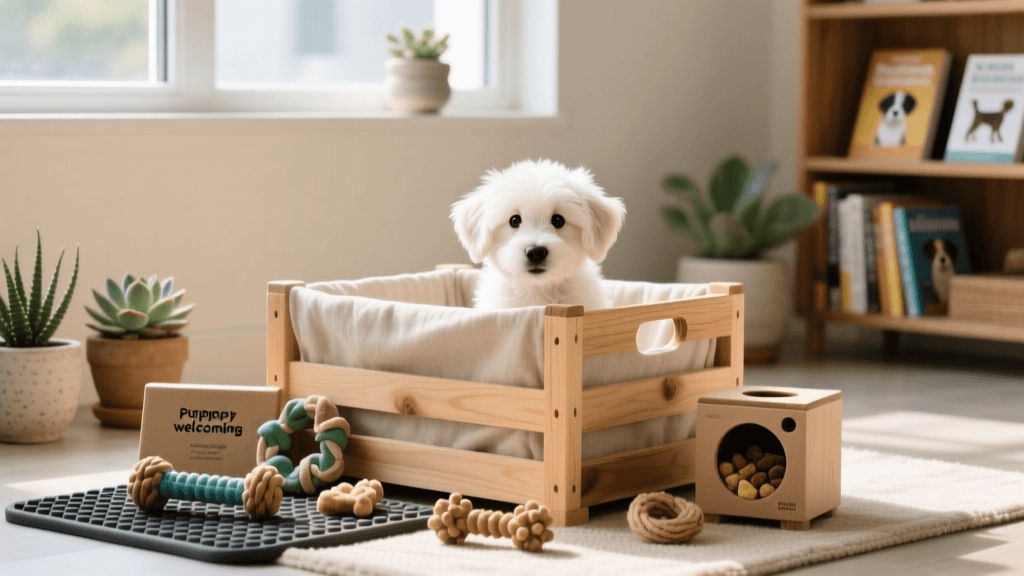
Choosing the right breed is only half the battle; equipping your home office for a puppy is equally important. In 2026, pet technology and enrichment tools have advanced significantly, making it easier than ever to manage a puppy while working.
- Heartbeat Toys for Transition: For the first few weeks, a toy like the SmartPetLove Snuggle Puppy is invaluable. The simulated heartbeat and heat pack soothe the puppy when you need to step away for a private phone call, reducing early whining and anxiety.
- AI Pet Cameras: The latest 2026 models of the Furbo 360 Dog Camera feature advanced AI that alerts you only when your puppy is engaging in destructive behavior or vomiting, filtering out normal napping and playing. This allows you to focus on work without constantly checking a live feed.
- Interactive Enrichment: Keep your puppy occupied during deep-work blocks with a KONG Classic stuffed with frozen dog-safe peanut butter and kibble. Mental enrichment tires a puppy out just as effectively as a physical walk, buying you 45 minutes of uninterrupted focus time.
Mastering Zoom Calls and Puppy Training
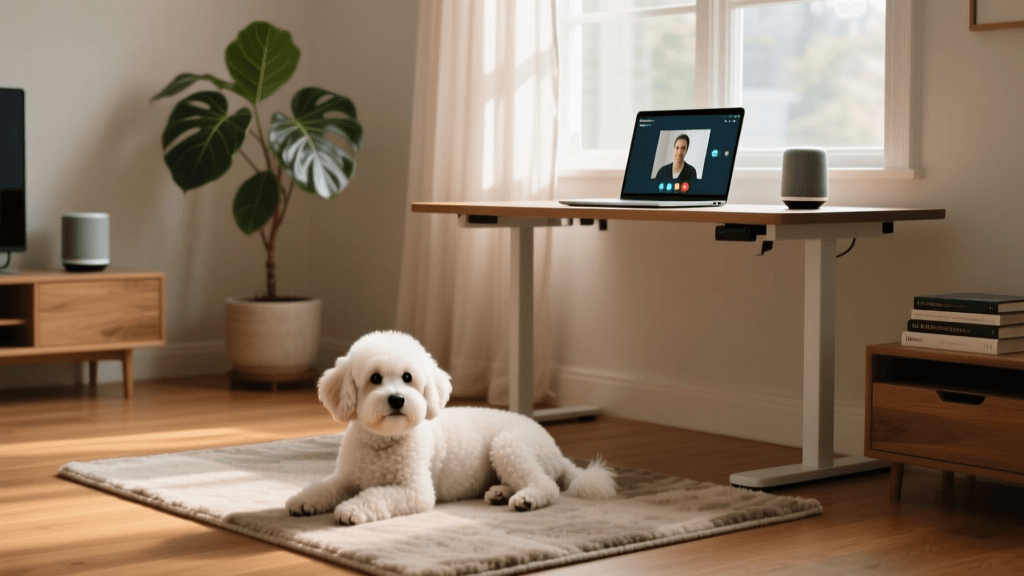
Even the quietest breeds need training to understand the rhythm of your workday. The most critical skill for a WFH puppy is the "Place" command. By teaching your dog to go to their designated bed or mat and stay there until released, you create a physical boundary that keeps them safe and out of the camera's view during meetings.
Desensitization is another key component. Puppies are naturally curious and may react to the sudden chimes of incoming calls, Slack notifications, or your voice changing pitch during a presentation. Play recordings of your meeting software's ringtones at a low volume while feeding your puppy high-value treats. Gradually increase the volume over several weeks. This classical conditioning teaches the puppy that a Zoom ringtone predicts a reward, rather than signaling an intruder to bark at.
Furthermore, it is vital to practice leaving the house. A common mistake remote workers make is spending 24/7 with their new puppy, only to realize the dog cannot handle being alone when the owner eventually goes to a co-working space or the grocery store. Follow the AVMA's guidelines on gradual crate training and alone-time conditioning to ensure your dog remains confident and relaxed, even when you are out of sight.
Final Thoughts
Bringing a puppy into your remote work life in 2026 is a deeply rewarding experience that can drastically improve your mental health, reduce stress, and add joy to your daily routine. By selecting a breed that aligns with your professional demands—such as the quiet Cavalier or the laid-back Greyhound—and investing in the right training and office setup, you can cultivate a harmonious environment where both you and your new best friend can thrive. For more comprehensive advice on welcoming your new companion, the Humane Society offers excellent resources on puppy-proofing your home and establishing healthy routines from day one.
hannah-wickes
All our authors care for dogs every day — read more of their work on the authors page.