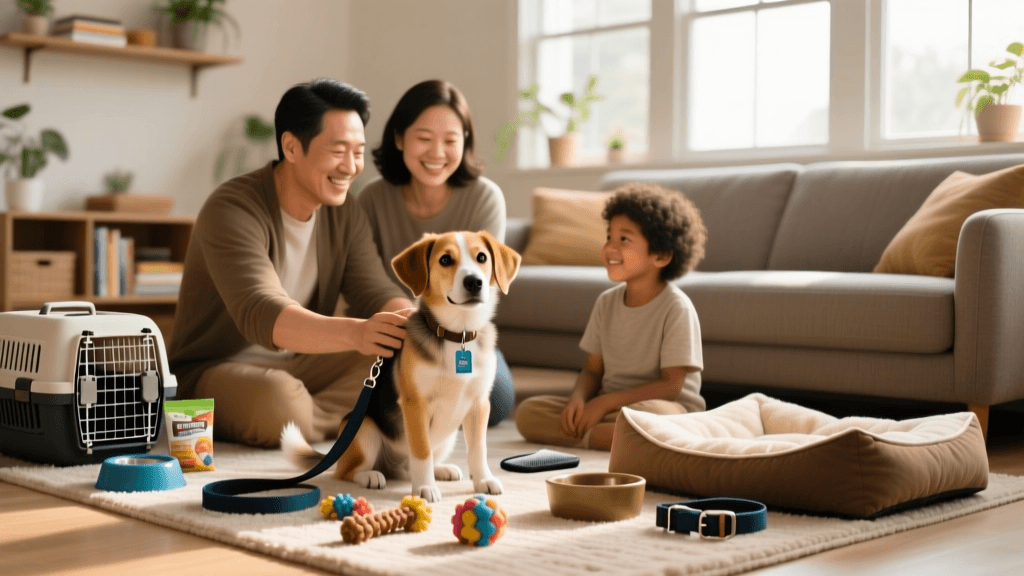
Questions To Ask Before Adopting From Rescue Shelter
Learn about questions to ask before adopting from rescue shelter with expert tips and data-backed advice.

Your Home Environment and Lifestyle Fit
Before walking through the doors of a rescue shelter, assess your living space, daily routine, and long-term commitments with surgical precision. A 600-square-foot apartment in downtown Portland is fundamentally incompatible with a high-energy working breed like a Belgian Malinois—whose average daily exercise requirement exceeds 120 minutes (American Kennel Club, 2023). Conversely, senior dogs or low-energy breeds such as English Bulldogs often thrive in smaller urban dwellings but require vigilant temperature monitoring: their brachycephalic anatomy makes them prone to heatstroke at ambient temperatures above 24°C.
Consider household composition carefully. Families with children under age six should avoid breeds with historically low tolerance for rough handling—such as Chow Chows or Akitas—unless supervised by certified trainers. The ASPCA’s 2022 Shelter Intake Report found that 37% of surrendered dogs cited “child-dog interactions” as a primary stressor, underscoring the need for behavioural compatibility screening before adoption.
Financial Realities Beyond the Adoption Fee
Adoption fees from reputable shelters typically range from $50 to $400—but this covers only initial vaccinations, spay/neuter surgery, and microchipping. Annual recurring costs for an average-sized adult dog exceed $1,800 according to the American Veterinary Medical Association’s 2023 Pet Ownership Survey. This includes preventative care ($320), food ($480), grooming ($220), insurance ($540), and emergency fund allocation ($300).
Unexpected medical expenses can escalate rapidly: a single cruciate ligament repair averages $3,200 nationally, while chronic conditions like canine hypothyroidism incur $1,100–$1,900 per year in lifelong medication and monitoring. In Boston, the MSPCA-Angell Animal Medical Center reports that 28% of newly adopted dogs require follow-up dermatological treatment within three months—often linked to environmental allergens or prior neglect.
Understanding Breed-Specific Health and Temperament Data
Breed statistics matter—not as rigid determinants, but as risk indicators grounded in peer-reviewed research. Golden Retrievers exhibit a 65% lifetime incidence of cancer (UC Davis School of Veterinary Medicine, 2021), while German Shepherds face a 21% prevalence of hip dysplasia confirmed via OFA radiographic evaluation. These figures derive from longitudinal studies involving over 120,000 individual dogs across 18 veterinary teaching hospitals.
Temperament assessments conducted by certified behaviourists at the Humane Society of Utah show measurable differences: Labrador Retrievers score 32% higher on sociability metrics than Doberman Pinschers in standardized SAFER tests, while Border Collies demonstrate 4.7x greater problem-solving persistence in puzzle-based cognition trials versus Basset Hounds.
Validating Shelter Screening Protocols
Not all shelters employ evidence-based evaluation systems. Ask whether staff use the ASPCA’s Meet Your Match Canine-ality Assessment or the SAFER (Safety Assessment For Evaluating Rehoming) tool. These protocols evaluate threshold responses to novelty, touch sensitivity, resource guarding, and stranger-directed reactivity—not just “friendly vs. shy.”
At Best Friends Animal Society’s Kanab campus in Utah, every dog undergoes a 72-hour observation period including leash walks, crate time, and multi-dog group sessions. Their 2022 outcome report shows a 94% retention rate at one year post-adoption—significantly above the national average of 76% (National Council on Pet Population Study and Policy, 2020).
Legal and Logistical Requirements
Local ordinances directly impact adoptability. In Chicago, dogs classified as “potentially dangerous” under Municipal Code §7-12-240—including Pit Bull Terriers, Rottweilers, and American Staffordshire Terriers—require mandatory liability insurance ($100,000 minimum) and annual registration renewals. New York City prohibits certain breeds from public housing regardless of temperament history.
Landlords may impose breed-specific restrictions even where municipal law permits ownership. Verify lease terms in writing—and request written confirmation from property management before finalising adoption paperwork. The Humane Society of the United States estimates that 22% of adoption failures stem from unanticipated housing conflicts.
Post-Adoption Support Infrastructure
Reputable rescues provide structured transition support—not just goodwill handouts. The San Francisco SPCA offers free virtual training consultations for first 90 days, plus subsidized spay/neuter follow-ups at their Pacific Heights clinic. Similarly, Austin Pets Alive! maintains a dedicated “Adopter Success Team” with licensed behaviour consultants available for scheduled in-home visits.
Ask specifically about return policies: does the shelter accept returns without penalty? What documentation is required? At the Wisconsin Humane Society’s Milwaukee campus, adopters receive a 30-day “adjustment window” with no questions asked—provided medical records and vaccination logs are submitted.
Behavioural History Documentation Standards
Shelters vary widely in how thoroughly they document pre-adoption behaviour. Request written records—not verbal summaries—for any observed issues: frequency of barking episodes (e.g., “3x daily, triggered by delivery trucks”), duration of separation anxiety symptoms (e.g., “destructive chewing observed within 12 minutes of owner departure”), or specific triggers for reactivity (e.g., “lunges toward joggers wearing headphones”).
A study published in Applied Animal Behaviour Science (2022) found shelters using standardized intake forms with timestamped behavioural logs achieved 41% higher successful placement rates than those relying on anecdotal notes alone.
Medical Records Transparency
Legally, shelters must disclose known medical conditions—but depth varies. Insist on copies of diagnostic imaging reports (not just “X-rays taken”), lab panels with reference ranges highlighted, and medication administration logs showing dosing consistency. At the Ohio State University Veterinary Medical Center’s shelter medicine program, all intake dogs receive full CBC, chemistry panel, heartworm test, and fecal flotation—with results digitally shared within 48 hours.
- Annual rabies vaccination cost: $15–$35 (AVMA, 2023)
- Average lifespan of shelter-sourced mixed-breed dogs: 12.8 years (Journal of Veterinary Internal Medicine, 2021)
- Median wait time for approved home visits at Seattle Humane Society: 5.2 business days
- Percentage of shelter dogs with documented dental disease: 68% (MSPCA-Angell, 2022)
- Minimum recommended puppy socialisation window: 3–14 weeks (AKC Canine Health Foundation, 2020)
“Adoption isn’t about finding a dog who fits your life—it’s about aligning your life with the needs of a being who cannot choose. Every ‘yes’ carries ethical weight beyond convenience.” — Dr. Emily Weiss, Senior Director of Shelter Research, ASPCA, 2021
| Shelter Program | Location | Pre-Adoption Training Hours Required | Post-Adoption Follow-Up Window |
|---|---|---|---|
| Project POOCH | Oregon Youth Authority, Salem, OR | 12 | 6 months |
| Pawsitive Change | Denver Dumb Friends League, CO | 8 | 90 days |
| Canine Companions | Brookfield Zoo, Chicago, IL | 16 | 12 months |
Genetic testing reveals more than coat colour. Embark DNA kits used by Austin Pets Alive! identified 19% of incoming dogs carrying recessive alleles for degenerative myelopathy—a progressive neurological condition requiring early intervention planning. Similarly, the AKC Canine Health Foundation’s 2020 genetic registry shows 12.3% of shelter-sourced Australian Shepherds carry the MDR1 mutation, rendering them hypersensitive to common dewormers like ivermectin.
Transport logistics demand equal scrutiny. If adopting from rural shelters like the Humane Society of Southern Arizona’s Tucson facility, factor in 4–6 hour drive times or $220–$380 pet-safe air cargo fees. Never rely on informal ride-share arrangements—certified transport services like Rescue Road Trip maintain USDA-licensed vehicles with climate-controlled compartments and veterinary oversight.
Microchip registration isn’t automatic. Even if implanted at the shelter, confirm it’s registered to your name and address—not the shelter’s database. The American Animal Hospital Association reports 32% of lost dogs with microchips remain unclaimed because contact information wasn’t updated within 14 days of adoption.
Finally, examine surrender reasons with forensic attention. “Too much energy” may indicate undiagnosed ADHD-like hyperactivity requiring veterinary neurobehavioural consultation—not just more walks. “Chewing furniture” could signal dental pain or nutritional deficiency rather than poor training. At the UC Davis Koret Shelter Medicine Program, 44% of intake behavioural referrals were resolved with medical intervention alone.
Rescue adoption succeeds when preparation precedes passion. It demands willingness to adjust schedules, budgets, and expectations—not just open a door. The dogs waiting in kennels at Best Friends in Kanab, the Wisconsin Humane Society in Milwaukee, and the San Francisco SPCA aren’t blank slates; they’re individuals with histories, health profiles, and needs that merit the same rigour you’d apply to hiring a live-in partner.
beth-carrasco
All our authors care for dogs every day — read more of their work on the authors page.