Understanding Puppy Teething: Best Chew Toys for 2026
Discover the psychology behind puppy teething and explore the best soothing chew toys of 2026 to relieve pain, curb destruction, and aid development.
The Canine Psychology of Teething: More Than Just Pain
When a puppy begins to chew on your favorite shoes or the corners of your drywall, it is easy to view the behavior as mere mischief. However, from a canine behavioral perspective, teething is a complex developmental milestone driven by neurology, instinct, and environmental exploration. While many outdated guides from 2024 recommended basic rubber rings, veterinary behaviorists in 2026 emphasize multi-textural, cognitive-engaging toys that address the root psychological needs of the teething puppy.
To select the best teething toys for your dog, we must first understand why they chew. Puppies do not have opposable thumbs; their mouths are their primary tools for mapping their environment. During the teething phase, the gums become inflamed and hypersensitive. According to the ASPCA's puppy care guidelines, chewing provides a dual purpose: it helps physically dislodge stubborn deciduous (baby) teeth, and it triggers the "Gate Control Theory" of pain. The tactile stimulation of chewing travels along nerve pathways to the brain faster than the dull ache of teething, effectively "closing the gate" on pain signals and providing immense neurological relief.
Furthermore, rhythmic chewing stimulates the release of endorphins and serotonin in the canine brain. This chemical release acts as a natural self-soothing mechanism, helping puppies manage the stress and anxiety that often accompany rapid physical growth. Therefore, the best teething toy is not just a physical tool for dental health; it is a psychological anchor for your developing dog.
The Three Stages of Puppy Teething and Behavioral Shifts
Understanding the timeline of canine dental development is crucial for matching your puppy with the correct toy texture and resistance. Providing a toy that is too hard can fracture emerging adult teeth, while a toy that is too soft will fail to satisfy the deep-tissue gnawing instinct.
Stage 1: The Eruption Phase (3 to 6 Weeks)
During this brief window, a puppy's 28 deciduous teeth erupt. Puppies are typically still with their littermates and nursing. The primary behavioral shift here is the beginning of "bite inhibition" learning, as littermates yelp when bitten too hard. Human intervention with toys is minimal at this stage, as the mother and siblings provide the necessary behavioral feedback.
Stage 2: The Shedding Phase (12 to 16 Weeks)
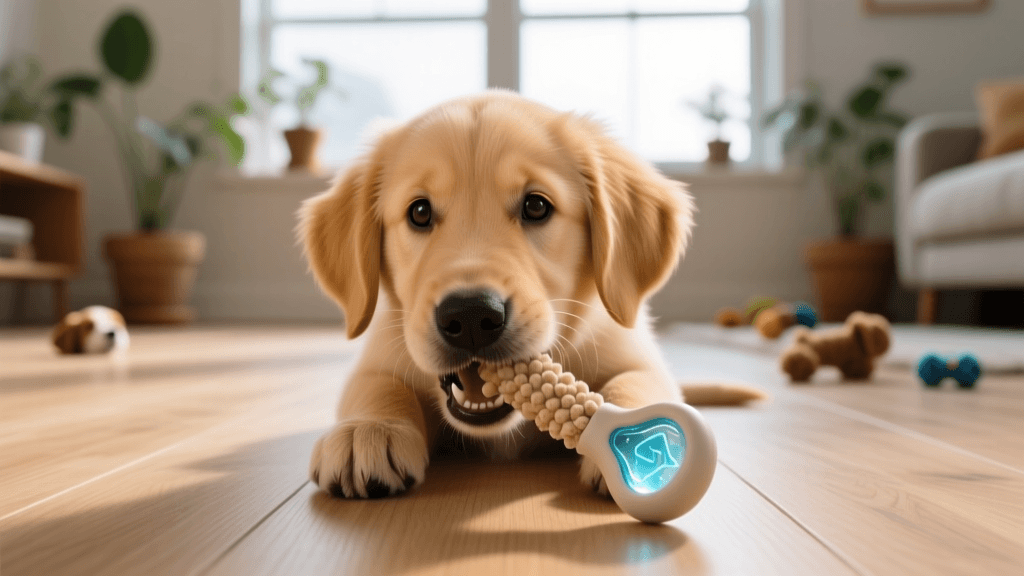
This is when puppies transition to their forever homes. The incisors and canines begin to loosen and fall out. Puppies will exhibit increased "mouthing" behavior, gently gnawing on human hands and soft fabrics. They are seeking relief from the itching sensation of receding gums. Soft, pliable toys with varied textures are essential here to massage the gums without damaging the fragile incoming adult teeth.
Stage 3: The Deep Jaw Phase (4 to 7 Months)
The premolars and molars erupt, and the jaw muscles strengthen significantly. This is the phase notorious for destructive chewing. The puppy is no longer just soothing itchy gums; they are testing their new jaw strength and satisfying a deep-seated prey-drive instinct to tear and dismantle. The American Kennel Club notes that this is a critical window for redirecting destructive urges toward appropriate, durable outlets that mimic the resistance of natural prey bones.
How Texture and Resistance Satisfy Canine Instincts
In 2026, the top-rated teething toys are engineered with canine proprioception in mind. Proprioception is the body's ability to sense its location, movements, and actions. When a puppy bites down on a toy, the sensory receptors in their periodontal ligaments send feedback to the brain.
- Thermoreceptors: Cold toys constrict blood vessels in inflamed gums, providing a numbing effect that reduces swelling and pain.
- Mechanoreceptors: Toys with bristles or nubs mimic the feeling of tearing through fur and cartilage, satisfying the predatory sequence (eye, stalk, chase, bite, dissect).
- Auditory Feedback: Toys that emit a low-decibel crinkle or squeak trigger the brain's reward center, reinforcing the chewing behavior on the toy rather than the furniture.
Top Teething Toys for 2026: A Behavioral Approach
Based on veterinary behavioral science and current 2026 market durability standards, here are the most effective teething toys categorized by the specific psychological need they fulfill.
1. Kong Classic Puppy (Red Rubber)
Best for: Cognitive enrichment and unpredictable prey simulation.
The Kong Classic remains a staple in veterinary behaviorist toolkits. Its unpredictable bounce pattern triggers the puppy's chase instinct, tiring them out mentally before they even begin to chew. The hollow center allows for frozen enrichment (e.g., soaked kibble and low-sodium bone broth), which turns chewing into a foraging puzzle. This engages the puppy's problem-solving skills, redirecting anxiety into focused, rewarding work.
2. Nylabone Puppy Power Chew Textured Ring
Best for: Deep-tissue gnawing and furniture redirection.
When a puppy targets wooden table legs, they are seeking unyielding resistance. The Nylabone Puppy Power Chew provides a safe alternative that mimics the density of wood but features microscopic bristles that act as a toothbrush. The multi-textured ring shape allows the puppy to use their paws to hold the toy, satisfying the instinct to manipulate objects while gnawing on the molars.
3. Petstages Cool Teething Stick
Best for: Acute pain relief and sensory engagement.
Designed to be soaked in water and frozen, this toy utilizes cryotherapy to numb aching gums. The exterior features a crinkle material that provides immediate auditory feedback. From a behavioral standpoint, the instant reward of the "crinkle" sound reinforces the puppy's decision to choose this toy over a silent, inanimate object like a baseboard.
4. Benebone Puppy Wishbone (Bacon Infused)
Best for: Aggressive chewers and ergonomic holding.
The ergonomic wishbone shape is specifically designed for the canine skeletal structure. Unlike straight bones that require the puppy to awkwardly tilt their head, the wishbone shape allows the puppy to pin the toy against the floor with their paws while chewing at an optimal cervical spine angle. The infusion of real bacon scent stimulates the olfactory bulb, keeping the puppy engaged for longer sessions.
2026 Teething Toy Comparison Chart
| Toy Model | Primary Behavioral Need | Texture & Resistance | Ideal Age Window | Avg. 2026 Price |
|---|---|---|---|---|
| Kong Classic Puppy | Foraging & Prey Chase | Soft, yielding rubber | 8 weeks - 9 months | $14.99 |
| Nylabone Textured Ring | Deep Gnawing & Manipulation | Firm polymer with bristles | 3 months - 6 months | $11.50 |
| Petstages Cool Stick | Acute Pain Numbing | Frozen fabric & crinkle | 12 weeks - 5 months | $9.99 |
| Benebone Puppy Wishbone | Ergonomic Jaw Testing | Dense nylon, scent-infused | 4 months - 8 months | $16.00 |
Redirecting Destructive Chewing: Training Techniques
Purchasing the right toy is only half the battle; teaching the puppy how to use it is where true behavioral modification occurs. Puppies do not inherently know that a $16 Benebone is a toy and a $2,000 sofa is not. To a puppy, both are simply environmental objects that provide satisfying resistance when bitten.
The "Trade-Up" Protocol
If you catch your puppy chewing on an inappropriate item, never forcefully pry it from their mouth. This can trigger "resource guarding," a defensive behavior where the puppy learns to swallow objects quickly or growl to protect them. Instead, employ the Trade-Up Protocol. Offer a high-value teething toy (like a frozen Kong) right at their nose. When they drop the forbidden item to take the toy, praise them calmly and remove the forbidden item. Over time, the puppy learns that relinquishing objects results in a higher-value reward.
Scent Association
Rub a small amount of dog-safe peanut butter or bone broth onto the appropriate teething toys. Canines process the world primarily through olfaction. By making the approved toys smell like high-value food, you artificially elevate their status in the puppy's hierarchy of environmental objects.
Safety First: Monitoring Your Puppy's Chew Sessions
While chewing is a vital psychological and physical need, it must be supervised. As puppies transition into the later stages of teething, their jaw strength can increase exponentially. Regularly inspect all rubber and nylon toys for signs of shearing, deep gouges, or missing pieces. If a toy becomes small enough to be swallowed whole, or if sharp plastic edges begin to form, discard it immediately to prevent gastrointestinal blockages or oral lacerations.
Ultimately, understanding puppy teething requires empathy and a willingness to view the world from your dog's perspective. By providing biologically appropriate, psychologically engaging teething toys, you are not just saving your furniture—you are actively supporting your puppy's neurological development, reducing their stress, and laying the foundation for a well-adjusted, confident adult dog.
anouk-beaumont
All our authors care for dogs every day — read more of their work on the authors page.